Carrying the message of hope on the long road from Arigna to Australia
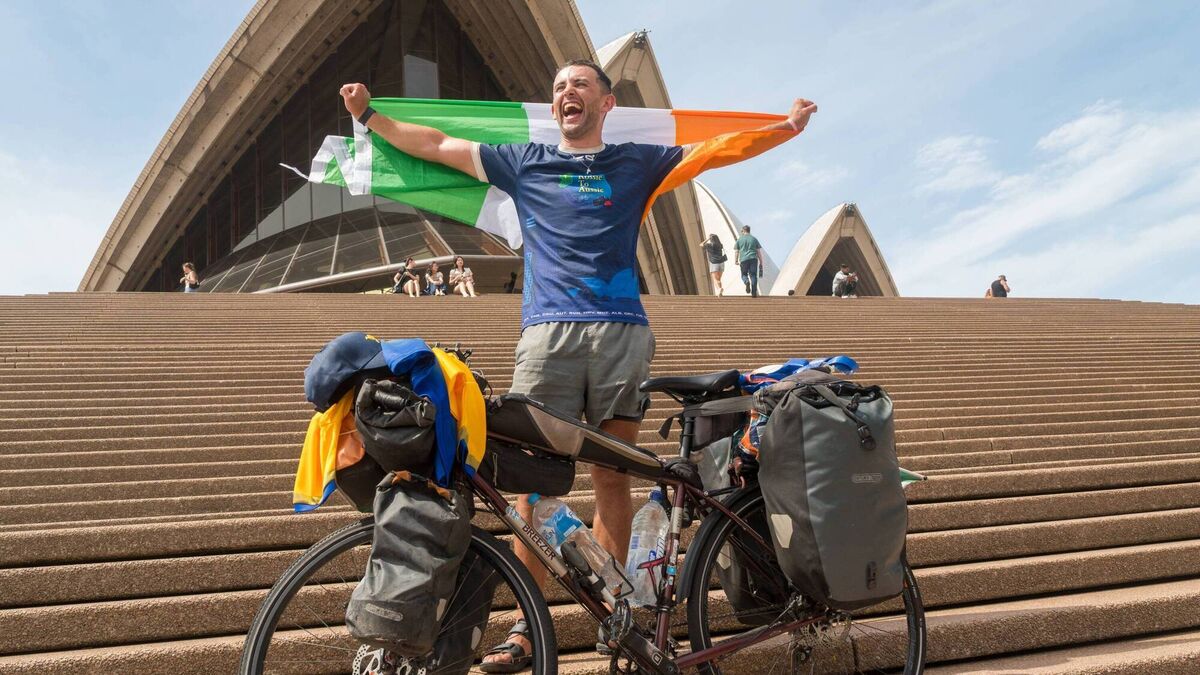
Arigna man Fergal Guihen celebrates on the steps of Sydney Opera House as he finished his two year long 30,000km cycle from Roscommon to Australia, a journey that began in March 2024. Pic: Owen Good
When Fergal Guihen left his native Arigna on his bicycle in March 2024, the ambition seemed extraordinary enough. The young County Roscommon nurse planned to cycle from his village all the way to Sydney, Australia, raising funds for two charities close to his heart, the Mayo/Roscommon Hospice Foundation and North West STOP, a suicide prevention and mental health charity.
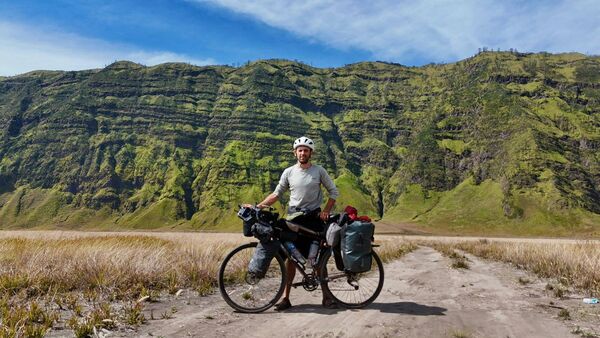
The roots of that awareness stretch back years before he ever climbed onto his trusty bicycle, ‘Nimrod’.
A qualified nurse, he was a student in St. James's Hospital during the Covid-19 pandemic when he found himself working in intensive care. As Ireland battled the virus, he witnessed people spending their final days on ventilators and watched families grapple with devastating loss.
Looking back, he sees those years as laying the foundations for the challenge that eventually followed. Yet there was another reason why the issue of mental health became so important to him.
When he was four years old, his aunt died by suicide. As he got older, he became increasingly aware of the prevalence of suicide and mental health difficulties around him. Others in his circle had also been touched by similar loss. The message became impossible to ignore. “It was very evident to me that suicide is a massive problem,” he says.
Those experiences helped shape his decision to support Leitrim-based mental health charity, North West STOP. It was a charity close to home, but it was also addressing an issue he felt people often found too uncomfortable to discuss.
Rather than seeing himself as a campaigner, he says he simply became comfortable having difficult conversations. “I found it easier to talk about things that people might tiptoe around,” he says. That openness would become one of the defining features of his journey.
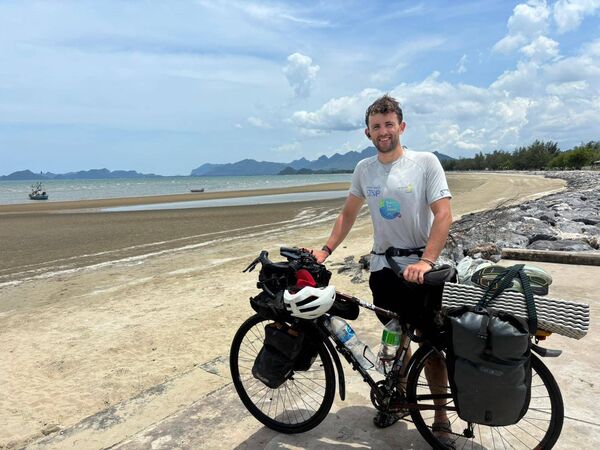
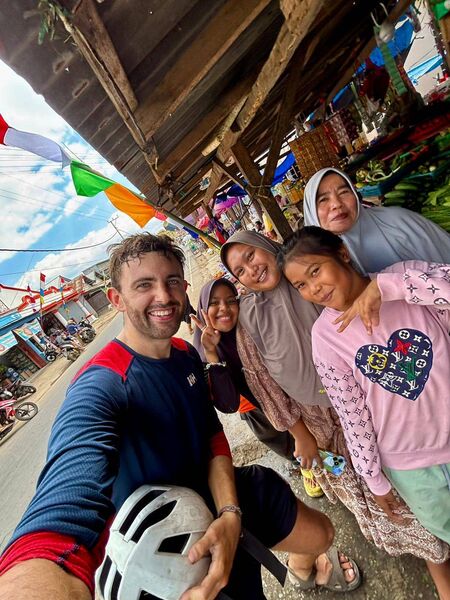
As he cycled across Europe, Turkey, Iran, Afghanistan, Central Asia, China and South-East Asia, thousands of people followed Fergal's progress on his social media channels. He did not simply post photographs of landscapes and border crossings. He spoke honestly about fear, loneliness, anxiety and self-doubt.
When he struggled with sleeping alone in unfamiliar places, he spoke about it. When loneliness hit unexpectedly in South-East Asia, he spoke about that too. He shared not just the adventure, but the reality behind it.
In doing so, he created a platform for conversations about mental health in a way he did not originally anticipate. The most significant turning point in his story came eight months into his expedition.
Having just emerged from what he describes as the toughest section of the route through Iran and Afghanistan, he stopped in Tajikistan to recover physically and mentally.
But then came devastating news from home. His cousin Tom, just two years older than him, had died by suicide. The tragedy reinforced for him that people can be carrying burdens that others never see. The loss shook him profoundly.
Returning home for the funeral was one of the hardest parts of the entire journey. Yet it also became a defining moment.
Fergal and his family made a conscious decision to talk openly about what had happened. They discussed suicide directly. They discussed why people struggle. They discussed the importance of awareness and support.
For Fergal, the tragedy transformed his mission when he got back on the bike to complete his charity cycle. “My why became far bigger than any challenge I was coming across,” he says. Before then, he was cycling solely for charity. After Tom’s death, the purpose deepened.
He felt he was carrying the memory of both his aunt and his cousin with him for the remainder of the journey. No matter what obstacles arose, whether freezing temperatures in Central Asia, searing heat in Asia, police scrutiny or crushing isolation, quitting was no longer an option.
“There was no quitting,” he says. “I felt like my aunt and my cousin were with me for the rest of the journey.”
Throughout his travels, one lesson continually resurfaced. Some of the happiest people he encountered were living in places with relatively little material wealth. The experience reinforced his belief that purpose and belonging matter far more than status or possessions.
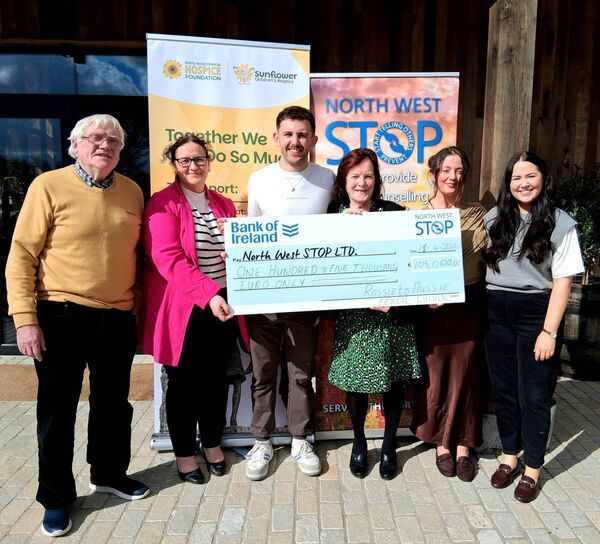
The fundraising itself surpassed anything he had expected. Privately, he had hoped the challenge might raise around €40,000. When the total eventually passed €210,000, he saw it not just as a financial achievement but as evidence that people had connected with the message behind the journey.
“What I found incredible was that it was ordinary people,” he says. “It was individual people giving what they could. All those donations added up to something far bigger than I ever imagined.”
For North West STOP, the funds will help support counselling services, a 24-hour helpline, sensory facilities and a new premises. The money raised for the Mayo/Roscommon Hospice Foundation will also contribute to services supporting patients and families facing some of life’s most difficult moments. In her final days, his great-grandmother was cared for by the Hospice Foundation.
Today, Fergal is regularly invited to speak to schools, community groups and organisations about resilience and mental health. Drawing parallels with his incredible journey, he often tells people that difficult periods are not permanent.
Gruelling episodes on the mind and body over those two years, such as Australia’s vast Nullarbor Plain, gave him a deeper appreciation of how people experience emotional distress and crisis. Recovery, he says, often begins with a single conversation, a single phone call or a willingness to ask for support.
“Just like my journey was, there were ups and downs. Get through the downs and eventually you’ll be up again. It’s to know that you will eventually come out of that and you’ll eventually see the good days again. You just need to endure and seek help, ask someone for help when you need it.
“Every hard thing I went through, it eventually ended. And then you’ll have moments like the Sydney Opera House – it was the best day of my life,” he recalls.
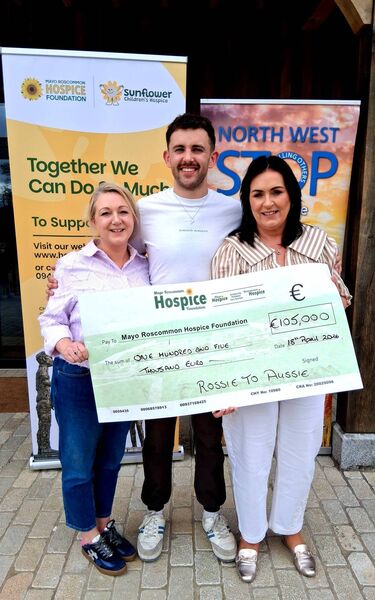
Since crossing the finish line in Sydney, Fergal now wants to keep sharing that message of hope wherever he can; that it is okay to talk, okay to seek help, and okay to ask difficult questions.
“Over the course of two years I was tried and tested in ways I never expected. There were countless challenges along the way, but each one taught me something valuable. Through it all, I picked up lessons that I believe could genuinely help others who may be going through difficult or uncertain times.
“So now I feel a responsibility to share it, to speak honestly about the journey, the struggles, and the lessons that came with them. Because if even one person can take something from this experience that helps them keep going when things get tough, then every hardship I endured will have been worth it.”
*If you have been affected by any of the content of this article, support and help is available, including from the following resources: North West STOP Free Counselling on 0818 444 000; Samaritans 116 123 or email jo@samaritans.org; Pieta House 1800 247 247 or text HELP to 51444 (suicide, self-harm); Aware 1800 80 48 48 (depression, anxiety); Text About It – text HELLO to 50808 (mental health issues).