Castle Island and Lough Key landscape ‘could become major heritage attraction’
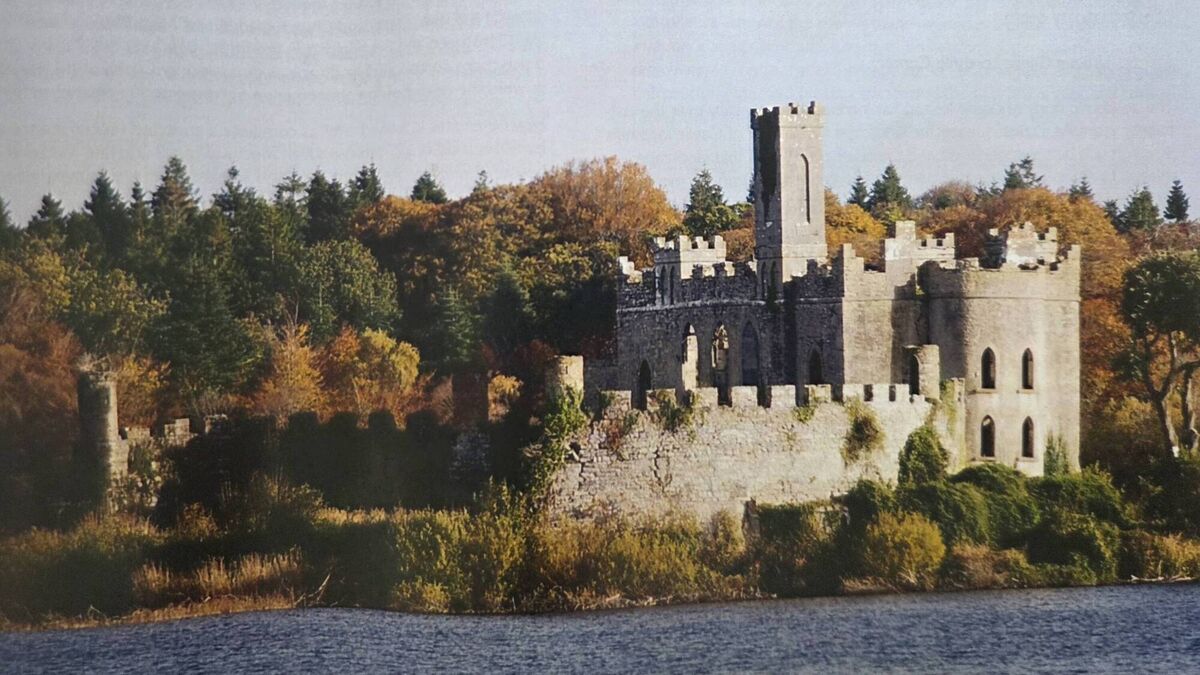
A Conservation Management Plan report states that Castle Island is of exceptional archaeological, historical, architectural and cultural significance.
Decades of archaeological research have uncovered the extraordinary history of Castle Island and the wider Lough Key mediaeval landscape. Now, leading archaeologist Professor Tom Finan believes it is time to begin sharing this story to a much wider audience.
Professor Finan’s comments come following the recent publication of a Conservation Management Plan (CMP) aimed at securing the future of the nationally significant Castle Island site and exploring how it might eventually be opened up and interpreted for visitors.
Commissioned by island owner Sean Simon and funded through the Community Monuments Fund 2025, the CMP sets out a roadmap for the preservation, repair, management and future use of the site.
Castle Island near the centre of Lough Key is best known for its dramatic ruins and its centuries-long association with the MacDermot dynasty, Lords of Moylurg.
With evidence of occupation stretching back more than 1,000 years, the island stands among Ireland’s most important surviving Gaelic lordship sites. Archaeological excavations have revealed extraordinary deposits including the remains of an early medieval cashel (a circular stone fort), traces of a catastrophic fire recorded in ancient annals, and a treasure trove of artefacts that offer rare insights into the daily world of the Gaelic elite.
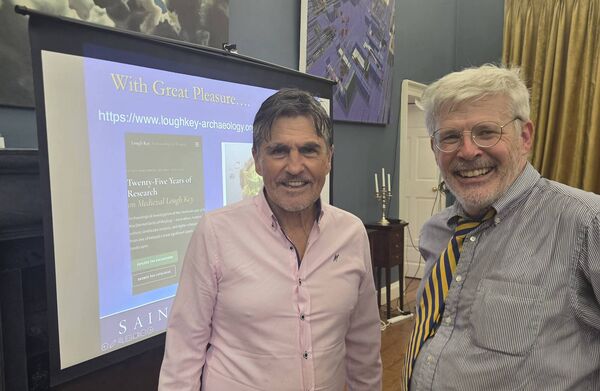
Professor Finan, who is based at St. Louis University in the US, has spent more than two decades researching medieval Lough Key and has led archaeological excavations on Castle Island over the last number years. He believes there is enormous potential to develop the island and its surrounding landscape into a unique heritage and tourism destination.
He explains that the medieval landscape extends far beyond the island itself. “When you want to talk about Lough Key historically, you’ve basically got The Rock, Trinity Island and Church Island as three islands on the lake that are of national, even international significance,” he said.
One of the key challenges, he said, is helping people understand the many layers of history hidden within the landscape.
“The landscape is multi-layered and what we see right now is just the top layer,” he explained. “My job is to look at the historical sources and use that to give us some hints to explain what we see in the landscape.”
Recent technological advances are helping to unlock those secrets. Prof Finan revealed that a recent survey carried out using LiDAR (light detection and ranging) remote sensing technology identified previously undocumented archaeological features hidden beneath dense woodland around Lough Key.
“The results were astounding,” he said. “There are certain things in the forest that we knew were there, but there’s other stuff in there and it’s never been recorded.”
The findings add to a growing body of evidence suggesting that much of the medieval landscape around Boyle survives largely intact beneath later developments.
Professor Finan believes that the area’s rich mediaeval story has huge, untapped tourism potential. “Everybody now understands the significance of Lough Key both in terms of history, the archaeology, the heritage and marketability,” he said.
While cautioning that any public access project would take time, he said the groundwork is now being laid with the CMP plan. “The plan begins with stabilising,” he said. “You’ve got to start somewhere.”
He estimated it could take up to a decade before a fully realised visitor experience emerges. “I would say five to 10 years,” he said. “It’s a significant, complicated site.”
Rather than relying solely on traditional visitor centres, Professor Finan sees opportunities to use modern technology to bring the island’s story to life.
“In today’s world there are ways to do this,” he said. “Virtual tours on your phone, medieval walk tours, QR codes. We’ve got all the data.” He also believes there is scope for improved guidebooks, educational resources and heritage interpretation that would make the history of Lough Key more accessible to visitors and local people alike. “We don’t do an exceptional job sometimes of putting together popular press-type books,” he admitted.
“I think the time is right for a lot of us to develop this area’s potential and share this place.”
Throughout the interview, Prof Finan repeatedly stressed that Castle Island’s story belongs not just to archaeologists but to the wider public.
“This CMP report has formalised the conversations about the potential of this place.”
After years uncovering evidence of medieval kings, fortifications, trade networks, feasting halls and daily life on the island, he says the next challenge is ensuring those discoveries inspire future generations.
“I think trying to understand this place does require effort,” he said. “But it is absolutely entertaining and exciting.”
For Boyle and the wider region, he believes a visitor attraction of national significance could be created, building on a landscape already renowned for its natural beauty while revealing the remarkable medieval world that lies just beneath its surface.