Ireland in tough position as EU-US relationship appears broken
James Cox
Here, we have a look at the issues likely to dominate political discourse in the week to come.
Ireland caught in middle of fractured EU-US relationship
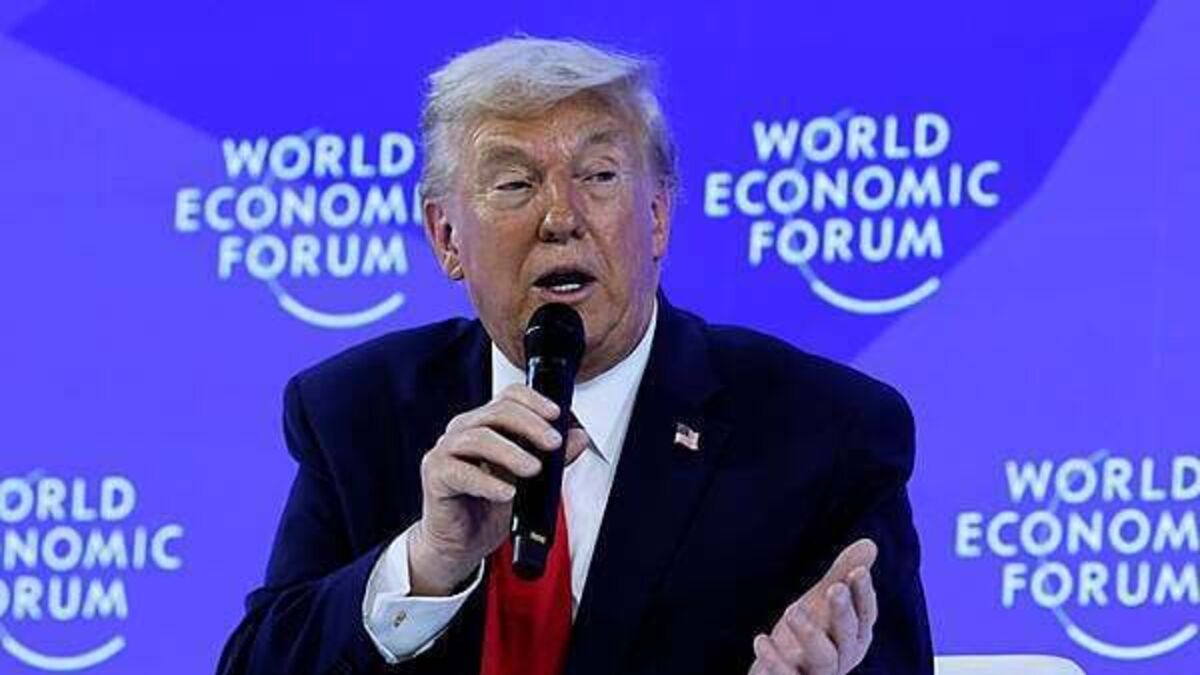
This year's edition of the World Economic Forum in Davos is likely to go down in history, although maybe not for the reasons we expected.
US president Donald Trump had the world collectively drawing breath as he began his speech. Ultimately, the fear of US military intervention in Greenland did not come to pass, however, it was far from a positive message.
In a dark, rambling, and at times incoherent, speech, Mr Trump essentially brought an end to EU-US relations as we know them.
He attacked Europe, mentioning his usual talking points of the evils of 'mass migration', and accused traditional European partners of disrespect for not allowing him to take the autonomous territory of Greenland.
Afterwards he claimed a deal had been struck on the matter with Nato secretary-general Mark Rutte, with plenty of unknowns still lingering over it.
EU leaders and diplomats are still shellshocked and many believe that more independence from the US will be required.
This places Ireland in a tricky situation. The State is still massively reliant on foreign direct investment, with much of this coming from American tech and medical companies based here.
Security issues are also worth considering as Ireland relies heavily on the support of European partners, with American support now more uncertain than ever.
There will be more than ever riding on Taoiseach Micheál Martin's St Patrick's Day visit to the White House.
Some opposition parties have argued he should not attend, but this has been dismissed by the Government.
Fianna Fáil support plunges, gains for Sinn Féin and Social Democrats
Fianna Fáil's support has slumped to just 15 per cent, its lowest level since the last general election.
That is according to the latest Red C poll for the Business Post, which shows the party down three points this month.
Fine Gael recovered slightly to 18 per cent, but together the Coalition parties now sit at a record low of 33 per cent.
Sinn Féin is the largest party in the poll on 24 per cent, while the Social Democrats hit a record high of 10 per cent.
That means their combined support would be on 34 per cent.
While the next general election is still four years away, it is an ominous sign for the Government as opposition parties continue to grow their popularity.
The 10 per cent figure is a huge boost for Social Democrats leader Holly Cairns.
The poor showing for Fianna Fáil is also likely to increase pressure on Taoiseach and party leader Micheál Martin.
Backbench TDs are said to be increasingly frustrated at the party leadership, particularly in the wake of their disastrous presidential election which saw Jim Gavin drop out early.
In a recent interview with BreakingNews.ie, Cork East TD James O'Connor said: "Micheál Martin takes zero notice of what Fianna Fáil backbenchers say, that is my personal position, he knows I think that."
In further bad news for Mr Martin, the poll also found that the majority of voters want to see him replaced as Fianna Fáil leader next year.
Forty-six per cent of voters said he should not lead the party when the Taoiseach’s Office rotates in 2027.
Irish anti-immigrant 'influencers' copying talking points from international groups
Ireland is "of interest to the global far-right" while anti-immigrant 'influencers' here are taking their talking points from international groups, according to an organisation that monitors extremism.
The Global Project Against Hate and Extremism (Gpahe) monitors far-right and extremist groups across the globe.
Gpahe recently published a report which found international far-right organisations have taken inspiration from extremist violence against migrants in Ireland.
In an interview with BreakingNews.ie, Gpahe co-founder and president Wendy Via said this is still the case, adding that the trend of anti-immigrant 'influencers' on the likes of X and TikTok is following global patterns.
"Ireland is of interest to the global far-right. It is predominantly white, it is English speaking.
"Even though Ireland thankfully does not have a strong extreme far-right, and it's not organised, the ones who do get involved use the same political talking points as far-right politicians and agitators in other countries."