For some families, every day is World Pancreatic Cancer Day
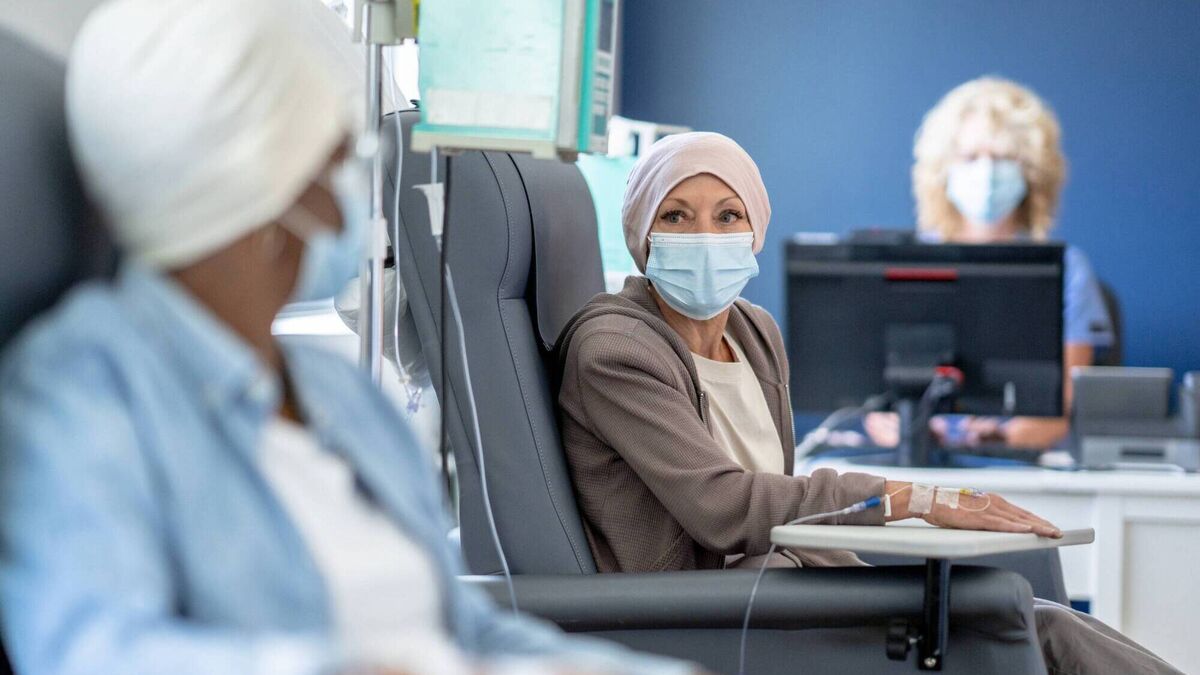
To mark World Pancreatic Cancer Day, today, Thursday, November 19th, we are sharing the story of one family affected by a cancer which devastates the lives of almost 600 Irish families every year.
For some families, every day is World Pancreatic Cancer Day

Chemo is a cure that some patients find more debilitating than the cancers they’re doing their damnedest to fight.

Frequently detected only when it has reached Stage 4 and is inoperable, pancreatic cancer devastates the lives of almost 600 Irish families every year. To mark World Pancreatic Cancer Day on Thursday, November 19th, we are sharing the story of one such family.

For some families, every day is World Pancreatic Cancer Day

Cherished memories of youthful tomorrows that teemed with exciting possibilities. The prospect of golden years watching kids and grandkids growing up and blazing their own trails in life. They’re the humdrum expectations most of us take for granted yet some of us tragically won’t live long enough to see.

On an overcast November 2025 morning, my wife “Frances” (not her real name) and I joined the unlucky families into whose otherwise unremarkable existences fate had lobbed a hand grenade called pancreatic cancer. Before we knew it, the reassuringly familiar contours of our life together had become a landscape filled with scarily jagged shapes.

The post-diagnosis portion of lives cleaved in two by pancreatic cancer is somewhere new arrivals must quickly become fluent in a language no one wants to hear. Lesions… malignancies…metastasizations. Stages whose innocuous numbers come booby-trapped with the kind of misfortunes that previously only ever befell others. This is a place where comforting words and phrases possess little or no value.

Far from an ear-splitting “kaboom”, the explosion that shredded Frances’s life expectancy to just “six to eight months if left untreated” was a debilitatingly stubborn case of constipation. Having suffered in agonising silence for several weeks, she reluctantly agreed to go and see our GP.

Worryingly, the routine ultrasound Frances subsequently underwent at our local hospital proved “inconclusive”. Although far from the most frightening word ever uttered in a medical setting, it’s the start of a slippery slope studded with uncertainties such as CT and MRI scans.

The “buy-one-get-one-free” blood extractions bundled in with every test were especially tough on Frances, who has had a lifelong dread of needles.

Although there is never a “good” time to discover you may have a critical illness, early December must surely rank amongst the very, very worst. The first wave of winter flu cases that was already sloshing over the wheels of the trolleys crowding hospital corridors, made each visit ten times more intimidating.

Devastating is too small a word to adequately describe the confirmation that Frances had a Stage 4 inoperable tumour in the neck of her pancreas. Worse still, the scan results indicated her tumour had begun “spotting” her liver. We would only learn the full extent of the damage when she underwent a biopsy just after Christmas.

Samples extracted and dispatched, we faced an anxious three week wait – literally a lifetime in the case of especially severe pancreatic cancer cases – while the lab technicians did their stuff. Recommended nothing stronger than Panadol to fight off perhaps the most aggressive and fast-moving of all cancers while we waited, our New Year was even less merry than our Christmas had been.

While the hours, days and weeks cancer patients must wait for test results slouch by with a sloth-like lack of urgency, their tumours are hard at work 24/7. And when it comes to fatally corrupting hosts’ cells, organs and mental well-being, no malignancy goes about its vandalism with greater gusto than pancreatic cancer.

By the time we were finally able to discuss available treatment options with an oncologist it was mid-January and the fabled “60-day treatment window” opened by that “inconclusive” ultrasound had slammed shut. The joint Covid and flu pandemics that were rampaging through hospitals then conspired to delay Frances’s first dose of her potentially life-extending chemotherapy by a further five weeks.

Given the infinite resources available online, it’s hardly surprising so many recipients of cancer diagnoses attempt to fill gaps in their knowledge by consulting “Dr Google”. While doing so may be of some help, pancreatic cancer patients are strongly advised to steer well clear of the murkier end of the social media cesspool. Spanning everything from dog deworming tablets to dodgy-sounding tinctures from China, the “miracle cures” on offer aren’t just useless but also likely to further compromise already seriously weakened immune systems.

Well-meaning friends, family members and workmates who claim to know someone who knows a faith healer who cured a friend’s aunt’s neighbour’s sister-in-law should also be ignored.

“At the end of the day, surely anyone gifted with such wonderful powers would be saving lives at their local hospital?”, you might ask. “It doesn’t work like that” comes the predictable reply.

All of which is not to say miracles don’t happen. They can and they do.

More incredibly still, they’re being performed on a daily basis by the hard-working doctors and nurses who administer chemotherapy treatments at the oncology ward of your local hospital.

Admittedly, chemo is a cure that some patients find more debilitating than the cancers they’re doing their damnedest to fight. Luckily, Frances wasn’t one of them. In recommending a milder treatment variant called Gemcitabine nab-paclitaxel, our oncologist has helped to measurably prolong her life.

Best of all, apart from the expected hair loss and a nasty hospital stay caused by a meds imbalance, his doing so has not significantly disrupted her enjoyment of that life.

Eating well even when every fibre of your being cries “no more!” is a vital step in this process. A positive mindset that refuses to buckle under when confronted with real or imagined adversities is another. Patients’ partners and family members/carers are the wheels that keep everything running smoothly. In the event any kind of problem does rear its ugly head, it’s also comforting to know that vastly experienced community health workers and palliative care nurses are only a phone call away.

In April, three monthly cycles into Frances’s chemo regimen, she and I joined a group of equally anxious patients awaiting updates in that oncologist’s waiting room.

Our joy at learning of “a significant shrinkage” in both her cancer markers and tumour was only dampened by the likelihood that several of those waiting with would be rather less lucky.

By the time World Pancreatic Cancer Day 2026 rolls around on Thursday, November 19th, it will be almost exactly a year since Frances’ and my life were forever changed. While the road beyond this point is sure to feature its share of twists, turns and bumps, we count our blessings that we have any road ahead of us at all.

A few words about the HSE

It would be remiss of me to write an article like this and avoid addressing the HSE’s effectiveness in discharging its duty of care to those afflicted with critical illnesses.

The opinions are mine alone and should not be taken as a criticism of either the doctors, nurses or ancillary staff who to all intents are Ireland’s hospitals. Sadly, like their counterparts in public health services the whole world over, Irish medical professionals are expected to help – and hopefully heal – far too many patients with too few resources.

If my and Frances’s experience is anything to go by the system’s biggest – only? – failing came early on when our fears were most intense and our need for comfort and guidance most desperate. When the inevitable annual flu/Covid outbreak necessitated we wait several weeks for first a biopsy and then its results, our hospital could and should have done far more than recommend an over-the-counter painkiller.

Happily, as Frances started moving through the system, the range of supports available to us both widened and deepened. Lifts to chemo sessions. Subsidised wigs for those who’ve lost their hair. Counselling for anyone who might need it. They’re just a few of the many many extra miles the HSE and its frontline and palliative care teams travel for the cancer patients whose lives are in their hands.

* For further information about Pancreatic Cancer, its warning signs and possible treatments, please visit www.pancreaticcancerireland.ie


More in this section