Forestry owners count the cost of ‘nightmare’ West Roscommon wildfires
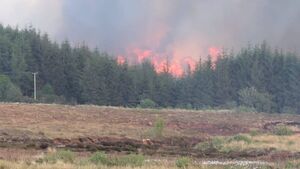
Acres of forestry on fire in the Gorthaganny area of West Roscommon. Pic: Liam Reynolds
A public meeting is taking place this evening to discuss the extensive damage to forestry, bogland and a special area of conservation in West Roscommon caused by unprecedented wildfires.
Organised by Gorthaganny Community Development, the public meeting will take place in the Marian Hall, Gorthaganny, at 8 p.m..
A large attendance is expected at the meeting which will include local politicians and other stakeholders.
A plan for the aftermath of the wildfires which ravaged the West Roscommon area more than two weeks ago will be discussed.
Widespread destruction was caused across a five kilometre radius in the Gorthaganny, Coney Island, Carrowbehy, and Cloonfower areas.
It’s estimated that the raging wildfires burnt a total of 1,300 acres of bog and forestry, twenty per cent of which is estimated to be forestry plantation.
For Michael Ryan from Brackloon who invested in forestry, the whole experience has been “a nightmare”.
Even before the wildfires hit, Michael was still dealing with the fallout from Storm Éowyn, which knocked about 30% of his trees in his 30-acre forestry plantation at Derrylahan.
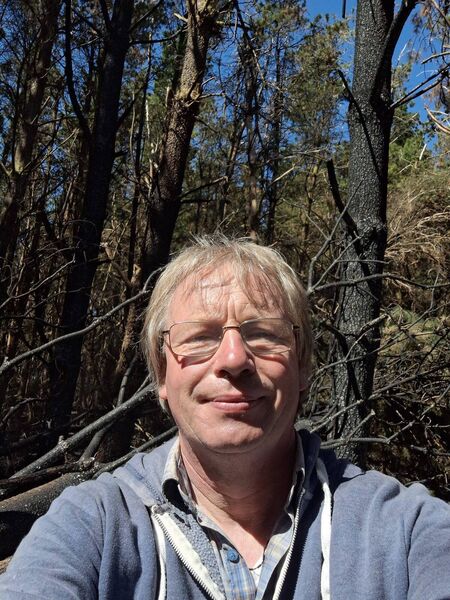
Those fallen trees helped the raging wildfire spread because “the lying trees burned quicker, and the fire was able to get a grip much easier”.
He noted that this was the second major fire in the area in the last six weeks, fires which had led to a very stressful period for local communities.
From his own perspective, the fires have badly damaged 10 acres of his plantation with some of it completely destroyed.
He likened the destruction to “a scene out of Armageddon” when he arrived at his forestry after getting a call about the fire outbreak on the afternoon of Sunday, May 18th.
A full assessment of the extent of the damage to his trees still has to be carried but even at this early stage, he concedes that he will suffer a substantial financial loss.
“I can’t quantify it fully at the moment. I was already carrying a financial hit after the storm,” he said.
Fearing that he has lost about 10% of his forestry, he conservatively estimates that each acre could fetch €7,000 at a minimum.
He may be able to claim a percentage back on insurance but admits the investment value will continue to fall given that he now wants to sell the forestry as quickly as possible, even before it reaches its full maturity in five years time.
“The forest is not attractive to a buyer now because it's a fire risk and it's got to be cleared earlier than it should be,” he said.
He is determined to sell of his investment prematurely as it’s no longer the retirement option that he envisaged.
“In the context of being a forestry owner, it's constant anxiety and stress at the moment, so every summer we're worried about fires and then storms in the winter.
“There’s no doubt in my mind that I will clear-fell the entire crop this Autumn for my own mental health because I don’t want to go through this again,” he said.
As he notes the saying ‘never waste a good crisis’, he is also conscious that there may be people out there looking to buy forestry at discounted rates at a time when farmers are stressed and want to get rid of their investment.
From a national policy perspective, Michael strongly believes that the Government and Forest Minister Michael Healy-Rae must radically review the current landscape.
“If the Government ever want farmers to be serious about having forestry as part of their holdings, they need to think about a way of mitigating all of these things that I have mentioned.
“They need to hear our stories. This is not just about monetary value. This is the constant stress about worrying about is there going to be a storm, is there going to be a heatwave.
“Strategically, what is the role of farmers in our national forestry policy? We want to see the Department of Agriculture to sit down and talk to people.
“I think one of the issues since Storm Éowyn is that it has been very hard to get accurate information in terms of what is the best thing to do with your forestry.
“We need clear information so that we can make sound decisions rather than out of fear or emotion.
“We also need a proper safety assessment of forestry, and that people would be supported to get the proper fire-breaks in around their forestry,” he said.
Michael also believes that the offer of compensation should be on the discussion table.
“There should be a compensation scheme. If I sell my forestry and it has dropped twenty per cent in value, they could bridge some of that,” he said.
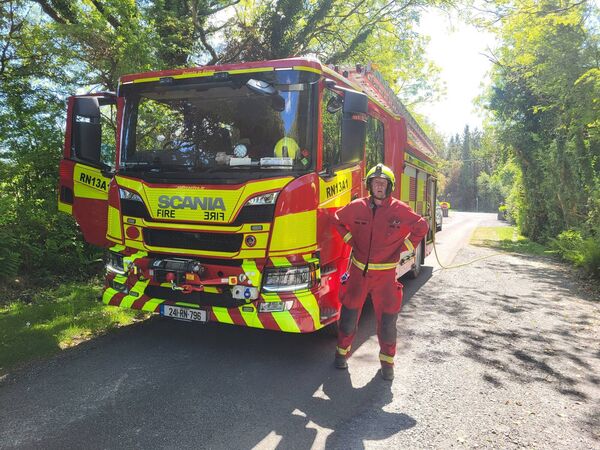
He was keen to acknowledge the trojan efforts of local fire crews in tackling the series of major fires over the last number of weeks.
“You can't speak highly enough of the fire services,” he said.