I’m Irish and I’m proud
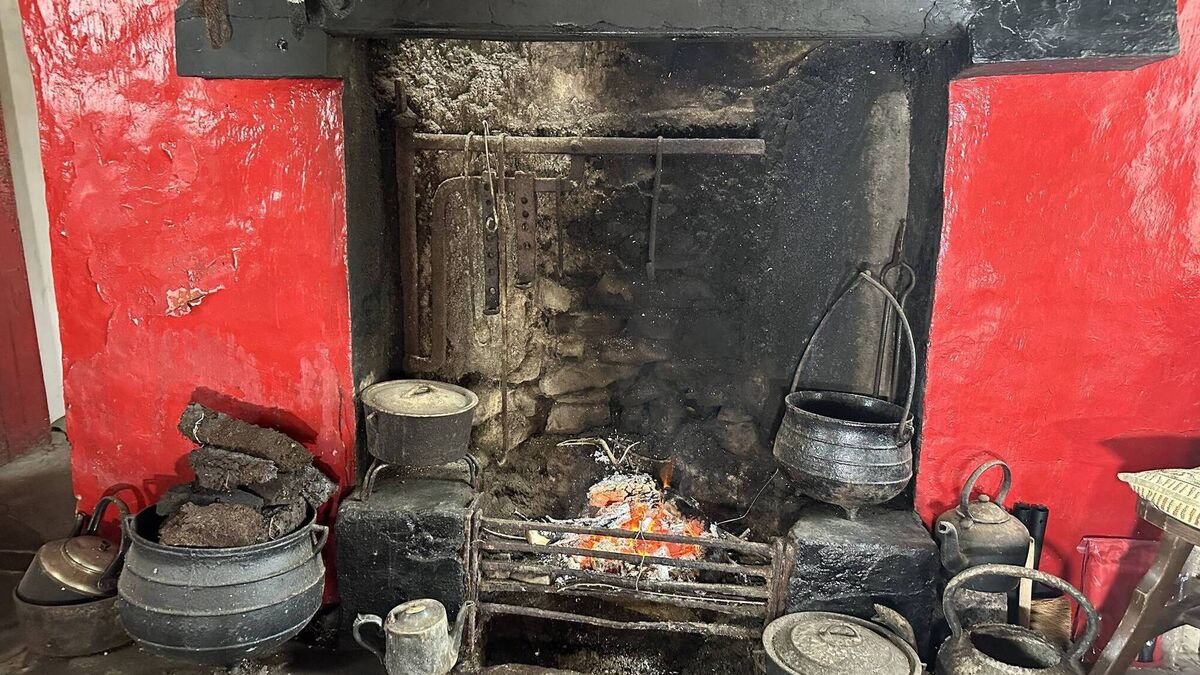
The open fire in the old cottage is a window into the past of true Irishness for Alan Beirne.
St. Patrick’s Day is without doubt one of my favourite days of the year. For me it’s not about the big parades, bunting or loud noise. I tend to focus more on what it means to be Irish and reflect on the struggles and battles the generations before us had to endure, to give us the life we have today, and the right to celebrate our heritage and culture.
I consider myself very lucky in that our family has a cottage outside Loughglynn village, which was built in 1749. It has lived on in its original condition for the 9th generation descendants to be able to visit (my children included). The thanks for this go to my father and aunt.
It’s a hideaway escape from the everyday hustle and bustle, noise, and nonsense from the modern day outside world. It’s my oasis of tranquillity and a place I have visited for as long as I can remember. It gives me perspective and balance in what I sometimes perceive to be an artificial and plastic modern world. It’s authentic and real, not filtered or Instagram ready!
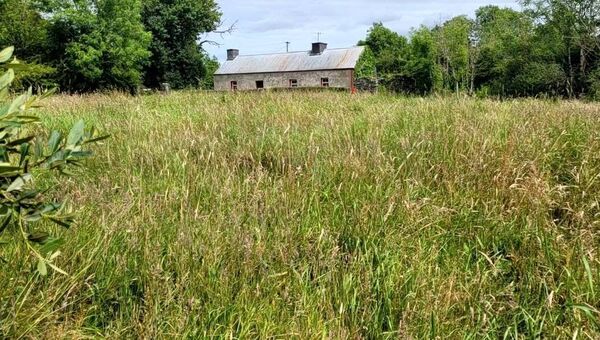
My first early childhood memory of the cottage is walking down through the many surrounding fields with my father and brother to the well for water. We then trudged back with heavy buckets splashing to my granduncle Thady (who was the last person to live there) as he laughed at our struggles while making short work of a warm bottle of Guinness!
On my most recent visit to the cottage I sat quietly in a chair next to the open fire. The silence was soothing as the thick walls ensured that even if I wanted mobile phone signal, I couldn’t get it. I stare out the small cottage window to see the land that my great grandfather Michael and those before and after him slaved on in order to feed their families and make ends meet. I look to the open fire with the black overhanging crane. It acts as a window into a past Irish life. I imagine the conversations that occurred around it, the 30 children born next to it, along with the great stories, laughter and music that kept them all entertained in the hardest of times.
My attention turns to the black cast iron pots and I think about the daily meals my great grandmother Hanoria O’Brien prepared for her hungry family as she picked spuds from the land before her, collected eggs from the hen house out the back, meat from the animals they reared and milk from the cows they nurtured.
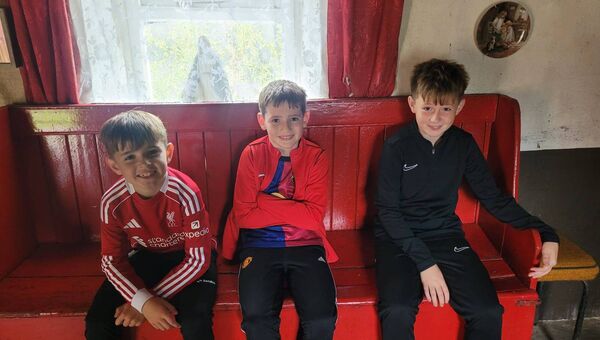
As I stare over at the red settle bed, I remember my late grandmother Mollie who worked daily in Loughglynn Convent and came home to lay her weary head beside her sister Helena each night on that very settle bed. I think of the horror the house endured when my grandmother woke up on that settle bed to find her 21-year-old sister lifeless after having a brain haemorrhage during the dark of night.
I also recall my grandmother taking about her brother Michael Junior who lost his life at only 33 years of age to an appendix infection.
The overworked tools for the land that remain outside and over the red cottage door act now as statues to the men of the house that worked the land. The aroma from the oil of the Tilley lamp that still burns in front of the picture of Our Lady is a nod to the deep religious faith that was rooted in all souls and kept everyone going in the darkest of times.
I reflect on some of the major events that this house, its people and it’s old stone walls experienced: the Penal Laws to 1782, the Irish Rebellion of 1798 (Wolfe Tone), the Irish Rebellion of 1803 (Robert Emmet), the Typhus epidemic of 1817 – 1819, the Cholera Epidemic 1832-1833, the Big Wind of 1839, the Great Famine 1845-1852, the Fenian Rising of 1867, Word War 1 -1914-1918, the 1916 Rising, the War of Independence 1919-1921, the Civil War 1922-1923, World War 2 - 1939-1945, the Blizzard of 1947, Hurricane Debbie 1961, the Good Friday agreement 1998, the Covid 19 Pandemic 2020-2022 and Storm Éowyn 2025.
My attention is then drawn to my great grandfather’s hat that sits at the top corner of the bright red kitchen dresser. I feel a connection to a man I never met as if he’s just left the cottage to run an errand. I wonder what he would make of modern-day Ireland.
This St. Patrick’s Day, it might be worth taking a quiet moment to reflect on your Irish heritage or to chat with a family member who may remember even more. You never know — you could be the one to pass those stories on next.
Our heritage and where we come from are essential parts of who we are; they must be remembered, honoured, celebrated, and never allowed to fade.
Lá Fhéile Pádraig - I’m Irish and I’m proud – celebrate it and hold on to it, no matter what.
*In memory of the O’Brien family Moyne who also sat and read the Roscommon Herald in the walls of a small Loughglynn cottage since the paper was established 1859.