Jury to begin deliberations in farmer’s animal welfare trial
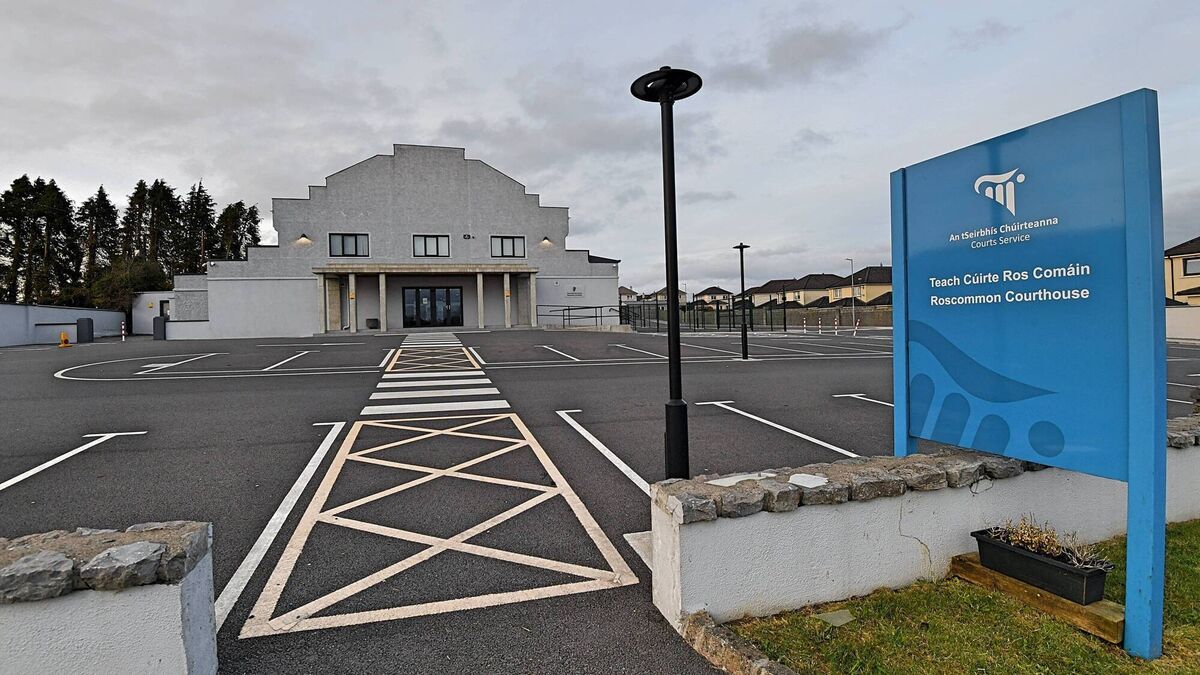
Roscommon Courthouse. A jury will begin deliberations on Friday morning in the trial of a farmer and his company accused of a combined total of 78 animal welfare offences.
A jury will begin deliberations on Friday morning in the trial of a farmer and his company accused of a combined total of 78 animal welfare offences.
Closing speeches were delivered at Roscommon Circuit Court today, Thursday, with the prosecution urging jurors to accept veterinary evidence of welfare breaches and the defence arguing that departmental restrictions and disease left Sean Coughlan doing his best in difficult circumstances.
Mr Coughlan, of Cum, Lahardane, Ballina, County Mayo, denies 40 charges personally. Coughlan Farming Ltd, for which he is sole director, denies 38 charges concerning animals kept at Laragan, Elphin, County Roscommon, in 2022.
The allegations include keeping dead calves with live animals, keeping animals on wet and unhygienic bedding, allowing cows to be milked in unhygienic conditions, neglecting or being reckless regarding animals’ health and welfare, and failing to dispose of carcasses properly.
Mr Coughlan also faces two charges of failing to comply with animal welfare notices.
In his closing speech, prosecuting counsel Sean O’Quiggley BL, instructed by State Solicitor for County Roscommon Kieran Madigan, said departmental witnesses had given thorough and consistent evidence.
He argued that veterinary inspectors Arthur O’Connor, James Casey and Treasa McManus were knowledgeable professionals whose accounts were supported by photographs, videos and records identifying animals requiring attention.
The jury did not have to accept evidence simply because a witness was an expert, he said. However, he submitted that the inspectors had answered questions directly, while Mr Coughlan had struggled to explain some of his assertions.
He challenged Mr Coughlan’s suggestions that departmental witnesses were biased or inadequately trained, noting the latter allegation had not been put to them.
Mr O’Quiggley said the condition of the bedding was a significant issue. Inspectors described wet sludge or slurry, while Mr Coughlan and former employee Saoirse McGovern maintained it was bark mulch.
He urged the jury to consider videos in which the wet condition could be seen and heard as an inspector walked through it.
There were also competing accounts of how long two dead calves had remained with live calves. Mr O’Connor believed they had been dead for more than a couple of days, while Mr Coughlan suggested they had died that day.
Mr O’Quiggley said the inspector had explained why he did not believe birds accounted for the calves’ apparently missing eyes.
He also referred to evidence of an emaciated cow lying in an unnatural position and photographs of skeletal and decomposing remains.
Mr O’Quiggley argued that the dispute over herd registration and the whereabouts of Mr Coughlan’s calving book did not explain the animals’ conditions. He said inspectors had acknowledged matters which were not concerning and requirements with which Mr Coughlan had complied, demonstrating fairness.
The defendants were presumed innocent, he told the jury, and the burden of proving each charge rested with the prosecution.
Closing for Mr Coughlan, Patrick O’Sullivan BL, instructed by Kamal Vaid, urged jurors to consider how and why difficulties developed on the farm.
He said Mr Coughlan’s farms in Roscommon, Mayo and Clare had distinct functions within an operation which had worked before restrictions prevented cattle movements.
Calves would ordinarily have moved to Mayo at approximately three months old, he said. Instead, facilities designed for approximately 140 or 150 calves had to accommodate 450. Mr Coughlan was also recovering from an injury which restricted his ability to work, he said.
Mr O’Sullivan referred to veterinary surgeon John McCourt’s evidence confirming Mycoplasma bovis in the herd, a disease which was difficult to identify and associated with pneumonia and lameness.
Ms McGovern’s evidence was that sick animals were isolated, while a lame cow shown on slats could move to the bedded area rather than being confined to the concrete.
Mr O’Sullivan also said Mr Coughlan had never intended to hurt an animal and had done his best to comply with notices. Some requirements, including roofing an exposed area over Christmas, presented practical difficulties.
Closing for Coughlan Farming Ltd, Fergal McMorrow BL, instructed by Matthew Kenny, disputed aspects of the prosecution’s characterisation of the evidence.
He said Mr Coughlan’s explanation that the bedding was bark mulch had been given during his 2023 interview and was consistent with his trial evidence.
Mr McMorrow also argued that the three farms were designed to accommodate animals at different stages of their lives and had operated successfully before the additional herd number was imposed.
He urged jurors to consider the proportion of animals in good health, submitting that more than 95% were healthy despite the pressure on accommodation.
The photographs focused on particular areas within a farm of approximately 700 acres, he said, rather than showing the overall operation.
He also reminded jurors that Mr McCourt, a prosecution witness, had confirmed the presence of Mycoplasma bovis.
While Mr Coughlan was responsible for his farm, Mr McMorrow argued that the jury had to consider the other factors affecting the business and its animals.
Beginning his charge, Judge Kenneth Connolly encouraged jurors to examine the evidence and facts in deciding whether the prosecution had proved its case beyond reasonable doubt.
Judge Connolly will conclude his charge on Friday morning and the jury will then begin their deliberations.
*Published as part of the Court Reporting Scheme