Lack of neurorehabilitation teams failing people in Roscommon
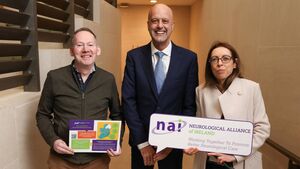
Pictured at a meeting in Leinster House, calling for urgent funding for community neurorehabilitation teams, were Mags Rogers, CEO of NAI, Martin Daly TD and Eamon McPartlin, patient advocate and board member at the NAI.
Six years on from the government commitment to deliver nine fully funded community neurological rehabilitation teams across the country, the rollout has been beset by delays, with most areas of the country including Roscommon still without any access to a team.
That’s according to the Neurological Alliance of Ireland (NAI), the national umbrella body for 40 neurological organisations, who recently met with TDs and Senators at Leinster House, to call for their renewed commitment in delivering on the targets outlined in the 2019 Neurorehabilitation Strategy. As National Brain Awareness Week marks its 20th year (March 10th – 16th), the NAI underscores the urgent need for dedicated community neurorehabilitation teams to address this critical issue.
There is now a significant regional inequity for patients in Roscommon who have no access to community neurorehabilitation teams in the West of Ireland because of a lack of funding.
The National Neurorehabilitation Strategy published in 2019 committed to delivering specialist community teams and long-term neurorehabilitation services across the country, as well as addressing the shortfall of 171 specialist inpatient neurorehabilitation beds.
Of the nine Community Neurorehabilitation Teams the government committed to establishing in 2019 three have not received any funding to date, (Midlands, North Dublin and South East) while the North West team has only three posts funded compared to the 12 that should be in place.
Magdalen Rogers, CEO of the Neurological Alliance of Ireland said: “Neurorehabilitation is a vital service to enable people in Roscommon with neurological conditions to live their day to day lives. We’re calling on the Government to announce a commitment to funding four community neurorehabilitation teams in this year’s Budget. We want to see this commitment during their first 100 days in office, to send a clear signal they intend to deliver on the pledges within the Programme for Government to complete the national rollout of community neurorehabilitation teams and to developing more specialist inpatient rehabilitation beds and implement community based multidisciplinary rehabilitation services in each HSE Regional Health Authority Area”.
NAI is calling for funding in the upcoming Budget for full community neurorehabilitation teams for the North West, North Dublin, South East and Midlands, promised since 2019.
Patient advocate and NAI board member, Eamon McPartlin from Leitrim, who lived in Galway for many years, explained the importance of access to neurorehabilitation teams to Oireachtas members.
“I was diagnosed with Functional Neurological Disorder (FND) in 2021, although symptoms actually began to appear a lot earlier in my thirties. Even before I received my diagnosis, the condition led to me having to give up my work as an engineer and ultimately to my marriage ending and I know that from speaking to others, the consequences of living with a neurological condition can be even more difficult to deal with than the condition itself.
“Accessing multidisciplinary treatment including physiotherapy, psychology and occupational therapy through community neurorehabilitation teams, without having to travel huge distances is vital. It allows people living with a neurological condition to receive treatment locally without they or their family having to take significant time off work or spend lots of money on travelling and accommodation. For some depending on where they live in the country the community neurorehabilitation team may be their only option to access the services they urgently need to support them in living a better quality of life."