Roscommon Bar Association welcomes end to legal aid dispute
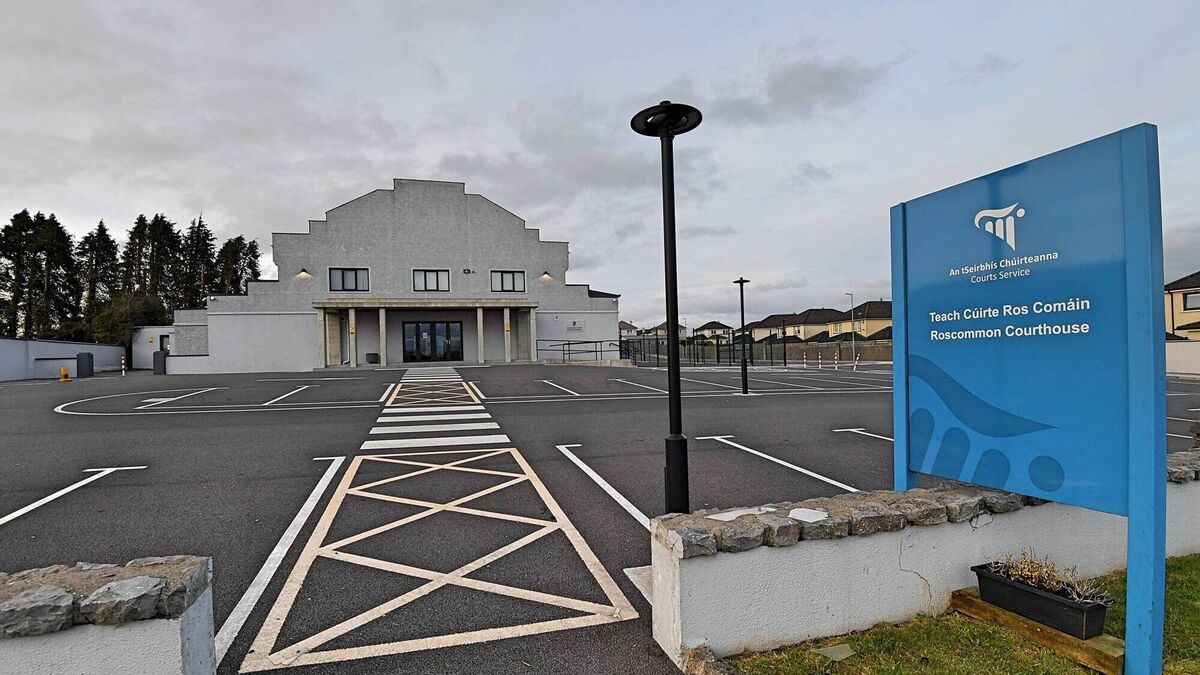
Roscommon Courthouse located at Racecourse Road, Roscommon. Pic: Gerard O'Loughlin
The President of the Roscommon Bar Association has welcomed the resolution of the long running dispute over the legal aid scheme.
The Law Society of Ireland and the Department of Justice reached an agreement yesterday evening, ending the long running withdrawal of services to criminal legal aid cases.
This dispute has led to hundreds of cases being adjourned and delayed in the county since July.
The dispute centred on the introduction of a flat fee of €520 per accused person, regardless of the number of charges, the connection between the charges or the number of court appearances.
In a significant ruling last week, elements of the new scheme were criticised as unfair and illogical by the High Court.
Roscommon Town solicitor Sean Mahon welcomed the agreement, but said the dispute could have been avoided completely.
“It was the most ridiculous thing,” he told the Herald today. “What was agreed was what solicitors were seeking back in July and August.” He was critical of the Minister for Justice Jim O’Callaghan’s handling of the dispute, saying he believed it was “political play from the get go”.
“These schemes have been operating for years but the way the minister decided to introduce these changes, it was like a red rag to a bull,” he said, adding that the High Court would not have made those comments lightly. “They were putting a shot across his bow. This could and should have been resolved in August, but instead of engaging with us, he buried his head in the sand, allowing it to descend into this chaos, especially in the busier courts.”
Mr Mahon was particularly critical of some of the minister’s remarks claiming rape trials were being deliberately targeted by the withdrawal of services.
“He may have been of the opinion that the scheme needed to be changed but the way to do that was through negotiation and not acting unilaterally and expecting everyone to fall into line,” he said. “Then when they don’t fall into line, you don’t make accusations of effectively professional misconduct and that the solicitors were working the system.”
He said that the legal aid scheme was probably in need of reform but the “way the minister went about it was the problem”.
In a statement, the Department of Justice said the agreement was reached after “extensive talks between the parties”.
It said that the district court flat fee payment structure remains and there will no longer be multiple certs granted for separate and distinct cases.
However, there will be enhanced payments made under the flat fee structure for separate and distinct cases involving two or more charges which are brought on the same day.
There will also be an enhanced single flat fee payment for cases which are often elongated. These are domestic violence cases, juvenile cases and cases where the accused is placed in custody before trial.
Minister O’Callaghan said he was very pleased that an agreement has been reached.
“The reforms which were the basis of the changes I implemented in July remain,” he said. “This includes the flat fee model which removes the appearance-based fee structure and the ending of multiple certificates for one accused. This will result in a more efficient and cost-effective criminal justice system. This was the purpose of the reform I introduced.
“I want to thank my officials and the Law Society for their work on this agreement, and I look forward to the solicitors who had withdrawn their services returning to work.”