Roscommon's American Civil War stories
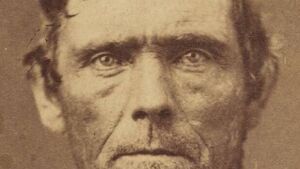
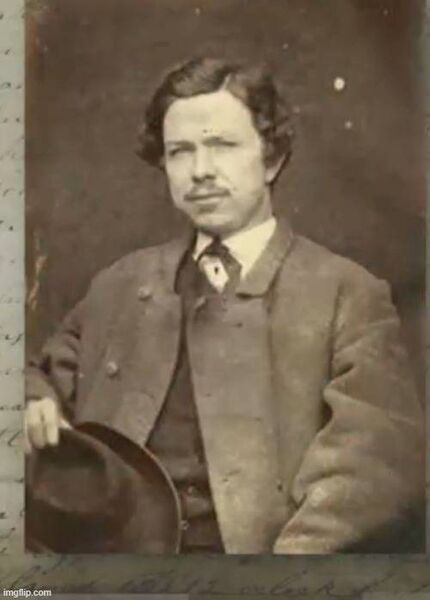
Martin Kelly, a Rosommon emigrant who lost his arm in the American Civil War.
Some of the stories of the Roscommon men who fought in the bloody and seismic American Civil War can now be viewed in an interactive map.
Noted historian and archaeologist Damian Shiels has carried out extensive work on Ireland’s role in 19th century conflict. He has recently released the with biographical info and addresses of more than 700 women, men and children who received US pensions in 19th century Ireland.
During Heritage Week in August 2023, Damian, in conjunction with Roscommon library, held an online presentation on ‘Roscommon’s Voices from the American Civil War’.
In the presentation, Damian outlined that in Roscommon's modern history, it is likely no conflict surpassed the American Civil War for the number of men in military uniform.
“There is no conflict outside of the First World War in modern Irish history, that compares,” he said.
In terms of Roscommon, there were a number of high profile people involved. One of whom was Brevet Brigadier General Thomas Curley. He was born in Tremane on May 8th 1820. He emigrated to the US in 1851, where he settled in Missouri. A policeman before the war, he fought in the Western Theatre in places like Tennessee and Georgia.
“He was breveted in March 1865 for his conduct during the war,” explained Damian. After the war he moved further West to Wisconsin in 1865.
“He worked as a farmer, a railway postal clerk, and as an employee in the Wisconsin State House. Most Irish were Democrats, and he was elected in 1882 on the Democratic ticket to the Wisconsin State Assembly and died in Madison, WI in 1904.”
Another Roscommon man who attained the rank was John O'Dowd. While it is not known where in the county he was from, what is known is he served as a captain in one of the ethnic Irish ‘green flag’ units for a time.
Martin Conboy, who was born in the county in 1833, received the Medal of Honour for his bravery at the battle of Williamsburg.
“It was not a very famous battle but it was a battle that absolutely annihilated an awful lot of New York Irishmen in particular. New York regiments took a huge beating at the Battle of Williamsburg in May of ‘62, and lots of Irishmen died at it, but Martin Conboy came through it and received a Medal of honour in later years in 1892, based on his actions.”
Roscommon born Fr Peter Cooney was also one of the most important Catholic chaplains during the war.
He settled in Michigan as a child and studied at Notre Dame. He became a priest in 1859 served as a chaplain in the war’s Western Theatre.
“His letters survive the conflict and are in Notre Dame to this day,” Damian said.
Another Roscommon priest, Fr John Bannon from Roosky, served as a chaplain with the Confederacy. He moved to St Louis in Missouri in 1853. He was sent to Ireland by the Confederate President Jefferson Davies to stop Irishmen, emigrating to the US, from joining the US Army.
“He was given money to put ads into Irish newspapers and he handed out pamphlets at different emigration ports. He also sought Papal recognition of the Confederacy as well. He stayed on in Ireland after the war and became a Jesuit. He died in 1913 and is buried in the Jesuit plot in Glasnevin.” However, the most significant Roscommon man during the war in Damian’s opinion was Brevet General James Rowan O’Beirne from Ballagh.
“He also received the Medal of Honour for his actions at the battle of Chancellorsville where he was left for dead after being hit in the head, chest and leg,” Damian said. But the most important role he played was he led the manhunt for President Abraham Lincoln’s assassin.
“He was the Provost Marshall in Washington DC when John Wilks Booth shot Abraham Lincoln in Ford’s theatre. He was responsible immediately for both the president’s body and the initial hunt. And we are actually left with an account of O’Beirne of the death bed.”
In recognition of his service, he was given a number of important posts after the war, including the management of Ellis Island.
From Donamon, James Cunniffe, who was wounded in the war and lost a leg in Mississippi, returned home, as did Simon Dowling.
“He went back to his home village of Kiltoom. He was 38 years old when he enlisted in New York in 1862. He was discharged for disability in August the following year. He'd been injured in the abdomen, which is why he received his disability discharge.”
James McDermott, who featured in one of the famous Fenian mugshots, returned home to Boyle.
“He was a soldier who had served as an officer in the six Connecticut infantry and later in the 99th New York State Militia, which was the Fenian unit, led by John O’Mahony.”
Damian concluded his fascinating talk with the image of Roscommon man, Martin Kelly.
“I did some research on Martin Kelly the subject to this image and we can tell quite a bit about him. We know he was born in Roscommon on the 19th of April 1819, four years after the Battle of Waterloo. He was in his 40s by the time this photograph was taken in the war. It was a medical record shot of people who have been injured in the conflict. Some of the most striking images of the war were taken in that way.”
It is known that he emigrated to the US before the Famine and was in the US in the summer of 1841, joining the army. He served in the US Mexican War of 1846 to 1848.
“He then goes to California. The degree to which this man is seeing the world, and particularly seeing the new world, is quite remarkable. He's now seen, by the time he was in California,10 years military service. He was discharged at San Joaquin River in California, along with his family, but they all moved back to Buffalo, New York.”
He then re-enlists before the start of the civil war. When it does break out, because of his experience, he is used to help found a new regiment, the 16th United States Infantry and he's sent to the Western Theatre.
“So again he's one of these people fighting out in places like Tennessee. He was at a place called Stones River just outside Murfreesboro in Tennessee on the 31st of December 1862. It is one of the biggest battles of the war. He was struck in the left arm by a Confederate bullet. We know it entered his shoulder from the front left before passing out through the lower part of his shoulder blade.”
In an effort to save his arm, the surgeons removed the head and upper 3rd of his humorous bone, though his limb would be permanently useless. It is while recovering from this wound that this photograph was taken. He died in October 1885, this old wound the official cause of death.
“I will end it there with the story of this remarkable image,” said Damian. “We've heard quite a number of the voices, but it's also quite incredible to see an image of one of these early immigrants. Someone who had left Ireland even before the Famine struck it. And because of the mishap that occurred to him during the conflict, we've been left with quite a remarkable record of his life.”