Sepsis survivor Sophie urges awareness of the signs and symptoms of sepsis
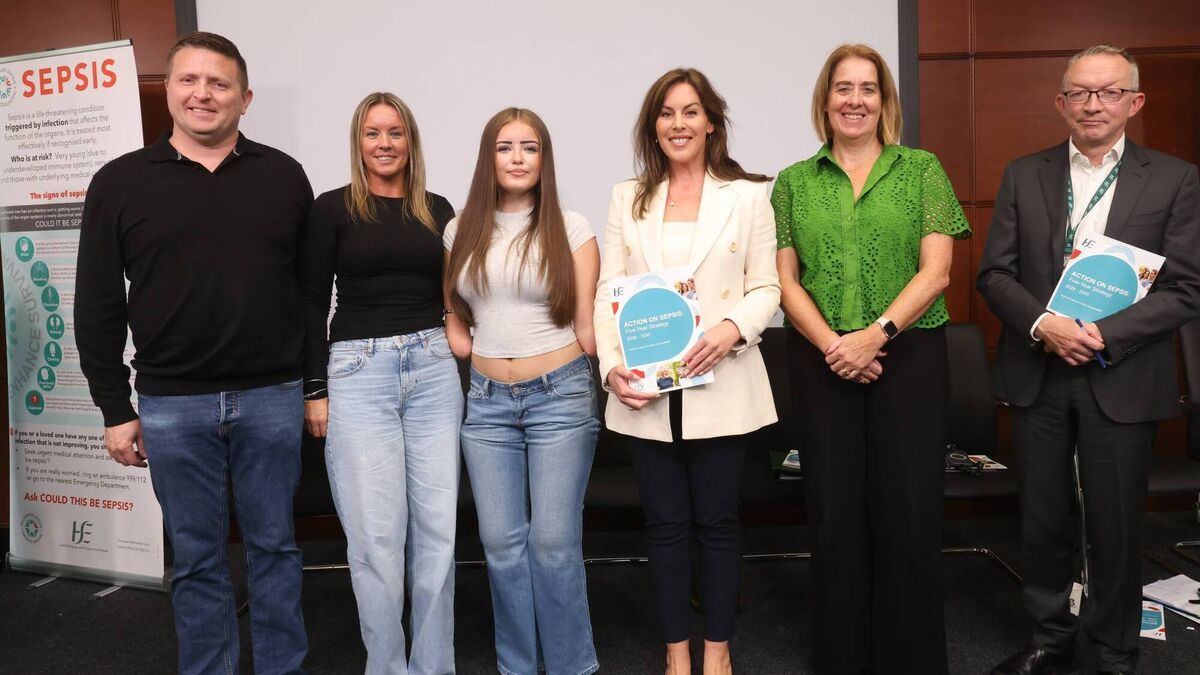
Pictured at the launch of the HSE’s Action on Sepsis strategy Keith, Laura and Sophie Lanigan, Minister for Health Jennifer Carroll MacNeill TD, Anne O’Connor, HSE CEO and Dr Colm Henry, Chief Clinical Officer, HSE
September is Sepsis Awareness Month, an annual global campaign held every September to educate the public and healthcare providers about recognising the early signs of sepsis.
In December 2022, Sophie Lanigan (16) contracted sepsis after a bacterial infection. Within 24 hours, Sophie’s condition deteriorated and she was rushed to CHI Temple Street, where she was given blood transfusions and put on a ventilator. The medication that was needed to save Sophie’s life caused a lack of blood supply to her hands and feet, and as a result in January 2023, Sophie’s four limbs had to be amputated.
Sophie says: “I’ve had to relearn everything: writing, using my phone, brushing my hair. All the everyday things that you don’t think about. It’s been hard, but I’ve learned a lot, and with the support of my family and friends, I’ve learned to adapt. I visited Dáil Éireann recently to help raise awareness of sepsis and will continue to do so. Everybody should be aware of the signs and symptoms of sepsis.”
Sophie shared her story at the launch of the HSE’s Action on Sepsis 2026-2030. The strategy will focus on key areas including prevention, improvements in support for survivors, improving treatment, knowledge, research and governance.

Last year there were almost twelve thousand cases of sepsis and septic shock in Irish hospitals, a rise in cases from 2024. The mortality rate from cases last year stood at 21.2%. *Globally, it is estimated 20% of deaths are caused by sepsis.
Sepsis is a potentially life-threatening complication that can hide behind any infection. It can affect anyone of any age and can lead to rapid deterioration in health. Sepsis is treatable if it is identified and treated early. Without quick treatment, sepsis can lead to multiple organ failure and death. If you suspect you or someone you know has sepsis, seek urgent medical care and always ask, ‘’
Helping to launch the report Minster for Health, Jennifer Carroll MacNeill TD said: “Sepsis is one of the biggest challenges facing healthcare in Ireland, and across the world. I am delighted to launch the Action on Sepsis strategy and to recognise the work in improving standards in sepsis treatment, guidelines and in raising vital awareness of the signs and symptoms of sepsis both within the healthcare profession, and among the general public.”
Michael O’ Dwyer, Clinical Lead, HSE Sepsis Programme added: “Sepsis is an ever-evolving challenge in terms of recognition and treatment. We can always improve in our role as healthcare providers and this strategy will help in that regard.
“Everybody has a role to play in combating sepsis and ensuring people are equipped to recognise the signs and symptoms, and when sepsis occurs, healthcare is the best it can be in terms of interventions and supports, both short and long term. We thank Sophie sharing her journey with us and for all her work on raising awareness of sepsis.”
Colm Henry, Chief Clinical Officer, HSE added: “Sepsis is a significant cause of morbidity and mortality in hospitals and communities. Some cases are avoidable through earlier detection. Our Sepsis Strategy aims to improve awareness and timely action to enable earlier identification and treatment and lead to improved outcomes.”
The five-year strategy is grounded in Irish data and international best practice. It builds on the work to improve sepsis treatment and awareness since the establishment of the National Clinical Programme (NCP) for sepsis in 2014.
Signs and symptoms of sepsis Signs and symptoms of sepsis in adults (including maternity) are:
- slurred speech, new confusion, too sick to communicate, drowsiness
- extreme shivering, muscle aches, fever
- has not passed urine in the last 12 hours and does not feel like passing urine
- shortness of breath, lips tinged with blue, feels like your heart is racing, dizzy when you sit or stand
- I feel like I'm going to die
- skin mottled and discoloured, new rash that is still visible when pressed on with a clear glass (glass test).
The signs and symptoms of sepsis in children are:
• Very fast breathing
• Fits or convulsions
• Mottled skin (irregular colour), bluish or pale
• A rash that does not fade when you press it
• Unusually cold when you touch them wake
• Very sluggish, unusually sleepy and hard to wake
• Has had no pee for more than 12 hours.