Fallon's Town Talk: Controversy engulfs two Irish institutions
The RTÉ licence fee payers and the ordinary staff who backbone the national broadcaster must think they have returned to a nightmare from the summer of 2023.
It has been a rough week for two Irish institutions who are celebrating their 100th anniversary. RTÉ and Fianna Fáil have been part of the fabric of Irish society since they were established in 1926.
Fianna Fáil actually celebrated its centenary last weekend at its Ard Fheis. The build-up to the Ard Fheis was overshadowed by comments from former Taoiseach and FF leader Bertie Ahern that there are “too many” immigrants coming into Ireland when he was canvassing on behalf of the FF candidate in the upcoming Dublin Central by-election.
The party’s current leader, Micheál Martin, was able to get away without suffering too much collateral damage given that he and Ahern aren’t close and he was able to criticise his predecessor without opening up any new fissures in the party.
Of greater concern to the Taoiseach was the possibility of a challenger emerging to his leadership over the course of the Ard Fheis, but that didn’t happen either. FF activists have already resigned themselves to potentially disastrous showings in this week’s by-elections and that has already been factored into any discontent with Martin.
No leader can be sure of what controversy or political storm lies around the corner, but Martin’s position appears safe until after Ireland’s presidency of the EU which covers the second half of this year. In the 100 years of the party’s existence, Martin is now the second-longest serving leader, surpassed only by FF’s founder, Éamon de Valera.
Martin looked to be in real trouble during the fuel protests, but, as has been the case throughout his long stint as party leader, no credible challenger emerged to take him on.
Some of his potential successors wouldn’t fill the Irish people with too much confidence if, for example, they had to enter the bearpit of a White House press conference with President Trump.
The supposed leader-in-waiting, Jim O’Callaghan, suffered greater backlash than even Martin for his call to bring in the Irish Army during the fuel protests. It now suits O’Callaghan to sit tight for a while.
What has changed in the dynamic is that other potential leadership candidates have emerged, most notably the Minister for Social Protection, Dara Calleary. Norma Foley is also being touted although the possibility of Jack Chambers being a contender doesn’t sound plausible. What is clear is the race to succeed Martin is no longer confined to one horse.
Nonetheless, Martin’s position is bombproof compared to his counterpart across the water, Keir Starmer. Labour, a party who won 411 seats in the 2024 general election, suffered a mauling in recent local elections.
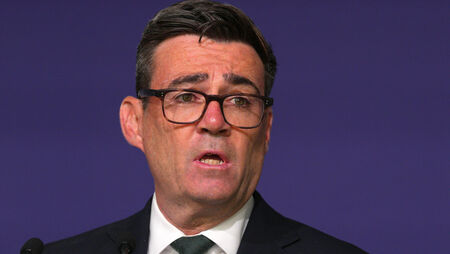
The British prime minister is hanging on through the grace of others and the extraordinary situation that his most popular challenger, Andy Burnham, isn’t even a MP. It’s death by a thousand cuts for Starmer as Burnham tries desperately to get himself elected to Westminster in an area where Nigel Farage’s Reform Party romped to victory in the local elections.
Turmoil in British politics is the norm since Brexit in 2016, but while Starmer is reviled at home, he is respected in Ireland. He has done a good job restoring Irish-British relations to the stable place they were in pre-Brexit. He has also tried to move Britain closer to the EU, which is further good news for Ireland. The spectre of Nigel Farage ending up in 10 Downing Street is a nightmare neither Ireland nor the EU wishes to contemplate.
The RTÉ licence fee payers and the ordinary staff who backbone the national broadcaster must think they have returned to a nightmare from the summer of 2023. It turns out that presenter and producer Derek Mooney had been mistakenly excluded from RTÉ’s annual list of top ten earners between 2020 and 2025.
It was also revealed that Claire Byrne and Ray D’Arcy were paid a combined €97,000 after they ceased presenting their radio shows. Eighteen people were paid more than €200,000 in 2025. For the public, it feels as if nothing has changed in the culture of RTÉ after all the promised reforms in 2023.
The station’s own reporters could barely conceal their frustration and anger when interviewing their own bosses last week.
Presumably, that will be nothing compared to the grilling when RTÉ director-general, Kevin Backhurst, comes before the Oireachtas Media Committee this week.
RTÉ bosses will also meet with tough-talking Minister for Culture, Communications and Sport, Patrick O’Donovan. The public will expect O’Donovan to walk the walk rather than just talk the talk. It’s simultaneously fascinating and dispiriting.