Herald Opinion: A great week to be a Rossie
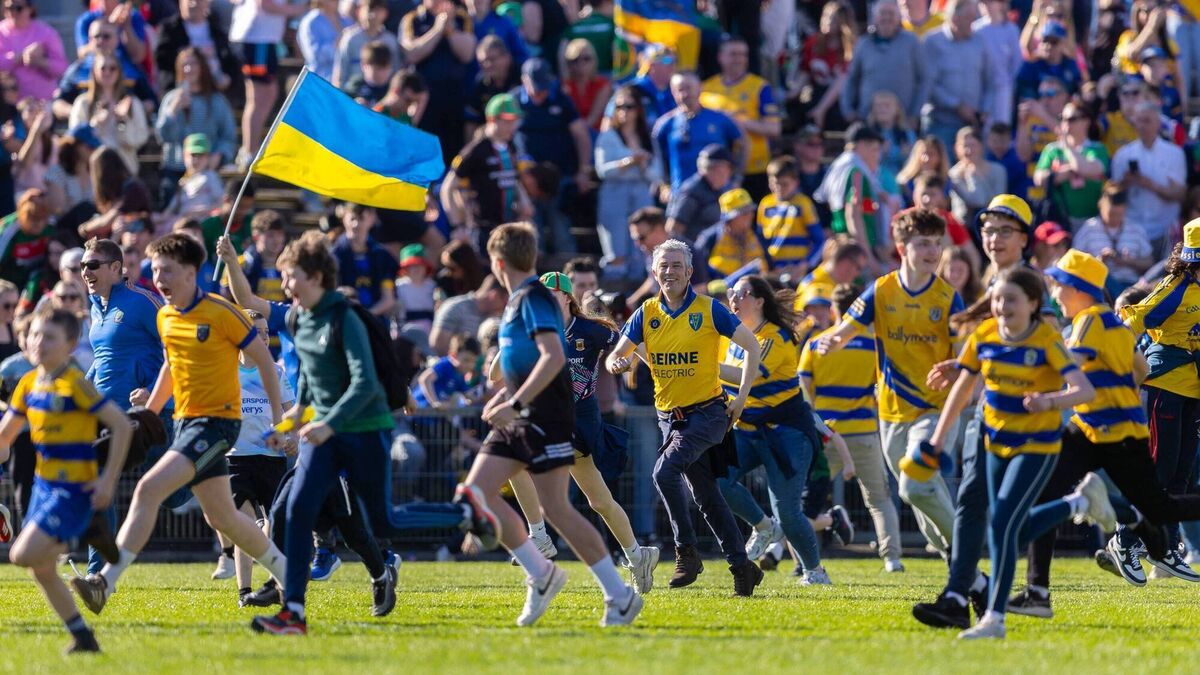
ROSSIE INVASION: Roscommon supporters, young and old, invade the pitch in the aftermath of the victory against Mayo at Hastings Insurance MacHale Park, Castlebar. Pic: INPHO/Tom O’Hanlon
The week that just passed was a great one. In truth, any time you win a Connacht championship match is a good day, but when you lower the Mayo colours on their own grass in Castlebar, it carries a weight that the history books don’t quite capture—especially for those of us living along the border.
In Ballaghaderreen, the Mayo folk enjoy the bragging rights just as much when the tide is in their favour. And, in fairness, their levels of enjoyment have been significantly higher than ours for a few years now. But after last Sunday, we Rossies finally walked with that unmistakable "winners’ spring" in our step. The “winners' walk,” if you like.
As I drove home from Castlebar through Ballagh, I felt a quiet thrill turning at Flannery’s Corner. As I passed the home of the late Mick McCormack, I couldn't help but look toward the window and think, “I’m sure you’re smiling tonight, Mick.” It was a simple, familiar, and deeply satisfying moment.
By Wednesday, it was more of the same. Another trip, this time to the old, maroon walls of Tuam Stadium, and another Roscommon win over Mayo—this time in the Connacht U-20 final. It was one of the best games I’ve watched in years. There is a something magical about Tuam and finals. It brought me back to Easter Saturday 2015, when Diarmuid Murtagh was in full flow and Cathal Compton and Tadhg O’Rourke lifted the cup. I can still hear Mick Rock’s voice over the din that night, declaring we had witnessed “the resurrection of football.” That is the gift of sport: no matter the chaos elsewhere, it cuts through the noise. For a couple of hours, the world narrows to the white lines of the pitch, lifting the mood and giving us a language to speak that isn't heavy.
That’s because if you listen to the conversations beyond the match, the tone is different now. Stand and listen, you’ll hear it. People aren’t talking politics in any grand sense; they’re talking about the price of things, diesel, groceries, insurance, ESB, the everyday costs that quietly stack up. There’s no drama to it, just a steady wearing down.
With that has come a subtle shift. Not loud, not organised, but noticeable. The old loyalties don’t seem as fixed as they once were. People who might have voted the same way all their lives are a bit less certain now—not out of anger, but out of fatigue. That instinct to back the local person—the one who understands the rain and the roads—was once just a rural quirk.
But now, with by-elections on the way in Galway West and Dublin Central, you get the sense that something is shifting. The names on the ballot matter, of course — but not as much as they once did. People seem more interested in people not parties. They aren’t looking for a manifesto; they’re looking for an ally—someone who knows that when the price of home heating oil goes up, it isn’t a statistic, it’s a reason to stay at home.
Maybe that’s where the comparison with sport comes in. Sport is straightforward. You know where you stand. You win, you lose, and you accept it. There is an honesty in that—no spin, no ambiguity. That clarity is what people are starting to look for elsewhere.
Roscommon supporters had our week this time. Hopefully, we’ll keep that stride as we face Galway on Sunday. The Mayo supporters, will take it on the chin and look to the next day. That’s the rhythm of it; you’re up one week and down the next, and over time, the scores tend to balance themselves out.
Life, and certainly politics, isn’t always as honest as a game in Tuam, but the shift is just as real. As those conversations change in the shops and on the sidelines, people are quietly adjusting their feet, looking for a new way to walk. In the end, it won’t be the grand speeches that shape what comes next. It’ll be the small things—the familiar turn in the road at Flannery’s, the quiet thoughts for those who’ve gone before us, and the steady, ordinary talk of people who are starting to change their minds.