Herald Opinion: All Creatures Great and Small on the Yorkshire Dales
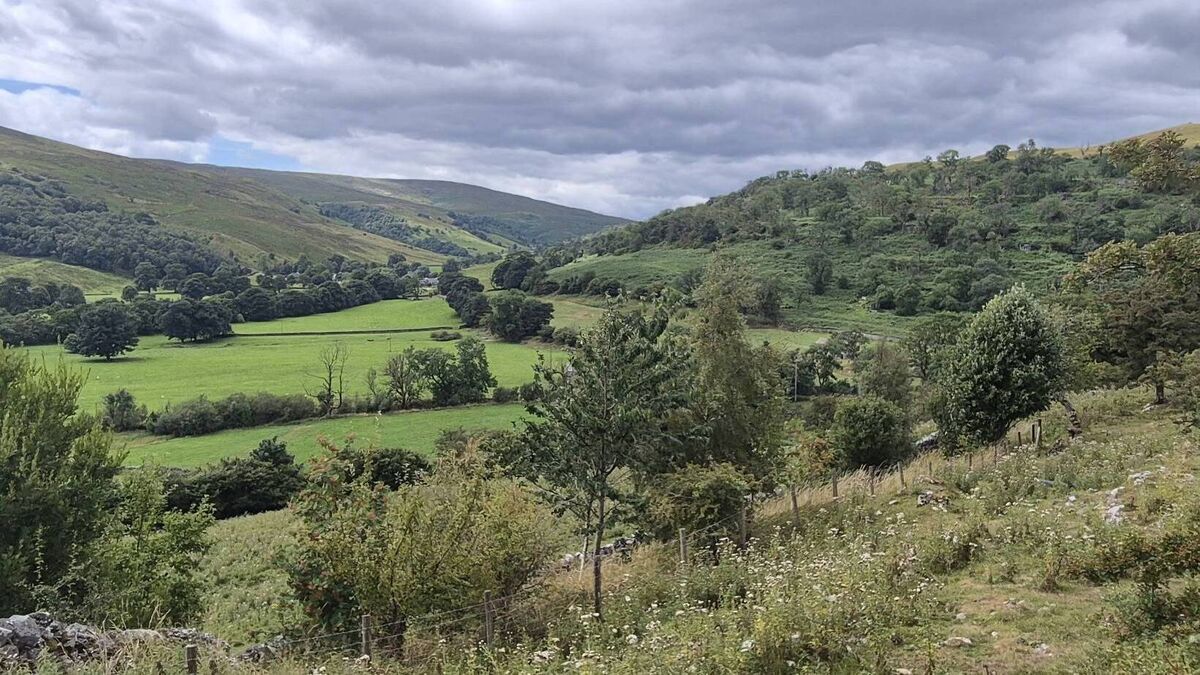
The famous Yorkshire Dales. Pic: Hugh Lynn
Last week, I wrote about my surprise that motorists around Chipping Norton rarely acknowledged a wave. Several readers contacted me afterwards, including one man who had noticed exactly the same thing.
He also mentioned something I had overlooked - the pothole-riddled local roads. Once considered far superior to our own, many of the local roads around Clarkson’s Farm now compare poorly with those in Ireland. Is this the result of all the extra tourist traffic, or simply a sign of the times in the UK?
After leaving the Cotswolds, I travelled north to see what the famous Yorkshire Dales and North York Moors actually looked like. As a child, I remember watching All Creatures Great and Small and being captivated by the scenery. The moors also provided the striking backdrop to Heartbeat. I wanted to visit the locations where both programmes had been filmed and discover whether reality lived up to the images I remembered from television. I was not to be disappointed.
I had booked a hotel in the market town of Thirsk. When I stepped out of the car, the first thing I noticed was the unmistakable smell of pig slurry hanging in the warm evening air. Thirsk may have a population of around 5,000, but there was no mistaking that I was in rural England.
Just a hundred yards from my hotel, broad fields stretched beyond the town, with enormous rectangular bales piled in great stacks like building blocks. There could be no doubt that this was farming country.
Thirsk was home to Alf Wight, the veterinary surgeon and author better known by his pen name, James Herriot. I visited his former home and surgery, now the award-winning attraction known as the World of James Herriot.
Walking through the family home, surgery, dispensary and consulting room felt like stepping into Herriot’s world. Among the exhibits was an Austin Seven of the type driven by John Alderton in the film It Shouldn’t Happen to a Vet. Nearby, in the television studio section, stood another beautifully restored Austin Seven, registration AJO 71, which had been used in the original television series.
The attraction also houses a veterinary science collection containing more than 4,000 exhibits.
Of all the exhibits, the story that caught my attention most was that of Aleen Cust, the first woman veterinary surgeon in Britain and Ireland. Although she completed her veterinary studies in 1900, the Royal College of Veterinary Surgeons initially refused to register her because she was a woman. Undeterred, she established a successful career as a veterinary assistant to William Byrne here in County Roscommon and was eventually admitted to the Royal College in 1922. There is always something particularly satisfying about travelling abroad and unexpectedly finding Roscommon woven into the story.
After exploring Thirsk, I went in search of Darrowby, Skeldale House and the Drovers Arms. The complication was that there were two Darrowbys to choose from.
In the original BBC series, broadcast between 1978 and 1990, Askrigg in Wensleydale stood in for the fictional town. Its Kings Arms Hotel became the Drovers Arms, while a house on Main Street served as Skeldale House. In the newer Channel 5 adaptation, Grassington in Wharfedale stands in for Darrowby.
Naturally, I visited both.
Askrigg was a lovely, old-fashioned Yorkshire village where very little seemed to be happening—and that was part of its charm. Its main street was lined with sturdy stone buildings whose weathered walls, slate roofs and traditional windows gave the village a timeless appearance. Flowers and hanging baskets softened the grey stone.
It was easy to understand why Askrigg had been chosen as Darrowby. In places, it seemed as though very little had changed since James Herriot’s time.
I found Skeldale House and the Kings Arms and, of course, took a few photographs. Having come this far, it would have been remiss of me not to eat in the pub that millions of viewers knew as the Drovers Arms. I ordered a delicious ploughman’s lunch for just £9.95, considerably less than I had paid at Clarkson’s place earlier in the week.
From there, it was onwards to Grassington, and a very different experience. It was larger and considerably livelier than Askrigg. Its attractive cobbled square was surrounded by handsome stone buildings, traditional shopfronts and narrow lanes, with window boxes adding splashes of colour.
Grassington was thronged with visitors. The outdoor tables at the pub were packed, while hundreds wandered through the streets, browsing in gift shops, buying souvenirs and, like me, enjoying being tourists.
Grassington may have been livelier and more polished, but Askrigg was the place that brought my childhood memories flooding back.
The North York Moors and the world of Heartbeat would be the next stop on my journey.