Herald Opinion: Farming and food at heart of Diddly Squat experience
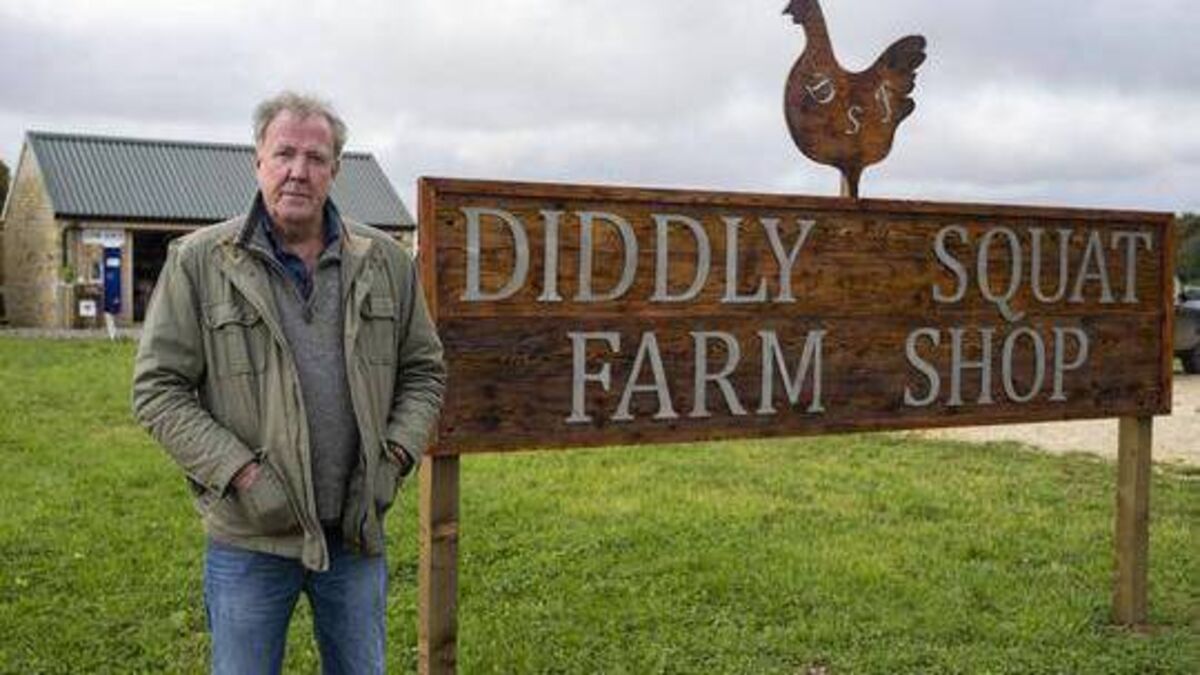
Jeremy Clarkson - outside the Diddly Squat Farm Shop on his farm.
The August Bank Holiday weekend has always been an important time in my corner of Roscommon. Castlerea Show takes place on Bank holiday Monday, the Rose Festival is drawing to a close, and just the other side of Loughglynn, the Ballaghaderreen Arts Festival is in full swing. It feels as though summer is taking one last bow before quietly slipping away. Before long, the school gates will reopen and another year will begin.
For me, there is an unwritten rule: if I'm going away on holiday, it has to be before the 15th of August. Once the schools are nearly back, the moment has passed and summer is over.
I've always loved travelling. Give me warm sunshine, fascinating history and somewhere to explore and I'm happy. Ancient Rome fascinates me. Greece never disappoints. Egypt remains firmly on my bucket list. This year, however, the ruins of the Mediterranean were traded for the rolling hills of Britain.
Instead of boarding a plane, I pointed the car east. I drove from Loughglynn to Dublin, crossed the Irish Sea by ferry and headed for Jeremy Clarkson's Diddly Squat Farm in the Cotswolds before continuing on to Yorkshire.
I've written before about the extraordinary impact “Clarkson's Farm” has had in highlighting the realities of British agriculture. Whether you love Clarkson or loathe him, the television programme has encouraged thousands of people to think differently about farming. I wanted to see for myself what all the fuss was about.
The journey across Wales was interesting in its own right. My sat-nav seemed to have developed a nervous disposition, warning me of speed cameras every few miles, while drivers showed remarkable lane discipline. They overtook, moved back into the inside lane and allowed the traffic to flow freely.
I made it to my hotel in Chipping Norton and then went off exploring the rural roads of Oxfordshire. I discovered something that puzzled me. Nobody waved. Driving along the narrow country roads, I pulled in for approaching traffic and instinctively gave the familiar country wave. Nothing. Not one driver acknowledged it.
Back home, waving is almost a language in itself. There's the finger lifted from the steering wheel, the full-hand salute, the nod of the head and, for some particularly enthusiastic souls, a greeting so animated you'd swear they were about to climb out through the windscreen. In Oxfordshire I tried several times. Nothing. Men, women, young and old all stared straight ahead. Perhaps they thought I was the odd one.
After a quiet night in Chipping Norton, I set off early for Diddly Squat Farm on Tuesday morning, quickly realising I wasn't the only one making the pilgrimage. The farm shop opens at 9.30 a.m., so I thought arriving at 9 would put me comfortably near the front of the queue.
I couldn't have been more wrong.
There were already around 200 people ahead of me.
The queue snaked around the car park. Families, couples, older visitors and dogs of every shape and size waited patiently. Many of the couples seemed to have dogs instead of children. Thankfully, every animal was impeccably behaved; not a single growl to be heard. Despite the crowds, there was no pushing or impatience. Everyone seemed genuinely happy to be there.
Inside, the shelves were packed with local produce. A small jar of honey — Clarkson jokingly calls it “bee juice” — cost £12, cherry tomatoes were £4 a punnet, blackberries £4 and a lettuce £2.20.
At first glance, the prices looked steep. But much of what was being sold had come directly from the farm or local producers, cutting out the supermarket middleman and leaving more of what the customer pays with the people who actually produce the food.
Suddenly, those prices made a little more sense.
Outside, Hawkstone beer flowed from the taps, British burgers sizzled on the grills and local ice cream was on offer. Diddly Squat might have become a tourist attraction, but farming and food remained at the heart of it.
Later that afternoon, I had lunch booked at “The Farmer's Dog”, Clarkson's new pub. My reservation was for 3 p.m., and if the farm shop had been busy, the pub was on another level. The overflow car park stretched across a huge field, while the beer garden was packed with people enjoying the sunshine.
The menu carried the same emphasis on British produce. I started with mushroom and broccoli soup, followed by a superb steak pie with seasonal vegetables and finished with an Eton Mess. It was simple, honest food, beautifully cooked and packed with flavour. The bill came to £46.50 before drinks or a tip. Cheap? Certainly not. But neither was I expecting it to be.
Looking around the packed dining room, one thought kept returning to me. Clarkson hasn't just made a successful television programme. He has persuaded thousands of people to visit a working farm, spend money on locally produced food and perhaps leave with a greater appreciation of where that food comes from.
Not many television presenters can claim to have done that.
For me, it was the perfect start to my English adventure. Oxfordshire had exceeded every expectation. Now it was time to point the car north towards Yorkshire, where the fictional villages of Aidensfield and Darrowby were waiting to become reality.