Ballaghaderreen artist brings ghost estates into focus in new exhibition
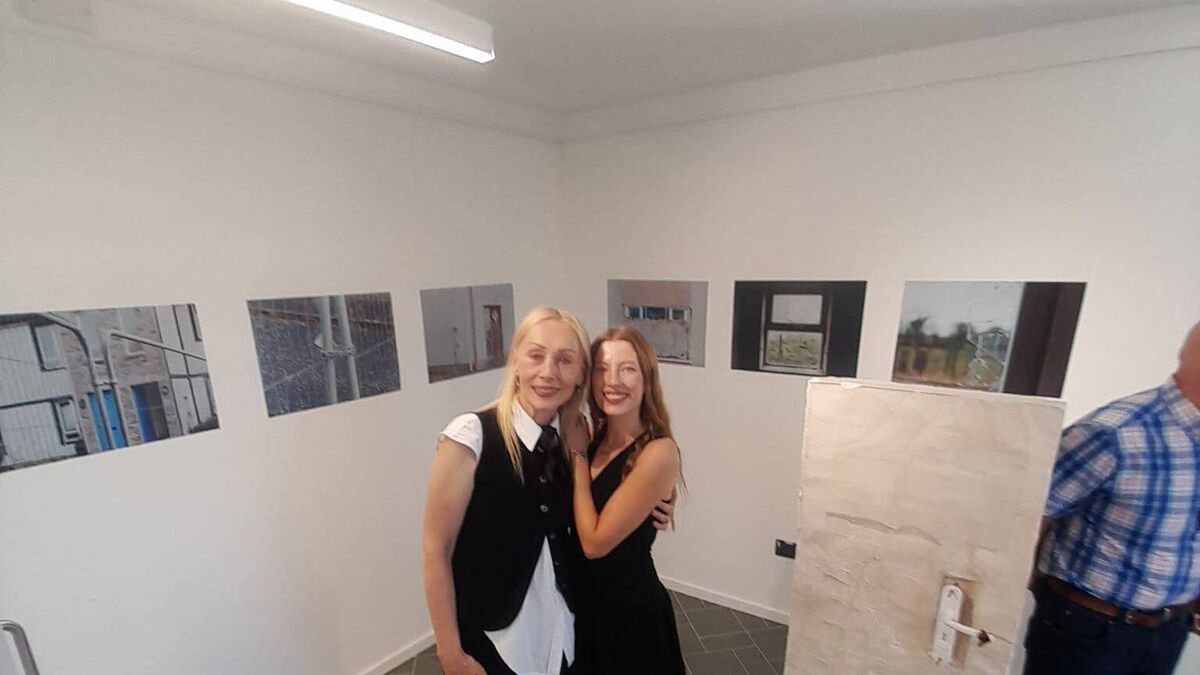
Elizabeth Valentine and Shona Hunt at the 'Objects in Absence' exhibition. Pic: Elizabeth Valentine
A young Ballaghaderreen artist has turned the abandoned houses and unfinished estates of rural Ireland into a powerful exhibition that made its Irish debut at this year’s Boyle Arts Festival.
Shona Hunt, who is in her mid-twenties and now teaches art at a university in Nashville, showcased Objects of Absence at the New Art Gallery in An Ríoga, Boyle. Although her work has previously been exhibited across Europe, this was the first time it had been shown in Ireland.
The exhibition draws on the ghost estates scattered across the country, with a particular focus on Shona’s hometown of Ballaghaderreen. What were once seen as symbols of prosperity have, in many places, become reminders of abandonment, stalled development and the lasting impact of Ireland’s housing crisis on rural communities.
Through her work, she examines the small, unsettling details left behind in unfinished and abandoned homes — doors without handles, empty electrical sockets and exposed wires. Rather than presenting dereliction simply as failure, Objects of Absence considers these spaces as places where memory, ecological renewal and alternative futures can emerge.
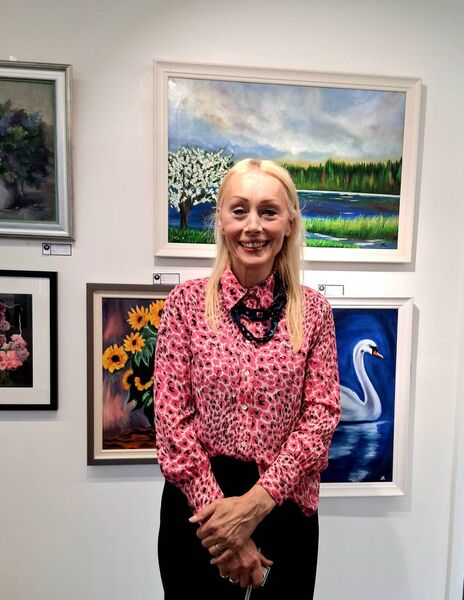
Gallery owner and artist Elizabeth Valentine said she was struck by both the quality of Shona’s work and the significance of its subject matter when the artist first contacted her last year.
Elizabeth, who is committed to giving young artists — particularly those from rural backgrounds — a platform, said opportunities can be difficult to access without support.
“I think unless you have contacts or you have someone that wants to give you a platform, which is very difficult as an artist, it can be very challenging to find a venue that will give you a platform,” she said.
She said the theme of Shona’s exhibition immediately stood out because of its local relevance and wider political resonance.
“It was all about Roscommon’s ghost estates. That was intriguing,” said Elizabeth.
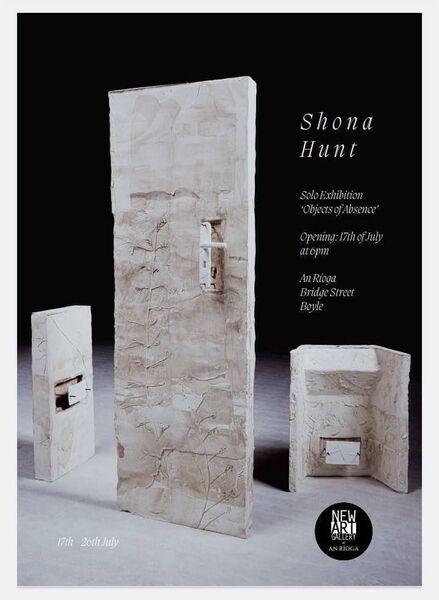
As part of her research, Shona visited the estates, photographed the empty houses and spoke with people still living among them.
“She would spend time going into the estate, taking photographs, talking to people that were living there,” Elizabeth said. “The exhibition was a statement on the impact of these estates on rural towns.” Elizabeth said the work also speaks to the contradiction of empty houses remaining in place while communities continue to face serious housing pressures.
“The political aspect reflects a massive shortage of housing while these ghost estates still exist,” she said.
For Elizabeth, presenting the exhibition professionally was central to ensuring the work received the attention it deserved.
“For me, it doesn’t matter whether it’s my work or somebody else’s, I’m going to make sure it’s curated professionally. It’s going to be orchestrated professionally,” she said.