Farming Rathcroghan future under threat
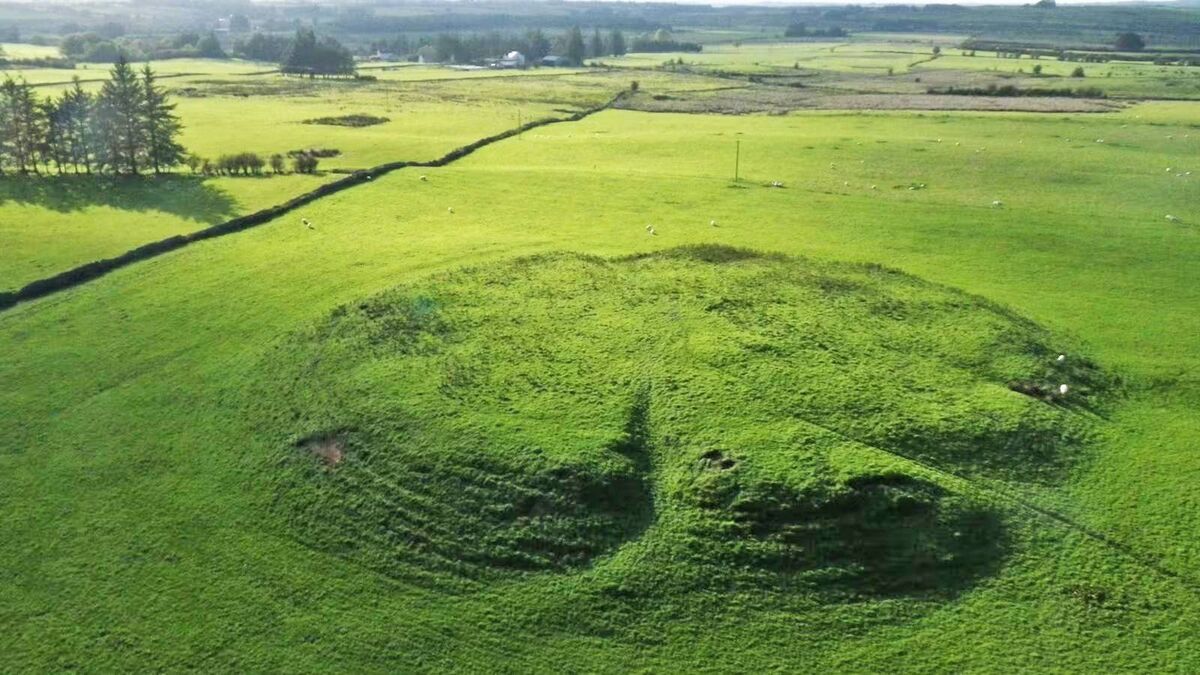
The Farming Rathrcoghan project is aimed at protecting the renowned ancient royal site near Tulsk while also allowing local farmers to steward the land around it for future generations.
The future of Farming Rathcroghan, a unique project aimed at protecting a renowned ancient royal site near Tulsk while also allowing local farmers to steward the land around it for future generations, has been cast into doubt due to funding concerns.
It has emerged that the award-winning project, which has been in operation for the last eight years, has been unsuccessful in its bid to secure EU funding for the coming year. A statement released by Farming Rathcroghan CLG outlined that funding will only be able to keep the project alive in its current form until March.
With the loss of funding, the project office, its staff of five and all related schemes will cease to exist. The group is currently exploring options to keep Farming Rathcroghan operational in a limited capacity until December to allow for the procurement of future long-term funding.
“Despite every effort being made over the last year to secure future long-term funding, the Farming Rathcroghan Project in its current guise is set to cease operations shortly,” said a statement, which was issued following a recent Board of Management meeting.
The “lukewarm” and “non-committal” actions of state agencies were also highlighted in the statement with the group feeling they have been doing the job of state agencies for the last eight years.
Over the that time, Farming Rathcroghan has resourced and funded 90 farmers, with more looking to join the scheme, allowing for over 260 “internationally-significant” archaeological sites to be maintained across 40 square kilometres.
The project was made possible through a European Innovation Partnership from 2019 to 2024 where €984,000 was made available, and later through a competitive funding award from the EU Just Transition Fund where just under €1 million was provided.
Richie Farrell, Farming Rathcroghan Project Manager, expressed his disappointment at the revelations. “We’re on the cusp of greatness in terms of what can be achieved at Rathcroghan, so it would be a disaster for the project not to be supported, “ he told the Herald.
“The cusp of greatness” was a reference by Mr Farrell to the site’s goal of attaining UNESCO World Heritage status, and he outlined the impact of not funding the project will have on that goal.
He described this process as “moving at a glacial pace” and added that “farmers are key to supporting any World Heritage (status). Not having the project in place is going to make that process very difficult.”
In relation to the lack of support from state agencies, Mr Farrell said “it’s difficult to comprehend,” questioning their support of heritage.
“When you have big level funding, it tends to camouflage the lack of support in other areas. They (state agencies) have been very slow to contribute what we call meaningful engagement,” he said.
Mr Farrell said that a total of about €2.5 million had been funded towards the project which he described as “fairly small,” and acknowledged funding is needed elsewhere. He did remain hopeful that if Farming Rathcroghan could make it to December, they could re-secure that funding.
Talks have been organised with Roscommon County Council next month and local representatives have rallied to show their support for Farming Rathcroghan.
Roscommon County Council Cathaoirleach Liam Callaghan expressed his “disappointment” to the funding being stopped. The Fine Gael councillor highlighted the benefit the scheme has provided for the local economy and the “obvious” enhancements it has allowed for, ranging from stone walls and gates to water protection measures.
Keeping the staff in place for the interim period is important for the long-term future of the project for Callaghan. “I think the National Heritage Council, the OPW who own a lot of the land in Rathcroghan, and the county council could come together so the staff could be kept in place for 12 months so that if there are applications that arise, there could be opportunities for funding.”
“If the administration side of it goes, possibly the whole scheme could fall apart. That’s why I’d like to get more support. The OPW, the Department of Agriculture and the Heritage Council have a role to play in that,” he said.