Former Roscommon Garda chief speaks out about his cancer diagnosis
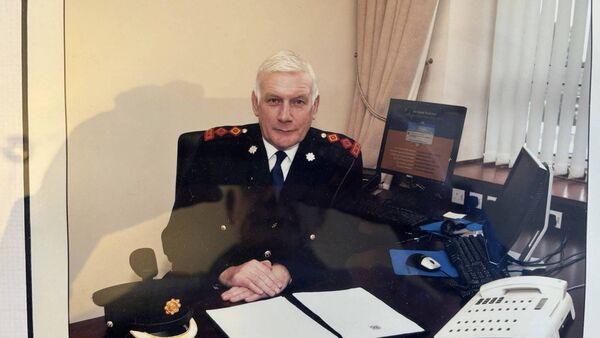
Paul Hargdon was a Garda Superintendent for the Roscommon/Longford Garda Division for over 35 years.
County Sligo native Paul Hargadon was a superintendent for the Roscommon/Longford Garda Division for over 35 years.
Now in his retirement years, after a diagnosis of oesophageal cancer, he has become an ambassador for Oesophageal Cancer Ireland and hopes that by sharing his story he will encourage others to listen to their bodies, seek medical advice early, and never underestimate the importance of cancer awareness.
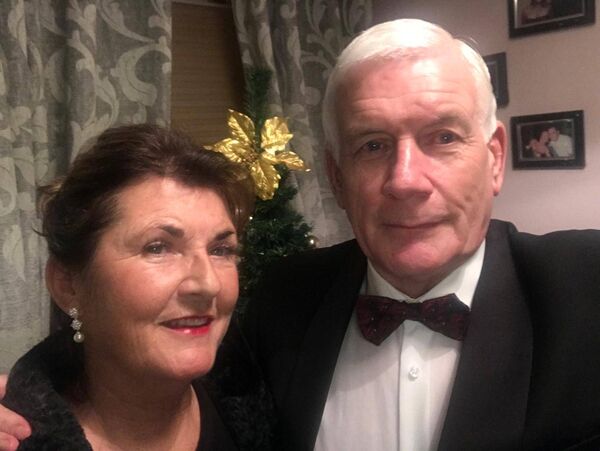
Born in 1953, he grew up on the shores of Lough Arrow. He met his wife Carmel, a native of Glaslough, while stationed in Monaghan, and the couple, who have been married for 48 years, have three adult children, Gareth, Michelle and Keith.
The couple moved from Ballinasloe to Marlmount, Blackrock, County Louth in 2019 to be closer to their son Keith, who has followed his father into An Garda Síochána and is now a Detective Sergeant based in Dundalk.
Since then, Carmel, who worked for Norbrook Laboratories, has been diagnosed with neurological issues and is now confined to a wheelchair.
In the autumn of 2024 Paul was on holiday in Portugal when he felt out of sorts. Symptoms included stomach issues, unintentional weight loss, and severe reflux. When he returned home, he had a visit with GP Dr Ciarin Cairns where it was agreed that he attend for a colonoscopy and endoscopy. As his father died from pancreatic cancer it was crucial he undergo these procedures.
After a biopsy and a CT scan it was confirmed that he had a cancerous tumour in his oesophagus. Fortunately, it was operable and treatable.
In January of 2025 he underwent a course of pre operative chemotherapy. While he coped reasonably well physically, the treatment took its toll, leaving him fatigued and emotionally drained in the days following each infusion.
On April 11, 2025, he underwent major robotically assisted surgery at Beaumont Hospital. Initially, the operation was successful, and he was transferred to intensive care.
However, the journey was not easy and he contracted double pneumonia, spent two weeks in ICU and underwent four further sessions of chemotherapy.
He eventually returned to the Phoenix Ward at Beaumont, where he would spend a total of seven weeks in hospital.
The journey was both physically and mentally exhausting and he readily acknowledged the mental challenges someone in his position can face. Despite all these extra challenges he has come out of this the other side with not only a positive outlook but as an advocate for looking out for the signs and challenges of oesophageal cancer.
“Despite my positive psychological attitude the seven week stay in hospital was to prove an extreme challenge,” he recalls. “There were days and nights when I asked the question “is this ever going to end, and if so, when?” of course there were no simple quick answers. I was assured by Prof Robb and his team that I was moving in the right direction, that all the signs were positive but that it would be a slow process. They assured me that I would get dressed and walk out of the hospital someday soon. I took some solace and comfort from this as I had the confidence of my medical team. I dug deep and mustered up all my psychological strength and positivity and pulled through it. It still rings in my ears when Prof Robb announced on his early morning round. ‘I think we can discharge you on Friday and you will have some light food today’. Seven weeks and nil by mouth, I never thought water could taste so good and I still can taste that ice cream and jelly,” he laughs.
“It was a very tough journey, but I made it through and I was discharged from hospital on Friday, May 30th, 2025. To aid my recovery I returned to Felda gym and undertook light activities, swimming, sauna and steam room and Jacuzzi. It took some time, but I regained some of my strength and by early July I was walking 5 kms per day. Digestion and reflux and regurgitation are the main issues, eating too fast and not chewing food properly. However, I think I have mastered this.”
In late July and August last year his oncologist recommended that he have four further sessions of chemotherapy but this time not as strong a dose. “I found this session was more difficult in that I had little or no energy and lost ability to walk any distance,” he recalls.
However, to regain his strength he joined an aqua aerobics classes joining 60/70 ladies in his local gym for 40 minutes three days per week and he has found this to be an enormous help. “I believe exercise and a positive mental attitude is the key to recovery,” he says.
He says that he got through his treatment thanks to the staff at the oncology unit, Bon Secours, the ICU and the Phoenix Ward at Beaumont Hospital. “I wish to convey my sincere gratitude for the care, comfort, kindness and empathy they always afforded me. I am reminded of a quote from academic and writer -Sara Wolfe Moss, ‘Nurses, one of the few blessings of being ill’,” said Paul.
He has also expressed his gratitude to the medical teams involved in his recovery such as Prof William Robb and his two assistants Doctors Donal O’Connor and Mohammad Bagir, Professor Adrian Murphy, Oncologist Mr Joergon Mulsow, Mater Private and the intern doctors on Phoenix ward.
Above all, he credits his family, particularly his wife Carmel and his three children, for carrying him through the darkest days.
His experience has left him with this message for others: “Pay attention to symptoms, no matter how minor they may seem, and seek medical advice early. All the tests I had two years earlier were clear. If I had ignored the changes in my body, the outcome could have been very different.”