Local historian gives fascinating insights on Irish Confederate Wars
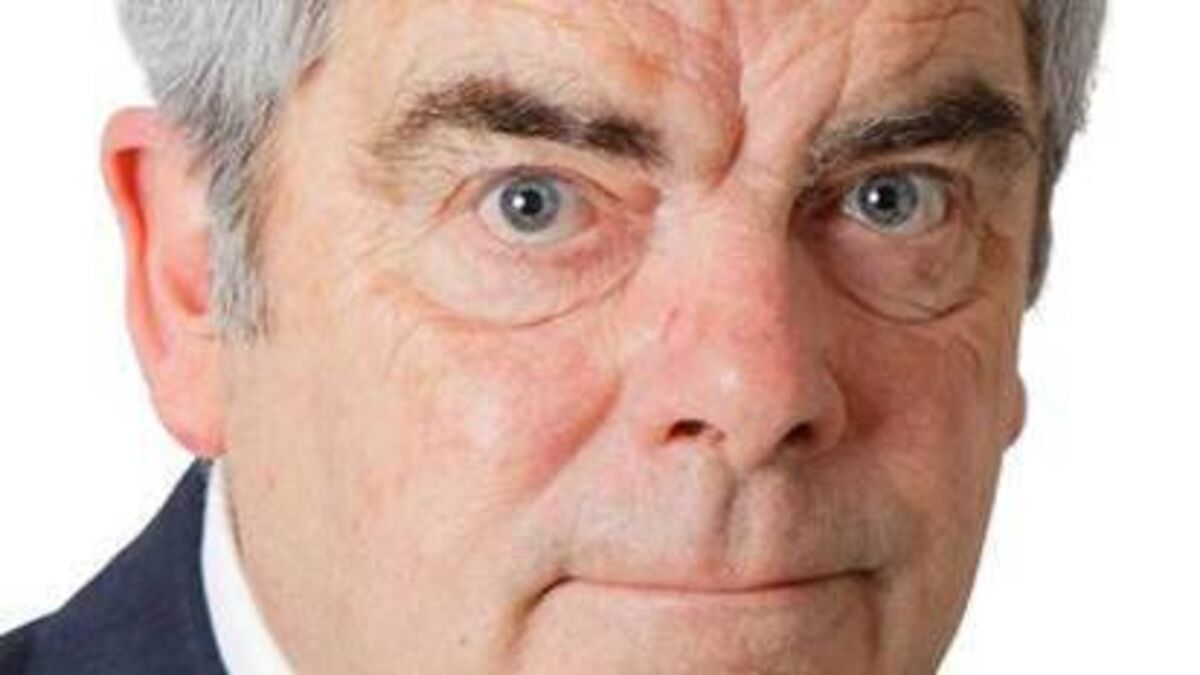
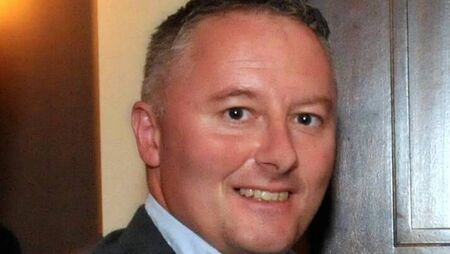
Noted local historian Dr Pádraig Lenihan
A noted academic and South Roscommon man gave a fascinating talk recently on the local story of the brutal and seismic Irish Confederate Wars of the 17th century.
A former Defence Forces officer, Dr Pádraig Lenihan is a lecturer at the University of Galway and author on military history, and spoke at a lecture of the Old Athlone Society earlier this month on ‘Sieges without Guns: Athlone and the Midlands, December 1641 – February 1643’. He is the son of the late Paddy and Breege Lenihan, Hodson Bay, Kiltoom.
Speaking to the Herald, Dr Lenihan said he was delighted with the turnout for the talk saying there was a large Roscommon contingent at the Shamrock Lodge Hotel.
“The wars of the 1641 to 1653 period are the most catastrophic, demographically speaking, in Irish history. We lost more people relative to the Irish population as a consequence of that war than the Great Famine disaster,” he explained. “The most intense and nasty period was the spring and summer of 1642.” He explained that at the time, Athlone was the capital of the Presidency of Connacht.
“Athlone Castle had a garrison of regular soldiers and refugees, who were armed, of 240 men, which is a big number. But Athlone is a little hillock surrounded by bog. There are three passes into the town, two on the Leinster side at Garrycastle and Ballykeeran, and Baylough on the Connacht side.
“From November 1641 to March 1642, that castle was blocked off, but the Irish were not strong enough to take the castle because they had no guns. So they were starving them out.” In North Roscommon, the plain or ‘machaire’ stretching from Tulsk to Boyle and east to Castlerea and to the Shannon to the west, provided the perfect ground for armed horsemen.
“That is open countryside, it is flat, good grazing land. The English garrison in Boyle under Major King, they had horsemen. There were also garrisons in Elphin, Tulsk, Roscommon Castle, Roscommon Abbey and Castlecoote. These garrisons had about 50 men in each. It doesn’t sound like a lot but if you are behind walls, 50 to 100 men are unstoppable. These horsemen dominated the landscape.” Though comparatively small in numbers, settler families in County Roscommon were very able and aggressive and more than held their own,” he said. “Some of the settlers have intermarried with formally Catholic families, and there is a lot of live and let live, but some of the settler families are much more aggressive in their approach to the natives.
“When the English Civil War breaks out, some of these families, the Cootes and the Boyles side with parliament.” Meanwhile, the Irish hold the west of the county, with the O’Connor Don having a massive castle at Ballintubber.
“There were also the Dillons of Loughglynn who had another castle, as well as the O’Garas up at Moygara,” said Dr Lenihan. “South of Roscommon Town, you had Grange and Ballagh near Lough Funshinagh and Ballinasloe, and those were Irish controlled, so Athlone is cut off.” In June 1642, 2,000 English come from Dublin to relieve and strengthen the garrison at Athlone.
“One of the first things they do is the march to Roscommon Town to forage and they open up that route with some difficulty. They then proceed up to Ballintubber. O’Connor Don has about 2,000 men from Mayo and Roscommon.
“He leads them out to attack the English and it doesn’t go well, and that is the battle of Ballintubber. It is a close run enough thing but the Irish are not as well armed. But in the end it is an inconsequential victory because the English have to withdraw back to Athlone. And like the tide coming back in, within a couple of weeks they are back to where they started.” “Ultimately, those English soldiers started to starve and die of sickness. By January ’43, six months later, when they are evacuated, there are 600 left.” A fascinating period of history, Dr Lenihan said that the Irish Confederacy “is the nearest we got to having a state of our own until 1922”.
His latest book, ‘Siege in Ireland, 1641-53: Blood and Stone’, examines the siege experiences through survivor testimonies, focusing on both soldiers and civilians. It is available in all good bookshops and is also available to purchase online.