RNLI volunteer Liam a calming influence at the ‘Helm’
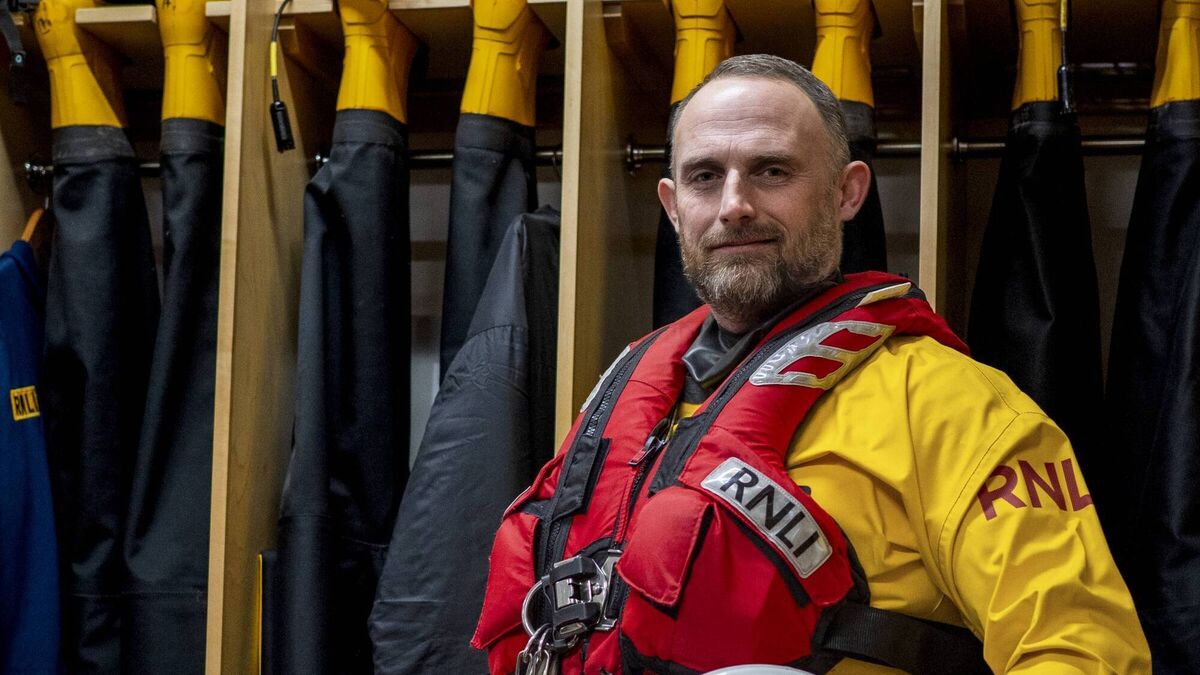
Liam Sherringham from Abbey Street, Roscommon Town was recently presented with an RNLI award. Pic: Matt Gleeson
Roscommon Town man Liam Sherringham has been swimming since he was seven years old.
Over the years he has been nominated for awards and has experienced incidents on Irish waters that some of us will never comprehend.
In November Liam, from Abbey Street, Roscommon, together with other RNLI (Royal National Lifeboat Institution) long term volunteers, was presented with an award in recognition of the work he does.
Liam is an assistant navigation inspector of water in Ireland and a volunteer with the Lough Ree RNLI as a Helm. His job is to control the situation and maintain calm.
“I started when I was 17, I always wanted to work on the water that was my ambition to work on the River Shannon and on boats, so why not go to the authorities that oversee it and manage it,” he said.
His influence for a life on the water started from when he was child as his dad was at sea as a ship man with Irish shipping for 40 years. But the irony of his father’s job versus his volunteering is clear. “He (his father) couldn’t swim a stroke.” However, Louie Fleming who lived in Roscommon Town also had a massive influence on Liam’s life with the water. Louie used to have a chemist shop in Roscommon Town and was also involved with the Athlone Sub Aqua Club. He was also at sea as a radio officer.
“He was a good family friend, and he took me under his wing and brought me to the pool lessons in Athlone and it grew from there,” He has been a part of the Athlone Sub Aqua Club since he was seven years of age. Initially he was a scuba diver, which is where his roots lie. Once he got older he started driving boats and when the RNLI stated in 2012 a lot of members from the club joined the RNLI as volunteers.
He stressed the importance of getting young people to engage with the organisation. His own daughters, Molly and Katie, who are 8 and 9, are already snorkelling and he brings them out on the River Shannon.
“The life blood of the RNLI is youngsters and getting people involved,” he pointed out.
You can join the RNLI as a member at 17 with permission from your parents. As members of the RNLI grow older, he is conscious of the need to try and keep bringing young people on board to keep the service running.
On how he balances work and volunteering, he thanked all employers of the volunteers of the RNLI for their flexibility “Thankfully my employer gives time off to respond to call outs,” he remarked.
A “call out” is an emergency call for help. The emergencies can vary from a cruiser going a ground on rocks, to people entering the water intentionally or unintentionally, potential drownings, boats going on fire and missing kayaks.
One incident in particular that stood out for him was two years ago on St Patrick’s Day when two youngsters got stuck near Athlone in a lake boat and were very close to being in serious, serious bother.
During Covid Lough Ree RNLI had a very busy year with 80 calls, they are one of the busiest stations in Ireland.
He noted that a minor shout can turn into a serious one if it is not attended to properly, “We have found people trying to push boats that have been stuck on rocks back into the water while they are in the water, which can become more serious if we weren’t on the scene.” The RNLI has been around since 1824 with most water organisations basing their own training on the RNLI due to its experience. Each member is trained for every situation.
Liam’s main role when volunteering is the Helm, the person who oversees the lifeboat and must keep control of the situation and keep calm. To be a volunteer you must be living within 10 minutes of the lifeboat station to be involved.
There are 46 stations in Ireland. The RNLI is a charity that completely relies on funding. The charity provides constant service and is not funded by the government. It is run by locals with an entire team in the background working on fundraising.
“It is very easy to stick on a fancy suit and life jacket and be on the front of a lifeboat, but a house doesn’t stand without foundations, the foundation of the RNLI is the background teams.” The stations around the country are in communication with one another and help each other out.
Despite it being rewarding there are many challenges for volunteers.
“It can be tough with body recovery. It’s good to be able to give closure to a bereft family and be able to return the loved one, but it’s tough on all of us.” The future of the organisation is in a good place, more people are needed to get involved as they operate 24/7 and 365 days a year.
Lough Ree RNLI is thankful and grateful to all who donate and contribute to the RNLI. “Every little helps, throw something in a bucket if you see someone shaking one,” concluded Liam.