Roscommon woman calls for improved endometriosis care in Ireland
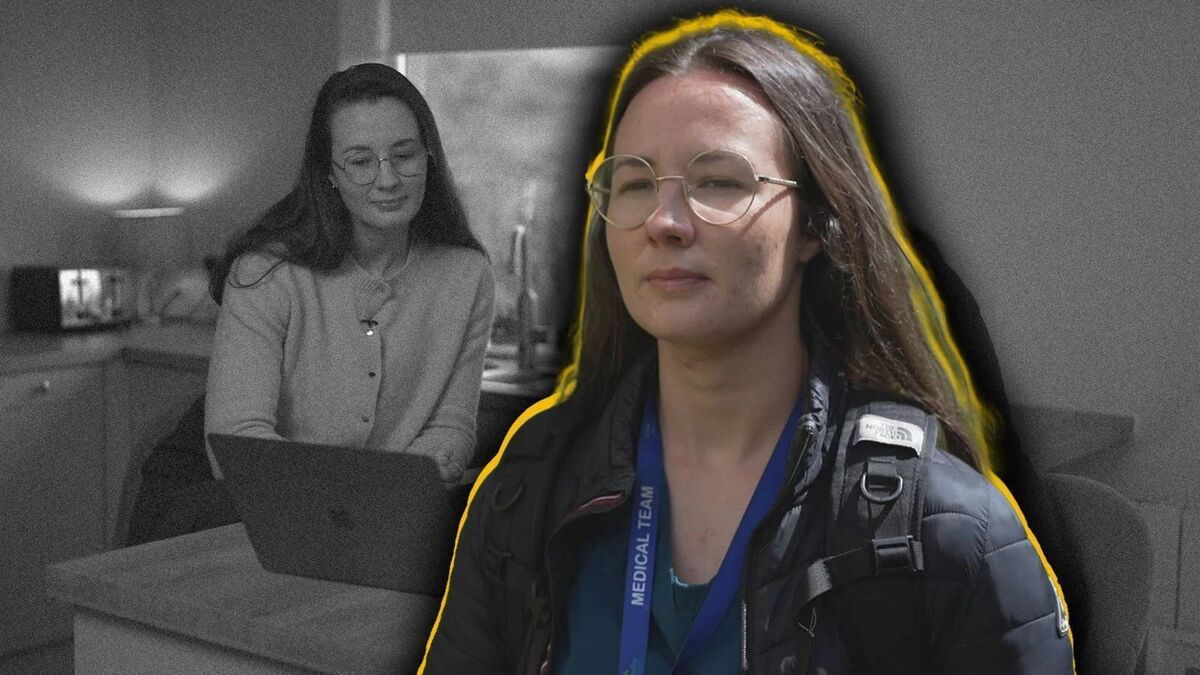
Dr Rachel O'Connor, 31, bravely told her story on RTÉ’s Primetime Investigates. Pic: Courtesy RTE
A Castlerea woman who was forced to travel abroad for lifesaving endometriosis surgery has called on the government to significantly improve care for women with the disease.
Endometriosis is a chronic inflammatory condition affecting organs such as the ovaries, fallopian tubes, uterus, bowel, and bladder. It can cause severe, debilitating pain. Despite this, it is a largely misunderstood condition, often dismissed as an acceptable period pain.
Recently Dr Rachel O’Connor, 31, bravely told her story on RTÉ’s Primetime Investigates, explaining that in March of last year, she underwent more than 10 hours of specialist endometriosis surgery in Warsaw. This involved major surgery to her bowel and other organs, with her surgeon telling her later she should not have survived.
“I exhausted all my options in Ireland to be perfectly honest. I went through nine consultants. The ninth was the one in Poland, and he helped me,” she told the Herald.
She said she had been “bouncing” between hospitals in Ireland, “and the waiting list for surgery is one to two years”.
“I didn’t have time. Even to get scans and biopsies would have taken six months, and I already had them done in Poland,” she said. “When I came back to Ireland and I showed them the scans, they were horrified. They said ‘we can’t treat you’, and told me to seek urgent care abroad.” During the life saving surgery, approximately 75-80 per cent of her organs from the diaphragm downwards were resected or removed.
“There were numerous masses lodged in my small and large intestine. The surgery was 10 and a half to 11 hours but that was in order to save my life,” she said. “It was a very hard ordeal.” Another major factor in her decision to receive treatment in Poland came when she was informed that if she did have the surgery in Ireland, she would likely have a stoma for at least a year.
“They didn’t know if it would be reversed, which meant if I had a stoma, I probably could not be a doctor,” Rachel said.
“In Poland, the risk of a permanent stoma was 2 per cent but here it was an 80 per cent chance that I would have one for the rest of my life.”
While working as a doctor, she also had to monitor her own health.
“I was a patient and a doctor at the same time. I was completely alone in the journey for years, for a long time.”
She continues to receive healthcare in Poland with scans and examinations, “and that’s really difficult, and that’s for the rest of my life”. She said that had she been identified earlier, she would not have experienced stage 4 septic shock or multi-organ failure.
“If I had been identified earlier, I would have been put on hormone pills which would have supressed the endometriosis but nobody offered that to me. If it was identified earlier, things would have been much different.” She said that after flying home from Poland, she met the minister for health.
“She was very apologetic and it was clear she cared, but it is going to take us a while to reach the standards that they have in Poland. There’re also the financial implications, my surgery cost €30,000. I had to fund that myself. I got it refunded a year after the surgery (under the Endometriosis Surgery Abroad Interim Scheme).”
Rachel also had to fund fertility preservation treatment abroad.
As a teenager, she suffered with extreme urinary pain monthly and severe gastrointestinal symptoms.
“I was on the floor in pain for ten days every single month for about a decade,” she said, adding that she repeatedly sought medical help.
“Each time I went to a doctor, I was just diagnosed with a UTI [urinary tract infection] every single month. But no urine sample ever showed that I ever had a UTI. It was very hard because I was questioning why am I going to be a doctor in this system when I can’t receive medical attention. I was questioning my whole career.”
Incredibly, she studied throughout this ordeal, graduating with a science degree from NUIG before going abroad to study medicine in Poland. She is now working as a senior house officer at the Department of Obstetrics and Gynaecology at The Coombe hospital. She said she could not understand the lack of services for a condition that affects one in seven women in Ireland.
“This is the same statistics as asthma and diabetes in Ireland and we can treat these conditions really well in this country. But an endometriosis patient, we can’t treat them. It is a multifactorial condition involving a lot of medical specialties. I have been to emergency doctors, internal medicine doctors, gynaecologists, GPs, WestDoc, nobody could treat me, they were just prescribing me with antibiotics for a UTI that never existed.
“I have always wanted to have children but my fertility is now 2 per cent. Someone could have offered me a transvaginal ultrasound or a pelvic MRI but no doctor ever considered that option.
“In Ireland, women with endometriosis are getting five, six surgeries and are still symptomatic and still in pain with a chronic illness that affects every part of their bodies. But in Poland, it was one surgery for my lifetime and now I am the healthiest I have ever been. I have no pain, I have no symptoms. I am able to eat a pizza and be fine. Before that I had to have a liquid diet, I had to blend everything. And I am so happy those days are over. That’s where we need to be in Ireland, because if a woman has numerous surgeries it is dangerous.”
Involved with Endo Ireland, Ireland’s endometriosis charity, Dr O’Connor is advocating for better services for women with endometriosis. “We held a conference a number of months ago and that was really well attended,” she said, adding that the group was meeting with governmental officials, the minister for health, and the HSE. “Just so we can support doctors and patients, everyone, on this condition and identify what we need to improve,” she said.
“It is a very slow process, we need more specialist doctors in this area, but I am hopeful that it will get better.”