Young County Roscommon man struggling to see a future for himself in farming under Mercosur deal
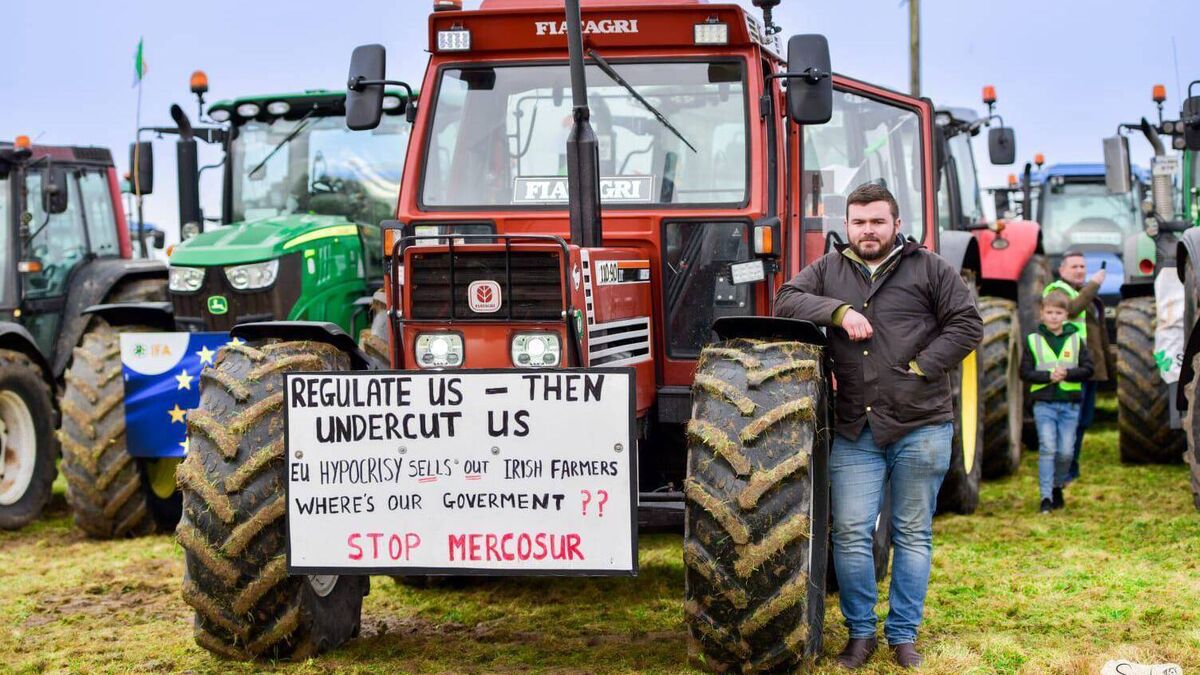
Young Castlerea farmer Owen Hester was just one of thousands of people to make the journey to Athlone for the Mercosur deal protest. The 26-year-old farming contractor warns that the trade deal will decimate rural Ireland. Pic: Swarber photography
Young Castlerea farmer Owen Hester was just one of thousands of people to make the journey to Athlone last weekend for the Mercosur deal protest.
The 26-year-old farming contractor warned that the trade deal would decimate rural Ireland.
“It is a deal that favours a few at the expense of the many. Certain sectors, cars and white goods, will benefit from it, but agriculture will definitely suffer. The hoops we have to jump through to produce our cattle compared to in South America, it’s a completely different standard," Owen told the Roscommon Herald.
"Once a calf sets foot on our farm it can be traced the whole way until it enters the food chain. We have to go to the vets to get prescriptions, there are Bord Bia audits. These are important, we know it is important. It is necessary for food safety and to prevent antibiotic resistance in people. I would just be very fearful of what’s coming down the line if this does come in. Anyone who eats meat should be concerned about this," he warned.
“My sole income is from the farm and the farmers I work for. So if farmers haven’t a profitable product to sell, I don’t see a future here for myself in the West of Ireland.”
After working all over the world for a number of years, “it was the love of farming that brought me home,” he added.
“But it is sad to say that you have to fight to do something that you love so much and that we are so good at. I don’t want to be negative, but since I have been home it seems to be challenge after challenge. We have a premium product here with our beef. It is as good as you will get,” he said. “If this comes in, I don’t know what future I will have. If I can’t farm the land and make money off it, I don’t know what there is to keep me here. Lads over in Australia say to me what is there for me to come home to.
“I have my own contracting business, and with the price of beef this year, I was mental busy. If farmers have money they spend it improving facilities on the farm. That’s money being pumped into the local economy, supporting local jobs. But if the price of beef is on the floor, no one is going to buy cattle to rear them. Beef needs to be at this price to cover the price of production. Our fertiliser and meal bills have doubled, tripled in the last few years.”
Heavily involved in cattle breeding and in the Castlerea Agricultural Show, Owen and his family have won numerous awards for cattle at shows.
“This deal could have a massive knock-on effect on rural towns and agricultural shows. If we can’t breed cattle, we won’t be going to the shows with cattle. I don’t know if people fully appreciate the implications this is going to have?” he said.
He described the Government’s approach to the deal as “shocking”.
“They came out at a late stage and said they weren’t supporting it. They should have been out lobbying countries, been over in Italy lobbying the government. Anyone who says otherwise is fooling themselves.”
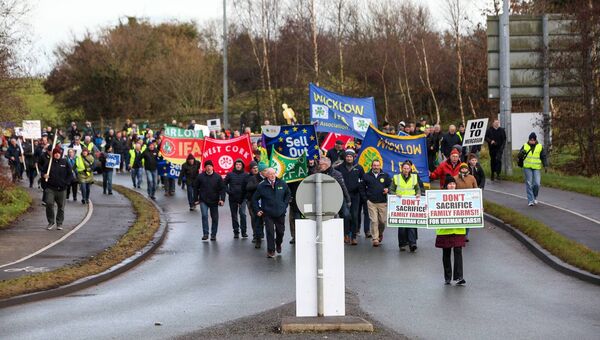
Glanduff man Billy Kelly is also completely opposed to the deal. Involved in farming all his life, he is now retired and his son Paul farms the land, but he continues to lend a hand when needed.
“Once a farmer always a farmer,” he told the Herald. He is adamant that all is not lost but was critical of the government and the Irish Farmers’ Association, saying they had been slow to organise opposition to the deal.
“If this is allowed to go through, there will be job losses. What about the future of our children and grandchildren? In 30 years’ time, are they going to be asking ‘Where are all the cows?’ Because it is not going to be viable if this meat is going to be coming in at 30 to 40 per cent cheaper. And people will choose it when it is on the shelves.” In Europe, we have food traceability second to none, everything known and approved from farm to fork. Then they are going to dump in this South American beef. They are talking about 90 million tonnes of it.”
He is sceptical of the department of agriculture’s claims that it will be able to ensure food quality. “There is no traceability. They are using angel dust and banned antibiotics, we don’t know what we are going to get here,” he said.
He added that while 2025 had been a good year for suckler farmers, that could be wiped out with the stroke of a pen by Mercosur.
“We are crucified with paperwork from the department. The farmer was managing this countryside long before the department and managed it pretty well.” He also praised Deputy Michael Fitzmaurice and MEP Ciaran Mullooly for standing up for rural Ireland. “They’re the only ones doing it.”
Brideswell farmer Christine O’Malley also praised the politicians for their work, and she condemned the Mercosur deal as unfair.
“Irish farmers and all the farmers in Europe, we have had to adhere to strict standards about animal welfare and traceability. The animal’s movements, the medicines they receive, it’s all monitored and rightly so to ensure the consumers’ safety,” she said.
These safeguards are simply not as strong in South America as here, she added. “They use growth hormones that aren’t allowed over here. Our cattle are mostly grassfed, and the animals are well cared for.
“This deal is unfair on the consumer, it is unfair on the Irish farmer. Farmers have played ball for the last 20 years and now it’s like a different set of rules for Brazil and the other countries.” She also noted the unfairness of flying tonnes of beef to Europe, with the resultant carbon footprint and rainforest clearance, while Irish farmers are trying their best to be sustainable.
“In Brazil it will be the small to medium sized farm that will suffer, with the bigger, industrial farms profiting.”