Fallon's Town Talk: Kevin Keegan’s Roscommon roots are unearthed
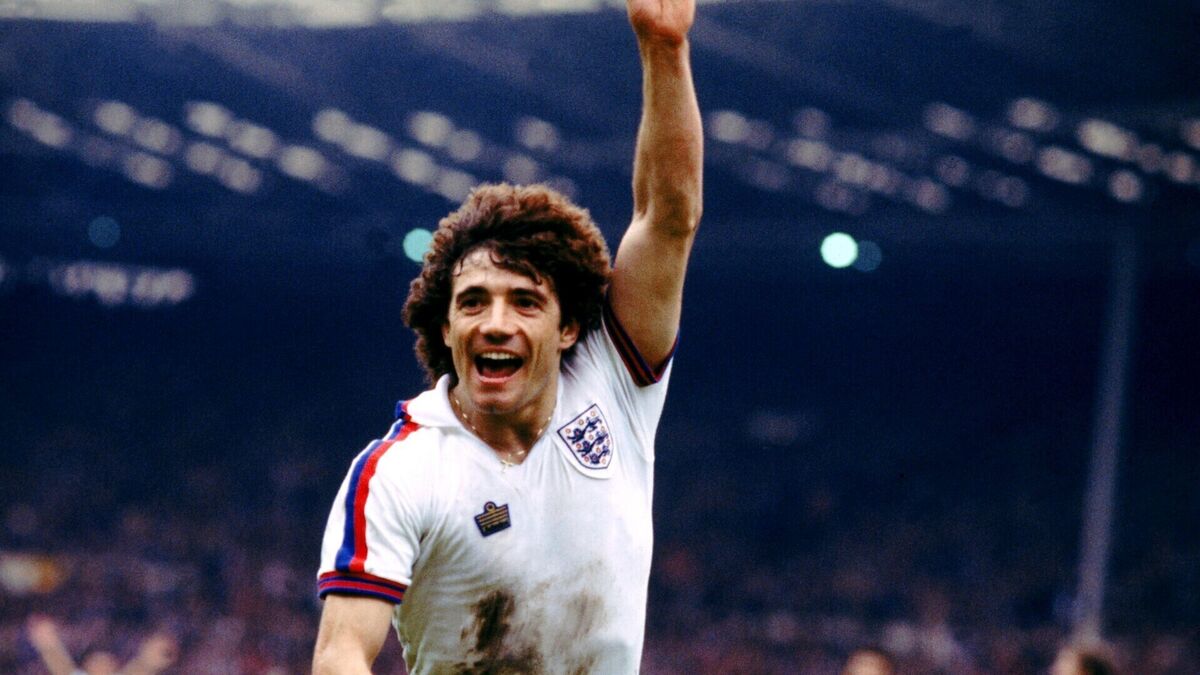
Former Newcastle and England manager Kevin Keegan died at the age of 75, his family have announced in a statement.
For a generation of sports fans of a certain age, the death of Kevin Keegan evoked a mixture of sadness and wistful nostalgia that catapulted them back to their childhood. Full disclosure here: Kevin Keegan was my first soccer hero. Long after the age when one should admit to such things, he remains one of my favourite-ever players.
I was guided towards supporting Liverpool by my uncle Michael but Keegan was the reason I became a fully-fledged fan. He was skilful, brave and boundlessly energetic. He scored spectacular goals but also decisive goals that clinched trophies. He formed a dynamic partnership with the much taller John Toshack.
This week, it was reassuring to find out that the hero of our youth was the good guy he always appeared to be. In the avalanche of tributes, his decency as a person and his myriad acts of kindness were highlighted as much as his luxuriant talent.
Another dimension was added when the Herald’s sports editor, Ian Cooney unearthed a Roscommon link in the wake of the great man’s death.
Over the years, it was claimed that Kevin had Roscommon roots. Keegan never mentioned any Irish connection and the story never went beyond the status of urban legend, if such a concept can exist in rural Roscommon.
Then, lo and behold, Ian’s detective work, aided by the Éire Guide social media platform, found that Keegan’s great-grandfather Joseph Shanley was born in Roscommon. Like thousands of others from Roscommon, Joseph fled to Britain during the Great Famine in 1848. His daughter, Ellen Shanley, was Kevin’s paternal grandmother. While it hasn’t been established from what part of the county Joseph Shanley hailed, it’s an amazing story.
It means Keegan was eligible to play for Ireland although he was a proud Englishman so the issue never arose. Nonetheless, in an era rife with TV documentaries where Z-list celebrities search for their roots, it’s tempting to muse about ‘what might have been’ if one of the sports people who defined the 1970s had turned up in Roscommon to explore his background.
Those who discovered soccer in the 1970s associate Keegan with his dashing, flamboyant heyday as a player while those who came to the sport in the 1990s know him as the idealistic, emotional manager who built a swashbuckling Newcastle United team.
In recent months, since he revealed his terminal diagnosis, it has been good to see a reappraisal of Keegan’s career. Following the announcement of his death, Sky Sports News showed more footage of football pre-1992 than any other day in their history. The younger generations knew only Kevin the manager, the man responsible for ‘I’d love it if we beat them’ rant. For older generations, his managerial career was only a small part of his story. For example, I would guess that the majority of Irish people aged between 55 and 65 who support Liverpool all their life first did so because of Kevin Keegan. He was the player who transformed Liverpool into an internationally-renowned team although he isn’t as beloved as the equally-great player who succeeded him: Kenny Dalglish. Hopefully, albeit belatedly, Keegan has a mural in his honour on the gable end of a house near Anfield.
Keegan was loved by the fans of all the clubs he represented. The difference between football in the 1970s and now is that Keegan was liked and admired by fans of all teams. Farewell then to Kevin Keegan, a man who sparked countless childhood dreams and brought joy to so many.
Last Sunday morning I popped into the Blessed Sacrament Chapel in Roscommon. One other person was there. He is a Mayo native who, like so many of his county folk, has made Roscommon Town his home. Last week a Mayo neighbour of mine described it as dual citizenship.
I said to the man in the chapel that I knew what he was praying for and I wished him the best of luck. He reckoned Mayo were up against it so I said something along the lines that this year, when Mayo entered the final with the least level of expectation I can remember, might be the time they do it. All he said in return was: “Wouldn’t it be great.” It turned out the man’s prayers were answered and for Mayo people all over the world, it was indeed great, perhaps the greatest day in the county’s history. Mayo deserved their famous victory and could even have won more easily. To all the Mayo people I know, savour this day of days and enjoy the celebrations.