Fallon's Town Talk: Varadkar returns to a stage where he is comfortable
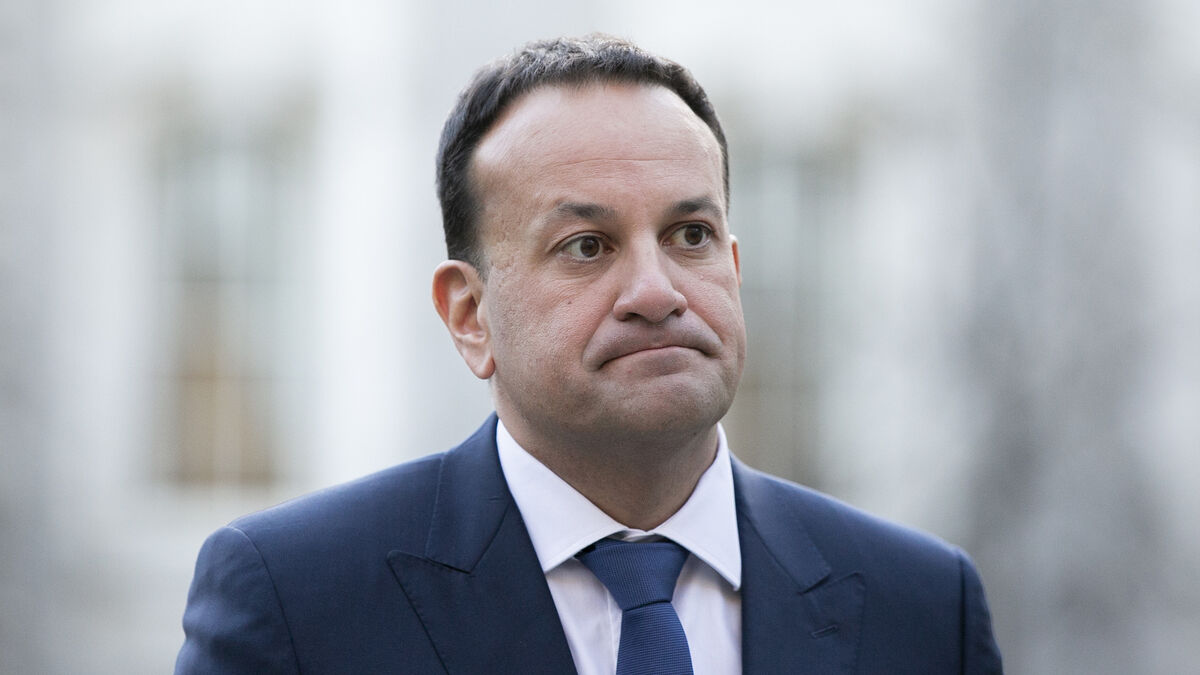
Former Taoiseach Leo Varadkar. Photo: Gareth Chaney/ Collins Photos
The reaction to the criticism of former Taoiseach Leo Varadkar of the fuel protests has been well-ventilated at this stage, including in the editorial in last week’s ‘Roscommon Herald’. As most readers are aware, Varadkar went on a podcast the weekend after the protests and claimed that urban workers paid the bulk of the taxes on which the State depends.
He further argued that rural Ireland was the principal beneficiary of subsidies and tax reliefs unavailable to others, and that the interests of the agriculture sector frequently ran contrary to the broader national interest.
The former Taoiseach’s comments were among the most pungent in a noticeable media backlash against the protesters. By going so far, Varadkar switched the attention onto himself rather than the impact of the fuel crisis on the lives of ordinary people - rural and urban.
His half-hearted attempt to walk back his comments was a classic non-apology apology; the form of words is well-known: If anyone took offence from what I said, I apologise. It was all a dispiriting reminder of how deep the urban/rural divide remains in such a small country.
The controversy also reignited a debate that took place after he retired from politics: how did Varadkar ever become Taoiseach? He was the head of government as recently as 2024 but it seems so much longer ago. Even at a remove of only two years, it’s hard to believe how a politician so lacking in the common touch or with any understanding of rural Ireland could have become this nation’s leader.
A look back at the 2017 leadership contest showed that the membership of Fine Gael had a better instinct for what was needed for their party and the country than their public representatives.
Varadkar and his acolytes had the votes in the bag before his opponent, Simon Coveney, even got out of the traps. Yet, despite Varadkar being the overwhelming choice of the parliamentary party, the membership still plumped for Coveney.
At the time, the vote of the party grass roots didn’t cause much of a ripple. Varadkar’s elevation was seen as exciting and intriguing. While being of Indian descent and gay garnered much attention aboard, his chief attribute in Ireland was the niche he'd carved out as a different type of politician.
His forged his reputation as something of a firebrand and a maverick, with a penchant for criticising former Taoisigh; taking swipes at Fianna Fáil leaders Bertie Ahern and Brian Cowen was hardly surprising but derogatory remarks about Garret FitzGerald, a hero to many in FG, were. In time, Varadkar would find out that leading the country wasn’t such an easy job.
As happens so often in politics, the early shine wore off, despite praise for standing up to British prime ministers on Brexit. Becoming a hate figure with the Tory press boosted his popularity in Ireland but not enough to help his electoral prospects.
In the 2020 General Election FG lost 15 seats and fell to third position in terms of party size in the Dáil. It was only the momentous intervention of the Covid-19 pandemic which kept him in power as a caretaker Taoiseach. He performed that role with aplomb and was admired for it, but even that failed to help him to form a bond with the electorate.
Ultimately, the intuition of the FG grass roots proved prescient and prophetic. In Ireland, establishing a rapport with people matters. Many politicians are more comfortable with enacting legislation and debating matters of state than with the parish pump side of politics, but most are able to balance both demands. Few people would want a legislature populated by clones of the Healy-Raes. However, Varadkar was never comfortable with that aspect of Irish public life and, unusually, rarely tried to hide his discomfort.
Most former Taoisigh fade into the background when they leave power. Varadkar may be set to return to the role which first catapulted him to national prominence as an outspoken commentator. The only significance of his role in punditry is if it impacts on FG’s electoral prospects.
The first poll since the protests has FG unchanged at 17%. Like FF, FG is set for a hammering in the upcoming by-elections but that won’t have anything to do with Leo. It was noteworthy that the two parties who were most prominent in their support of the protesters, Independent Ireland and Aontú, had gained support.
The distance between FG and the leader they once thought would lead them to electoral glory is likely to grow after his caustic comments on rural Ireland. That will probably suit both parties just fine.