Herald Opinion: Enjoying the sunshine is easy – but are we prepared for what comes with it?
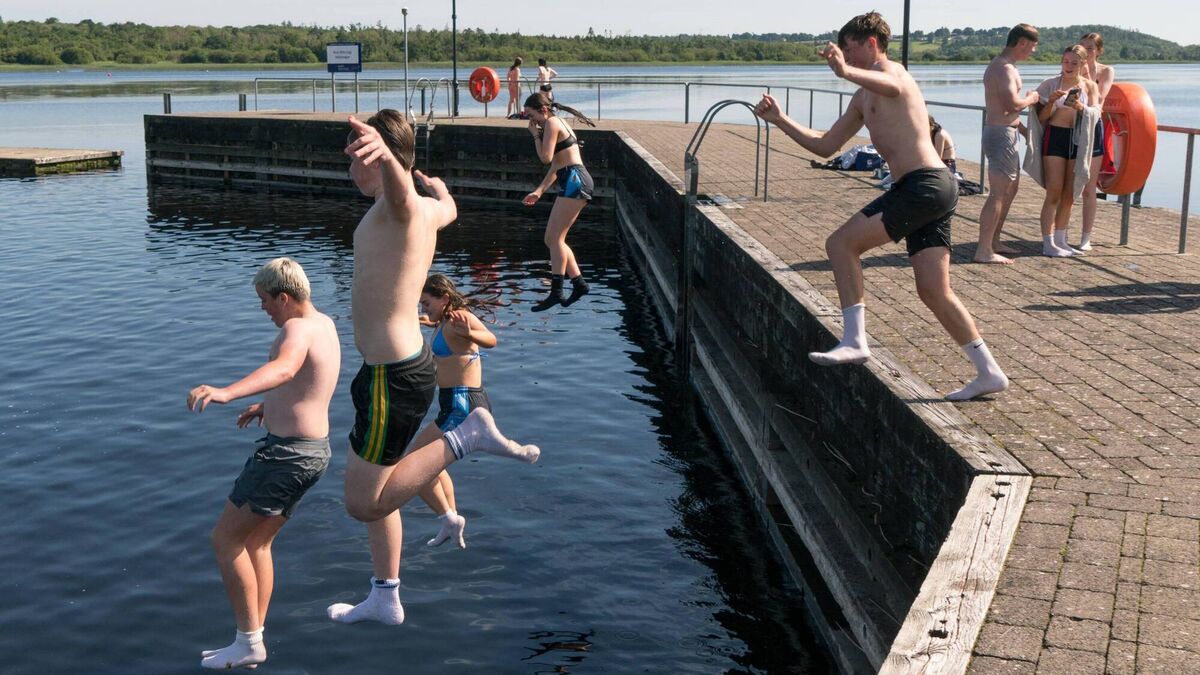
Young people from Roscommon Town and Oran cooling off at Ballyleague last week. Pic: Gerry Faughnan
Bonfire Night, the 23rd of June, signalled the beginning of our summer holidays. It was a day the children had been looking forward to for weeks and, if truth be told, so had the teachers. After we said our goodbyes and wished the children a happy summer, we gathered as a staff to continue the centuries-old tradition of breaking bread together. We sat down to a meal, shared a few drinks, and marked the end of another school year.
Like every year, it had brought its share of highs and lows. There was much to celebrate. One of our colleagues was preparing to go on maternity leave as she awaited the arrival of her first child.
Sitting in the shade of a parasol overlooking the River Shannon, I found myself reflecting on the spell of fine weather we had been enjoying. It was one of those June afternoons when the sun sat high in a cloudless sky and life seemed to slow to a gentler pace. People strolled along the waterfront, boats drifted lazily by, and conversation flowed as easily as the drinks on the tables around us.
We could have been almost anywhere in Europe. Sitting outdoors, enjoying good food, good company, and glorious sunshine, it would have been easy to imagine we were in Spain, France, Greece, or Italy. Yet this was Carrick-on-Shannon, and for a few precious hours, there was nowhere else any of us would rather have been.
The past week has been one of the finest I can remember. Day after day the temperatures climbed, bringing with the kind of weather we normally associate with holidays abroad. Thursday was particularly oppressive—one of those days when the heat became almost uncomfortable and many wondered whether they would be better off indoors with the curtains drawn.
The heat finally broke with spectacular thunderstorms. On Thursday night, flashes of lightning illuminated the sky, while on Friday the distant rumble of thunder rolled across Loughglynn for much of the day. Thankfully, there was no local damage. Lightning has a habit of bringing down power lines, starting fires, and, on occasion, killing livestock. This time, however, it provided little more than a dramatic reminder of nature's power.
And yet, on Friday morning, the radio carried reports of homes and businesses across parts of the north-west that were without electricity as ESB Networks crews worked to restore supplies. Whatever the weather in Ireland, we seem destined to experience power cuts. If the wind blows too hard, power lines come down. If torrential rain arrives, faults develop. Now, it seems, even prolonged hot weather can put the system under pressure.
Listening to those reports, I couldn't help thinking how vulnerable our electricity network really is. The recent spell of hot weather created challenges across Europe. With little wind, wind farms generated less electricity than usual. Some nuclear power stations in France and Britain had to reduce output because high temperatures affected their cooling systems. At the same time, demand for electricity increased as people sought relief from the heat. Ireland, which imports electricity through interconnectors whenever demand exceeds domestic supply, inevitably felt some of that pressure.
Solar power undoubtedly has a major role to play in the future. More and more homes, farms, and businesses are installing panels, and on bright days they can make a significant contribution. However, Ireland has yet to develop solar generation on the scale needed to offset periods when other sources of electricity are under pressure. Solar generation falls away on dark winter evenings just as electricity demand reaches its peak, while wind energy depends entirely on the weather.
A couple of winters ago, emergency diesel generators were brought into service to strengthen our electricity supply during periods of exceptional demand. Their continued availability serves as a reminder that, despite all the progress made in renewable energy, our electricity infrastructure remains under considerable strain. As we become increasingly dependent on electricity to power our homes, businesses, transport, and heating, ensuring a secure and resilient supply is no longer a luxury—it is a necessity.
As another school year ended and another Irish summer began, I couldn't help wondering what sort of Ireland today's children will inherit. Enjoying the sunshine is easy; ensuring our country is prepared for what comes with it may prove to be the greater challenge.