Herald Opinion: Have we learned as much from the past as we'd like to believe?
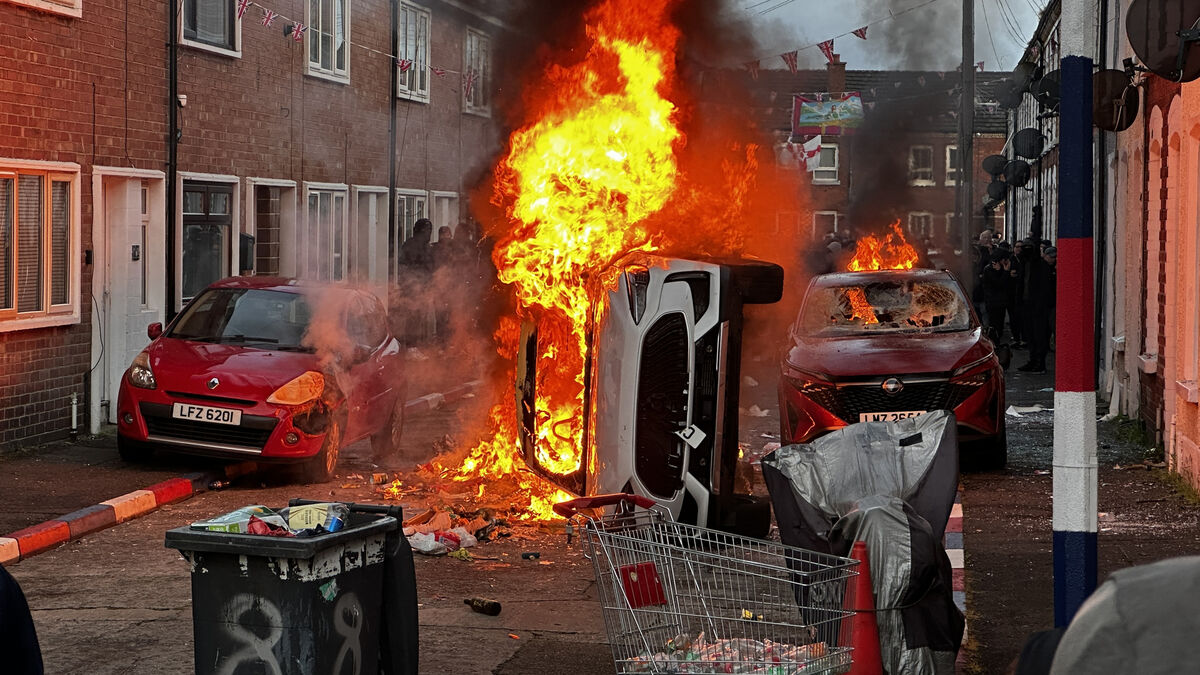
Vehicles set on fire by protesters on Lendrick Street in Belfast, as disorder flared in response to a stabbing attack in the city. Pic: Press Association
Belfast and unrest. Two words that, historically, fitted all too well together.
After the Good Friday Agreement and the peace process, many believed that the days of trouble were finally beginning to fade into history. Peace was the new reality. Sectarianism, we hoped, would gradually disappear and the hatred that had divided communities for generations would lessen with time.
The killings stopped. The bombers became redundant. No longer did the evening news lead with reports of another shooting, another bombing, another life cut short. No longer did people wake to news of fresh tragedy on the streets of Northern Ireland.
Good times appeared to beckon. A new generation was growing up free from the daily fear and uncertainty that had scarred the lives of their parents and grandparents. For the first time in decades, there was genuine hope that Belfast would be known not for conflict, but for peace, progress and prosperity.
So what happened this week? Why were white plumes of smoke once again rising above parts of Northern Ireland? Why were families forced from their homes? Why did scenes that many believed had been consigned to history suddenly return to our television screens?
The unrest followed a brutal stabbing in north Belfast on Monday evening. The victim, Stephen Ogilvie, 44, suffered devastating injuries, including the loss of an eye. A 30-year-old Sudanese man, Hadi Alodid, has been charged with attempted murder and remains before the courts.
But while the attack shocked the community, the violence that followed has raised wider questions. How did a criminal act allegedly committed by one individual become the catalyst for nights of disorder, attacks on property and growing tensions on the streets? Why, almost three decades after the Good Friday Agreement, do divisions remain close enough to the surface to erupt so quickly?
The attack occurred in a predominantly nationalist area of north Belfast. Yet much of the subsequent disorder appears to have involved people from a very different political tradition. There are growing claims that organised anti-immigration activists, along with individuals linked to loyalist paramilitary groups, have played a role in the unrest. If those claims are accurate, it would suggest that what we are witnessing is about far more than one criminal act.
Yes, the attack on Stephen Ogilvie was dreadful. The brutality of what occurred understandably provoked anger and revulsion. However, while outrage at such violence is justified, it does not explain why innocent people should then become targets themselves.
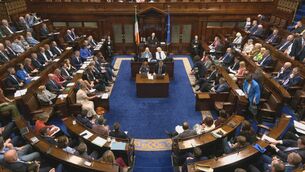
There is also a striking similarity between what has happened in Belfast this week and the riots that erupted in Dublin in November 2023 following the stabbing of three children and a care assistant outside a school on Parnell Square. Coincidentally, the trial arising from those events has begun this week, bringing those scenes back into public consciousness.
Of course, immigration lies at the heart of much of the debate. Many people are unhappy with current immigration policies, with the number of asylum seekers arriving, with accommodation pressures and with what they perceive as a lack of consultation by governments. These are legitimate matters for public discussion in any democracy.
Many of these concerns are not rooted in hostility towards immigrants themselves but in perceptions that housing, healthcare, education and other public services are already under strain. Others worry about the pace of change within communities and whether integration is keeping pace with immigration. Whether justified or not, such concerns are widely held and cannot simply be dismissed.
Yet there is a question that continues to trouble me. Whenever a crime is committed by a person who is not white or not Irish-born, the reaction is immediate and intense. Social media erupts. Politicians are questioned. Protests are organised. Sometimes, as we have seen, violence follows.
But where is the equivalent outrage when a child is sexually abused? Where are the riots when a woman is murdered by a partner? Where are the attacks on property when elderly people are assaulted, when drugs destroy communities or when organised criminals prey on the vulnerable?
These crimes happen with depressing regularity. Their victims suffer just as much and their families grieve just as deeply. Yet they rarely provoke the same public fury.
That contradiction is difficult to ignore. If our concern is truly about crime, violence and public safety, then surely our anger should be directed at all serious offenders, regardless of their nationality, ethnicity or background. If, however, our outrage only reaches boiling point when the accused happens to be a foreign national, then perhaps the issue is not solely crime at all.
That does not mean people do not care about these other crimes. Rather, it suggests that some offences become symbols of wider fears and frustrations that extend far beyond the crime itself.
The burning of homes, buses and police vehicles will not deliver justice for Stephen Ogilvie. It will not make Belfast safer or prevent another violent attack. What it will do is leave more families frightened, more communities divided and more people wondering whether we have learned as much from the past as we like to believe.