Herald Opinion: Why are so many people still dying on our roads?
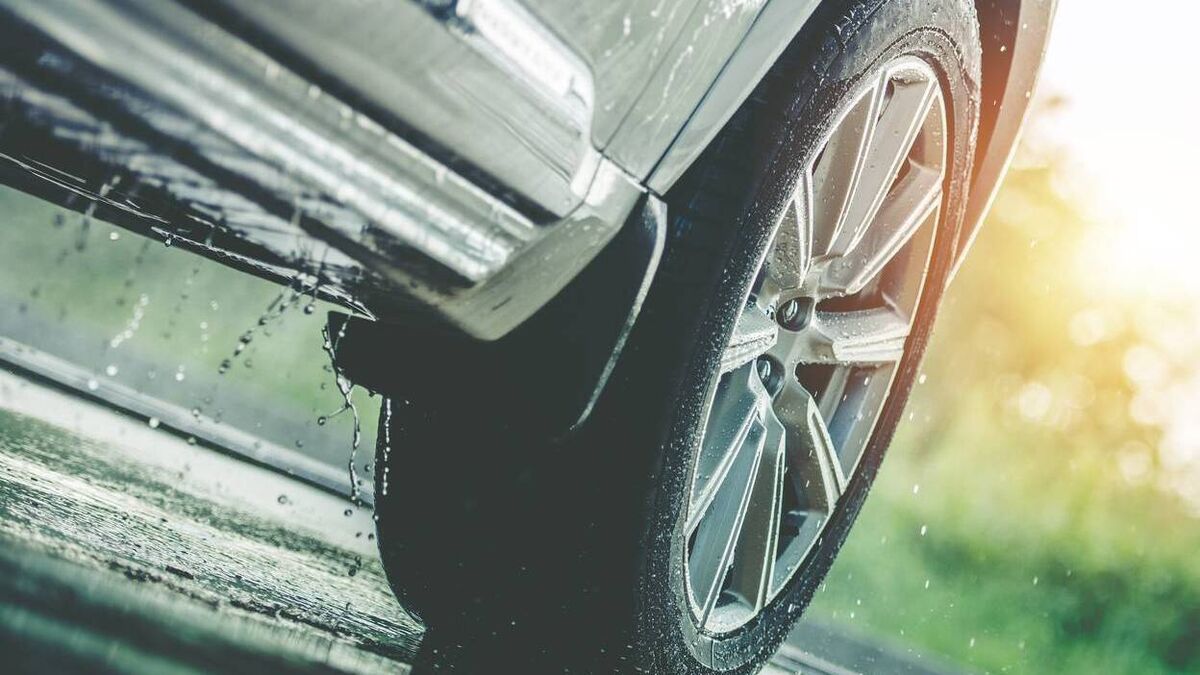
Tyres don't suddenly become dangerous overnight. They wear gradually. Pic: iStock
With all the good weather of late, the last thing on many of our minds has been road safety. Or is it?
Last week it was widely reported that the number of people killed on Irish roads this year had reached 100. That is 100 people who will never again sit at the kitchen table for dinner, 100 people who will never know whether this is finally Mayo's year, and 100 lives cut tragically short. Behind that stark figure are hundreds of parents, children, spouses, friends and neighbours whose lives have been changed forever.
We are constantly reminded that Ireland's roads remain dangerously unforgiving. Every road death is a tragedy, but when the total reaches three figures before July is out, it raises an uncomfortable question: why are so many people still dying on our roads?
We've all heard the familiar explanations - excessive speed, drink, drugs, failing to wear a seatbelt and the ever-present distraction of the mobile phone. They all play a part in road collisions and, ultimately, road deaths.
No one doubts that speed, alcohol, drugs and driver distraction remain among the biggest killers on our roads. But perhaps tyre condition deserves more attention than it receives.
More than a quarter of a century ago, Bobby Molloy, then Minister of State with responsibility for road safety, introduced the National Car Test. Since then, the standard of cars on Irish roads has improved dramatically. Yet despite all that technology, the only parts of the vehicle actually touching the road are still four small patches of rubber.
Even so, I often wonder whether we underestimate the role a poorly maintained vehicle plays in too many collisions. The Road Safety Authority's own research shows that defective tyres are the most common vehicle defect identified in fatal collisions where a vehicle defect was a contributory factor. That should make every driver stop and think. It also raises an obvious question: how many of those collisions might have been prevented by something as simple as properly maintained tyres? After all, worn tyres on a wet road are hardly a recipe for safety. They mean less grip, longer stopping distances and a greater risk of losing control at precisely the wrong moment.
Admittedly, safety carries a price tag. I put two new tyres on my car last week and they cost me €390. It was money I would much rather have spent elsewhere, but they are the only thing between your car and the road.
Driving around County Roscommon, it is impossible to miss the countless black doughnut-shaped marks on roads and in car parks, left behind by drivers spinning, skidding and drifting. Burning rubber might impress the crowd for thirty seconds, but it also burns away precious tread. Those same tyres are then expected to cope with an emergency stop on a wet Irish road. That seems like a very poor trade-off.
It's not just those who drift cars. Every one of us who drives knows that tyres wear down over time and eventually need replacing. How often have you heard someone say, "The wire was showing," "I was practically driving on the canvas," or "that tyre owed me nothing"? We've all heard those expressions.
But perhaps they should give us pause for thought. Tyres don't suddenly become dangerous overnight. They wear gradually, and unless we take the time to look at them every so often, it is easy to miss just how little tread is left.
The legal minimum tread depth in Ireland is 1.6 millimetres, but many motoring organisations recommend replacing tyres before they reach that limit, particularly if you spend a lot of time driving in wet conditions. Checking your tyres takes less than a minute and can be done with nothing more than a €1 coin or a tread gauge. It is a minute that could make the difference between stopping safely and not stopping at all.
Yes, there is plenty of debate about electric scooters and scramblers, and much of it is justified. But I sometimes wonder whether those discussions distract us from the everyday issues that affect every single motorist. Some road safety issues dominate the headlines because they are new and controversial. They fill radio phone-ins and newspaper columns. Yet what about the tyres that meet the road?
Should we ever tire of checking our tyres? They are all that stand between us and stopping safely when the unexpected happens.
Perhaps road safety doesn't always begin with new laws or tougher penalties. Sometimes it begins with five minutes on the driveway. Those four small patches of rubber are all that stand between us and the road. If that simple check prevents even one family from facing an empty chair at the kitchen table this year, then those five minutes may have saved a life.