Champions can still find another gear
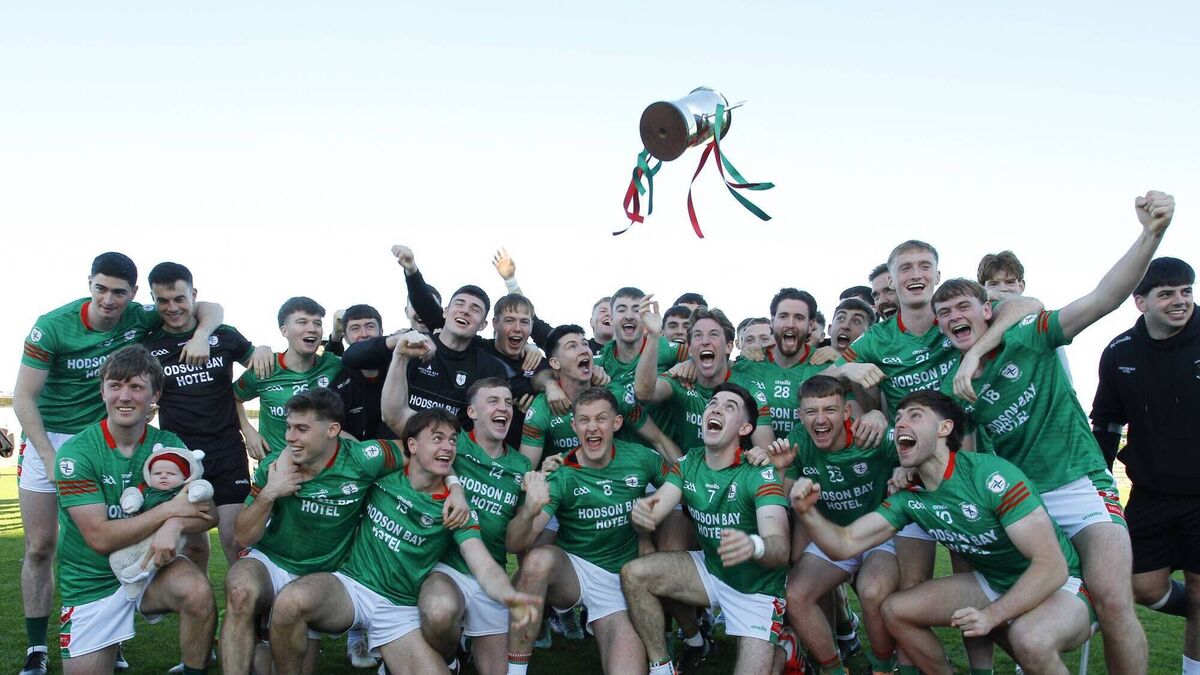
For all the excellence embedded within the Roscommon Senior Football Championship, it is the team at the top of the mountain that have the greatest potential to climb even higher, writes KEVIN EGAN…
A final for the ages between two outstanding club sides, crowning a championship where there were signs of hope for several members of the chasing pack. On the face of things, those invested in the wellbeing of Roscommon football are entitled to feel pretty good this week.
Perhaps St. Brigid’s will go deep in the Connacht and All-Ireland Series, or perhaps they will be knocked over along the way — a possible semi-final clash with the Galway champions looks particularly daunting for the Fahey Cup holders.
Still, coming into Sunday’s final, there was a strong argument to say that this was a clash between two of the top ten club sides in Ireland, and that argument was reinforced by the standard of the match.
Yet, for all the conditioning, class and collective endeavour that was on show, there are other teams that will spend the winter believing that they aren’t as far away as all that.
Boyle, Michael Glaveys and Strokestown played competitive fixtures against these two teams along the way and came agonisingly close to victories, while Clann na nGael did beat Pádraig Pearses, albeit in a fixture where there was nothing concrete on offer for winning.
The bar is high when it comes to being competitive in the Roscommon Senior Football Championship, and the whole county, in particular local supporters who get to watch the action, all benefit from it.
In the lead-up to the final and indeed in the aftermath of it, the complete absence of any bitterness in the rivalry between these two neighbouring clubs is remarkable.
Neither sees the other as the group that robs them of more success, instead they understand that each is pushed to greater heights by the presence of the other. Games between the two are physical and competitive, but never nasty or cynical, and while Dermot Lyons deserves recognition for playing his part in that aspect on Sunday, the players should take credit for how they went about the game.
If there is a concern from a wider perspective, it’s that out of the two teams, Pádraig Pearses will be the group with all the regrets, even though they flew a little bit closer to their ceiling.
Notwithstanding the immediate impact that they would take from the return of Conor Ryan and Seán Canning, it’s St. Brigid’s who might find the extra few percentage points easier to find, even more so in a new paradigm in 2027 where it’s possible that teams will be permitted six substitutes as opposed to five.
In the spirit of authors who start with their ending and work backwards, breaking down the game is best done by working in reverse from the final whistle.
It will be remembered as a county final where there was nothing between the sides until extra-time, but Tom Butler’s sensational equaliser masked how, even at the hour mark, the momentum of the game had shifted dramatically towards the Kiltoom-based club.
In the main, this was down to the bench impact. On the back of an outstanding performance from Declan Kenny and a couple of uncharacteristically errant restarts from Conor Carroll, Pádraig Pearses had been slightly superior when it came to the kickout battle for the first three quarters of the game.
But once Eddie Nolan was introduced, the balance shifted, the pressure mounted on the men in red, and, by the end, even Paul Whelan’s “safety blanket” option — the short dink out to the left corner aimed towards David Murray — didn’t work.

Pearses attempted to introduce Hubert Darcy as an extra fielding option but that only left Darcy spending as much time in his own half-back line as he was at the other end of the field, which was a sub-optimal use of his strengths.
Ronan Stack’s contribution might not have shown up as obviously on the stats sheets, but it was still plain to see to all in attendance, and crucial to the cause. Charlie O’Carroll also made his mark with a superb 0-4 haul, and he can consider himself deeply unlucky to have found himself cast in the role of “finisher”, given that he is racking up the scores in his minutes on the field.
Butler’s heroic strike aside, Pearses didn’t get anything like that level of transformation. Anything that was a problem for them after 15 minutes was still a problem after 55 minutes.
Two years ago, Charlie O’Carroll played in a quarter-final against Pearses, and he went through what John Price experienced on Sunday — a tough learning curve for a player who is ahead of schedule in his development, something that will stand to him immensely in the long run. Price finding the going tough is easy to understand, but it’s a measure of where Pearses are at in terms of depth that he was one of their first options.
The rest of the cohort that came into the Pearses team couldn’t be accused of weakening the side, but they didn’t make the impression that was needed either. Meanwhile St. Brigid’s could afford to leave Eoghan Derwin, Adam Lennon and a handful of other potentially impactful players on the sideline.
It could be argued that when it came to coaching, gameplans, and getting the most out of what they had on the pitch, Pearses edged the contest on the sideline.
While Ben O’Carroll and Conor Hand came up with moments of individual brilliance to deliver crucial scores for their club at a vital time, and Brian Stack did what Brian Stack does — playing his best football when the pressure was on and demanding that more responsibility was heaped on his shoulders — Pearses created high-percentage, high-quality chances with their structured movement of the ball and their smooth interplay.
Time and again players like Declan Kenny and Jack Tumulty exploited cracks in the St. Brigid’s rearguard by using their footwork to either blast past or else wrong-foot a defender, and in situations where it was two-on-two or three-on-three, Pearses got a good shot away.
Their transition play was faster, they had a clear structure in place for turning their kickout wins into shooting chances before that all-important ten-second window closed, and they did this in a game where every St. Brigid’s defender was either on top, or breaking even against his direct opponent.
Yes, there will be lamentations around Woodmount about their missed chances, particularly the run of three-in-a-row at 0-13 to 0-11, when they had the chance to extend the lead.
But here, the question must be asked, what level of return is realistic? Which statistic is the anomaly — scoring 2-16 while hitting nine wides and dropping one shot into Conor Carroll’s hands, or their 5-22 (two wides) and 3-17 (one wide) returns in previous games?
St. Brigid’s hit one goal from three clear goal chances, hitting the post and drawing a save from Paul Whelan with their other two openings. Pearses got one goal out of a scramble, got another from a surprising penalty decision, and didn’t really look like raising a green flag otherwise.
Saying that Pearses left scores behind them is reasonable, saying that they left more behind them than their opponents is not.
For good measure, in a battle between two incredibly intelligent and disciplined teams, it was St. Brigid’s who had one lapse, conceding what was a needless two-point free that Paul Carey converted before half-time.
Roscommon club football has two outstanding flagship teams, and a very capable cohort of clubs chasing after them. The only concern is that out of all of them, it’s the club that is on top of the mountain right now that has the most potential to go even higher.