‘Absurd’ to suggest Dublin stabbing accused did not intend to kill, jury told
By Gráinne Ní Aodha, Press Association
It is “absurd” to suggest that the man accused of the attempted murder of three children on a Dublin street three years ago did not intend to kill, a prosecuting barrister told the Central Criminal Court.
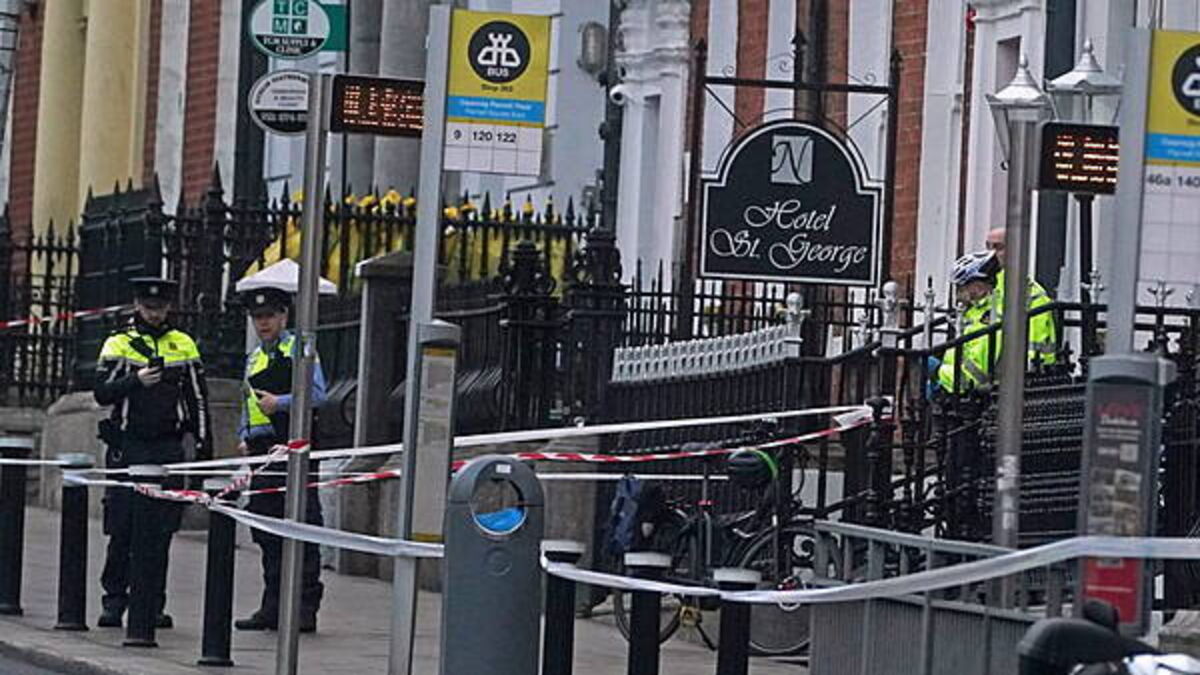
Riad Bouchaker, 52, of no fixed address, is charged with the attempted murder of two girls and one boy, and assault causing serious harm to care worker Leanne Flynn, in Parnell Square East in Dublin City on November 23rd, 2023.
The defence barrister urged the jury not to view Bouchaker as a “monster” and said “vengeance” should have no place in the courtroom as he urged them to look at the case with “calm and intelligence”.

Bouchaker is also charged with assaulting two young children and a teenager, and with producing a 36cm kitchen knife.
He has pleaded not guilty to all eight charges.
On Monday, the jury of nine men and three women were told the prosecution’s case had formally closed and that the defence would not be calling evidence.
Mr Justice Tony Hunt told the jury that it was the right of every accused person to not give evidence, and the accused “can say ‘I want nothing to do with this process, you prove the case’.”
After the closing statements concluded, Mr Hunt said he expected his charge to the jury would continue for the duration of the afternoon and into Tuesday.
Giving his closing statement to the jury, prosecuting barrister Karl Finnegan SC said he wanted to be “crystal clear” that he was asking the jury to find Bouchaker guilty of all eight charges on the indictment sheet.
See this for what it is, ladies and gentlemen
He said if the defence were arguing that Bouchaker did not intend to kill anyone and that he was not in his right mind at the time, he urged them to “absolutely reject that defence” as it was “inconsistent” with CCTV footage, eyewitness accounts, and with the injuries to individuals at the centre of the charges.
Referring to Bouchaker’s statements to gardaí, a month after the stabbing, where Bouchaker indicated he expressed regret or was thankful no one died, Mr Finnegan said “even if true”, this was “irrelevant” to the intention of his actions at the time.
He said it did “not help one jot” that Bouchaker had said “thank god” no one had died during later interviews with gardaí and said this indicated he understood that death was a likely consequence of his actions.
He said that “most importantly” they should reject it as it was “inconsistent with common sense” and it was an “absurd” suggestion that he did not intend to kill.
He said that Bouchaker’s statement to “thank god” that no one died is “an acknowledgement of how close things came to murder” and that he was only “stopped by the courage of others”.
“See this for what it is, ladies and gentlemen,” he said.

The defence barrister representing Bouchaker suggested to the jury that there was a “dearth of evidence” in two of the three attempted murder charges.
He said that there was no evidence presented that a less than 1cm laceration on a five-year-old boy’s neck was done by Bouchaker, and that the evidence “to sustain the extraordinarily high count” of attempted murder “is not there either” in relation to a head wound to a six-year-old girl.
He urged the jury to not view the accused as “some monster” but as a person presented for trial.
He said he was not asking them for “your sympathy” for Bouchaker, who he said was “inflicted, impaired and somewhat adrift” in this process, as that would be an “emotional” response.
Instead, he asked them if a member of their family were sitting where Bouchaker is, “ask what kind of trial would you want” for them, before adding that the jury was to represent “the best parts” of society.
He also said that “vengeance should have no place here” and said the “shrieking” of others “should find no place in these courts”.