‘A simple blood test gave me a fighting chance’ - Marty’s cancer journey
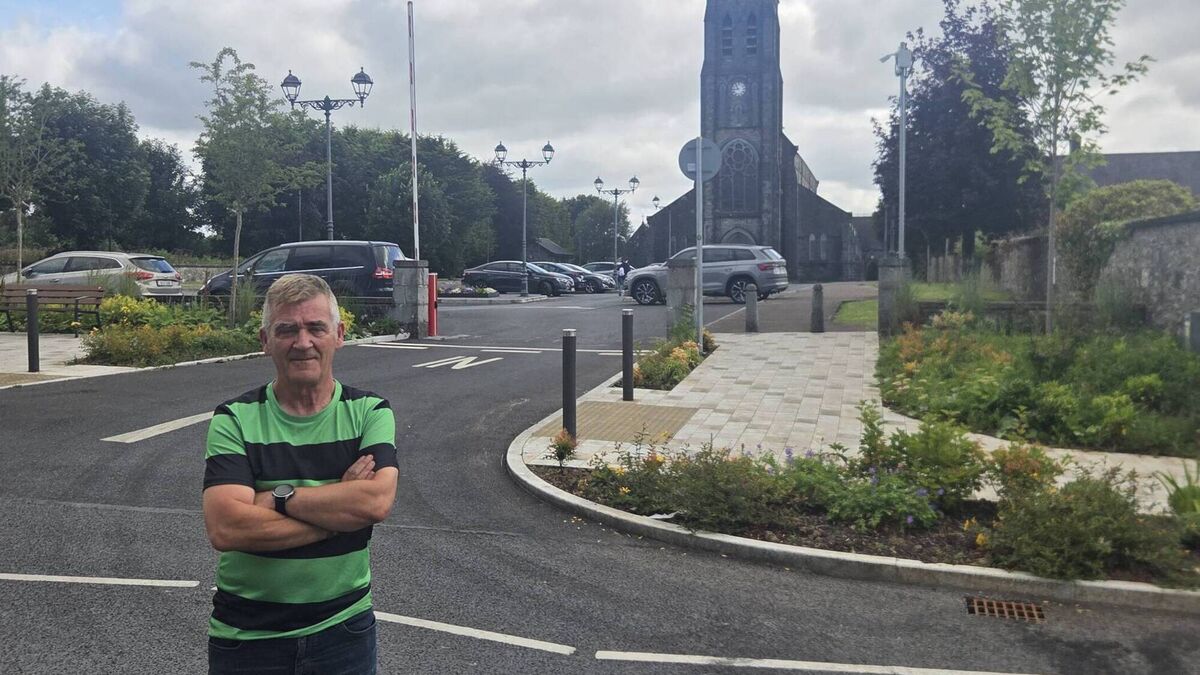
Marty Groarke firmly believes a routine blood test in January 2025 saved his life.
If Marty Groarke from Ballaghaderreen has one message for people over 40, it is simple: get your bloods done.
He firmly believes a routine blood test in January 2025 saved his life. Without it, he believes his cancer would have gone undetected until it was too late.
“A simple blood test has given me more than a fighting chance,” the popular local figure told the Herald. “Anyone over 40 is gambling with their lives by not having one, and we all know gamblers never win.” What makes the 62-year-old’s story even more remarkable is that he felt perfectly healthy when the cancer was discovered. The diagnosis came completely out of the blue.
January 2025 had started routinely enough. Like every year, Marty went for his annual blood test. He was more concerned about his cholesterol levels than anything else and was even hoping he might be able to come off the statins he had been taking.
Instead, the blood results showed elevated liver enzymes. “My cholesterol was fine, but liver enzymes were raised, probably due to the excesses of Christmas,” he recalls.
His GP decided to repeat the blood tests two weeks later. The results were still abnormal. That decision triggered a chain of events that would ultimately uncover a serious health diagnosis.
An ultrasound scan in Roscommon led to a CT scan. A short time later, Marty was called into his local clinic where the doctor told him he had a 2.5cm lesion on his liver. “I asked him what he thought and he said he thought it was cancer.” Even then, Marty's instinct was to focus on the next step. “‘So, where do we go from here?’ I asked.’” The answer involved more blood tests, specialist referrals and, eventually, a biopsy at St. Vincent’s Hospital in Dublin. A few days later came the diagnosis that changed everything.
Sitting with consultant oncologist Dr Fergus Keane and accompanied by his sister-in-law Carol, who is an oncology nurse in Galway, Marty learned he had an aggressive cancer of the bile duct running through the liver.
The news became even more alarming when he was told how quickly it was growing. “He told me that from 2.5cm, it had grown to 4.5cm in two weeks.” Because of the tumour’s location and size, surgery was not considered possible at that stage. “They couldn't guarantee getting all the cancer out and I'd be looking at end-of-life care.” For many people, such a conversation would be devastating but Marty chose to approach it differently. Outside the hospital, he remembers taking stock of the situation. “I was thinking that this is just another battle and I’ll know now what I’m made of.” That mindset has carried him through every stage of the journey since. “People deal with a diagnosis in different ways,” he said. “Some people will withdraw and keep it to themselves. Others, like me, will do the opposite: face it, talk about it. Some battles have to be fought and, if you win or lose, at least you were in the fight.” Treatment began almost immediately. Doctors put him on a demanding chemotherapy regime and before treatment started, Marty lightened the mood with a question that brought laughter to the room.
“‘Yeah, Fergus, one vital question. Will I lose my hair?’” Fortunately, the answer was no.
Chemotherapy was far from easy. There were long hospital visits, powerful drugs and side effects, including episodes of what patients often describe as “chemo brain”. “One day I opened my washing machine but I had it full of garbage,” he recalls. “The following week I got a new video doorbell but threw half of it into the bin.” Recognising his concentration was being affected, he stopped driving.
Throughout treatment, support arrived from every corner of his community. “It also helps that your whole community will rally around you and help in any way they can. And they sure did.” Family, friends, neighbours and medical professionals all became part of the team around him.
There was also positive news. A PET scan confirmed the cancer had remained confined to the liver region. “Thank God,” Marty said. “I only wanted a fight on one front.” The chemotherapy initially worked. After ten treatments, scans showed significant shrinkage of the tumour and doctors pressed ahead with another ten sessions. Later, however, the tumour adapted and began growing again.
Dr. Greg Lambert, his Galway consultant, moved him onto Ivosidenib, a newly approved targeted therapy specifically designed for his type of cancer. He also underwent an embolisation procedure led in St Vincent’s Hospital in an effort to make surgery possible. This involved restricting the blood flow to 70% of my liver, which would kill that portion of his liver.
However, while follow-up scans showed the tumour was still too large to remove by surgery, the treatment has helped keep the cancer under control.
Today, he continues to undergo monthly reviews, blood tests and scans. “My monthly checks have shown cancer profile and tumour markers have been excellent so far,” he outlined. “Twenty months in, still not out of the woods, but going strong and my quality of life has been very good.” Yet through all the treatment, procedures and hospital appointments, he keeps returning to the moment this journey began: a routine blood test.
When doctors looked back at his case, they told him he had been completely asymptomatic. He felt fine. There was no pain, no illness and no warning sign that an aggressive cancer was growing inside him.
“I was about two months away from getting sick and, if I had, it would have been too late. I would have been straight into palliative care.” That reality is why he speaks so passionately now about early intervention. The blood test did not save Marty’s life on its own. But it set in motion the scans, investigations, diagnosis and treatment before the cancer reached an advanced stage. Without that intervention, he believes he would not be here today.
His cancer journey is not over. He knows there are no guarantees and no easy victories. But he is still fighting, still receiving treatment and still enjoying a good quality of life because the disease was discovered before symptoms appeared.
And that is why his message is directed not at cancer patients, but at healthy people. People who feel perfectly well. People who think they don't need a blood test.
“Get your bloods done, folks,” Marty advises.
* Marty wants to take this opportunity to thank the following for their support: his family, friends - especially Mick, Enda and Pat; the Ballaghaderreen Clinic; Galway Oncology Day Unit; St Vincent's Liver Department; Cancer Society of Ireland; Dr Greg Lambert and Dr Fergus Keane.