Fallon's Town Talk: Despite Ireland’s absence, World Cup excitement builds
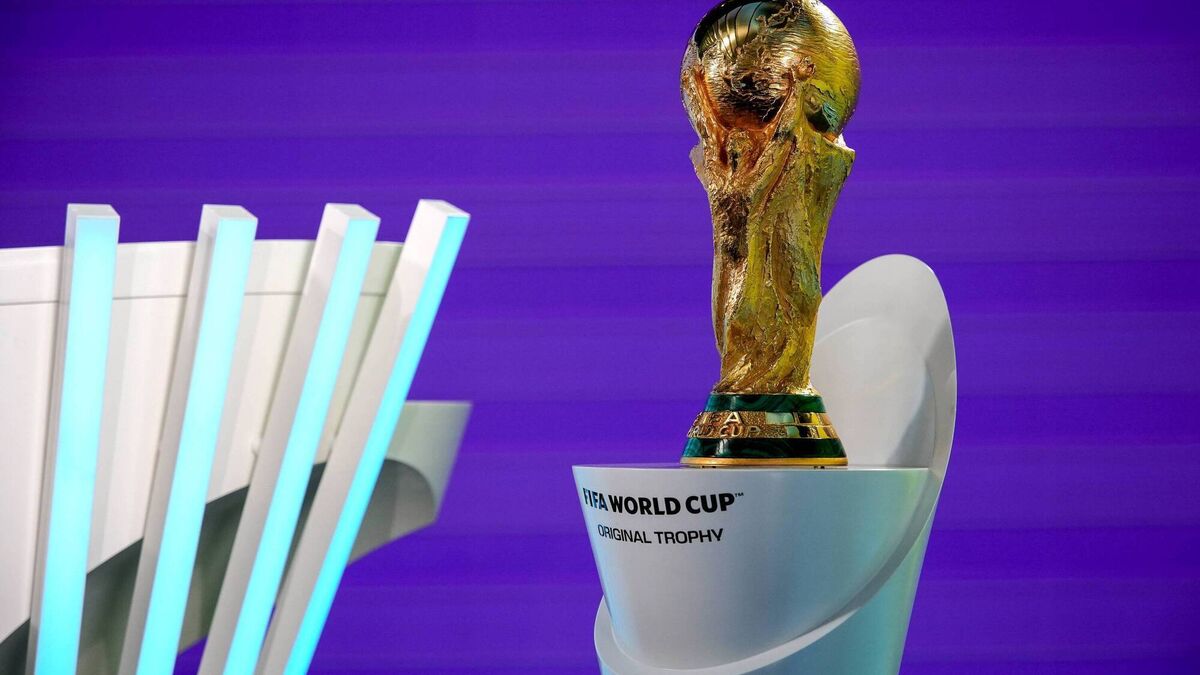
The World Cup trophy will be up for grabs and is still as magical as ever despite new format. Photo: INPHO
The World Cup is almost upon us. Only the Olympics comes close as a global sporting spectacle. While the Olympics are enthralling, part of the attraction of the games is watching sports which are only catapulted into the limelight every four years. In contrast, soccer is the world’s most popular sport – except in the nation which is one of the joint-hosts – the USA.
Ireland came tantalisingly close to qualifying and it is now that the impact of the cruel defeat in the qualifiers is being keenly felt. It is hard not to think of the joy and excitement that would be engulfing Roscommon and every other part of the country in the days leading up to the big kick-off.
Paradoxically, the further we get from Italia 90, the more the wistfulness grows. The 1990 World Cup is one of the landmarks of the 20th century in Ireland: the sporting equivalent of the 1916 Easter Rising or the 1979 Papal visit. Jack Charlton and his merry men will always be revered but it time for new heroes, for new generations to experience the thrill of Ireland playing at a World Cup.
That is not to be for this Mundial, but even without Ireland qualifying, there is a giddiness that comes with the anticipation of any World Cup. Fears persist that geopolitics will spoil this World Cup. The nauseatingly close relationship between President Donald Trump and FIFA president Gianni Infantino looms over the tournament.
Infantino has achieved the seemingly impossible by being more unlikeable than his predecessor Sepp Blatter. As always with the erratic Trump, nobody knows how he will behave during the World Cup.
Nonetheless, there is also a good chance the sense of dread will be unrealised. FIFA has long been enmeshed with unsavoury administrations. Even greater fears were expressed about how fans would be treated and how the football would be overshadowed by the vileness of the regimes in Russia and Qater – yet both 2018 and 2022 were exciting tournaments with the final four years ago among the best there has ever been.
As the opening match approaches, we are transported back to memories of World Cup past. Paul Howard – of Ross O’Carroll-Kelly fame – wrote a superb article in ‘The Irish Times’ last Friday about how you spend the rest of life chasing how your first World Cup made you feel. It’s worth reading on social media.
Much of Howard’s article resonated for me. My favourite World Cup team remains the mesmeric Brazilians of 1982; my favourite Brazilian player remains Socrates – the player for whom the word ‘languid’ would have had to be invented if it hadn’t existed already.
The team of Socrates, Zico, Eder, Falcao played only five matches and didn’t win the tournament. With many of the same team they didn’t win 1986 either; what they did was contribute to possibly the two most spellbinding matches in World Cup history – a 3-2 loss to Italy in 1982 and a penalty shoot-out defeat by France four years later.
Brazil 1982 are the JFK of the World Cup – the tragic heroes who left the world with a tantalising sense of ‘what might have been’. But here’s the rub: 44 years later that team is still beloved while many of the winners since are forgotten, including the Brazilian side which edged a dreadful final in 1994.
I hope it isn’t youthful nostalgia that makes 1982 and 1986 – when the incomparable Diego Maradona carried Argentina to victory - the best World Cups I’ve seen, at least until the 2022 tournament which, bizarrely, took place in winter in Qatar. Ireland’s qualification made 1990 and 1994 special in a way the actual quality of football didn’t justify.
Despite the antics of Roy Keane, I retain fond memories of 2002 too, including a crazy day when Ireland gained a last-gasp draw with Germany. The match was at 12.30 in the afternoon and that week’s edition of the newspaper had been put to bed the night before. The rest of the day and night was as languid as Socrates in his prime.
As big a fear for this World Cup as the geopolitics is the sheer number of teams and matches – 32 countries just about worked, 48 is too many. There’s every chance the TV audience will tune out for much of the group stages after the initial buzz. Nonetheless, when the knock-out stages begin, the excitement will build to a crescendo. Hopefully, it’s a World Cup that is memorable for the young…and also for those who will reconnect with their youth.