Remembering the Malahide Murders: The Ballygar roots of a 1926 tragedy
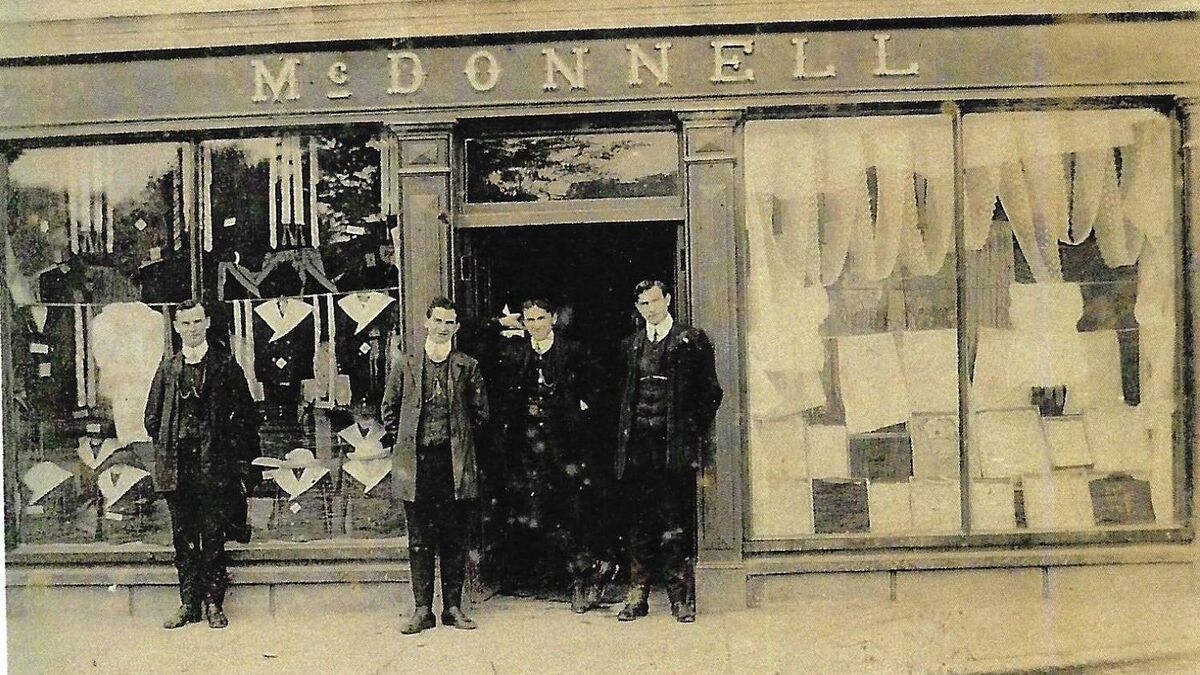
McDonnell's shop, Ballygar, 1910. Pic: Courtesy Paul Connolly
The Malahide murders of 1926 remain among the darkest crimes in Irish history, yet the Ballygar origins of the story are often overlooked.
The murders refer to the killing of the McDonnell family by their gardener, Henry McCabe. The McDonnells were a well-off and devout Catholic family who had lived in Ballygar for many years, operating McDonnell’s shop—a thriving grocery, drapery and general store. Brothers Peter and Joseph McDonnell ran the business, which played a notable role in Ballygar’s local economy.
Historian Paul Connolly, operator of the Mount Talbot History Facebook page, describes the family as “a bit elusive”. Deeply Christian and devoted to St Mary’s Church, Ballygar, “they would have their own seat reserved at Mass,” he explains.
“A lot of them didn’t get married—they married. They donated a lot to the church.” Their impact is still visible today. The family donated the altar and other fixtures that remain in place, and a plaque outside the church commemorates them, stating that a Mass will be held for them every month forevermore.
Paul believes the family’s departure from Ballygar was due to two main factors: personal tragedy and shifting political circumstances. Of the original sixteen children, only four remained.
“They were hit with a lot of tragedy… it seemed like they had a lot of bad luck,” he says. One brother’s son died from pneumonia while on honeymoon; the other died instantly after being struck on the temple by a potato thrown in jest by a friend in a field.
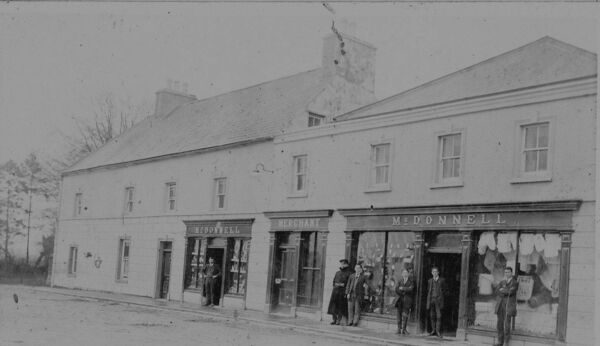
Political pressures likely also influenced their decision to move. “They were linked to the Irish Parliamentary Party,” Paul notes. “They would have been very much conservative… leaders of the Irish Volunteers who went to serve the British in WW1, so I think they moved to get away.” “They would have been very much against the IRA and rebellion, and Ballygar had a large IRA force coming after they left. They wouldn’t want to be seen having anything to do with the War of Independence because that would have been treason to those fellas.” For these reasons, the family closed their business and relocated to Malahide.
They bought a large house called La Mancha near Malahide in November 1918. The prominent residence sat on about 30 acres of land. Peter and Joseph McDonnell and their sisters Alice and Annie all moved there. A man named James Clarke, from outside Ballygar and long employed by the family, also relocated with them.
At La Mancha, they hired a cook, Mary McGowan, and a gardener, Henry McCabe.
The murders took place on March 31st, 1926. Firefighters responding to smoke at the property found the doors and windows shut. Four of the bodies were already severely burned when the fire brigade arrived. A fire poker appeared to have been used as the murder weapon.
James Clarke was known for his loyalty to the family. Paul believes this may be why he was killed first: “He knew he would have defended them. He lost his life because of his loyalty.” The entire McDonnell household—Annie (56), Joseph (55), Peter (51) and Alice (47)—along with workers Mary McGowan and James Clarke were murdered that night.
Henry McCabe was quickly identified as the prime suspect. He was tried, found guilty, and hanged in Mountjoy Prison in December 1926.
As the centenary of this tragedy approaches, historian Paul Connolly believes it is important to recognise and remember its deep roots in Ballygar, where the McDonnell family’s story began.