‘Well, Holy God’ Ballaghaderreen man documents growing up in the Catholic Church
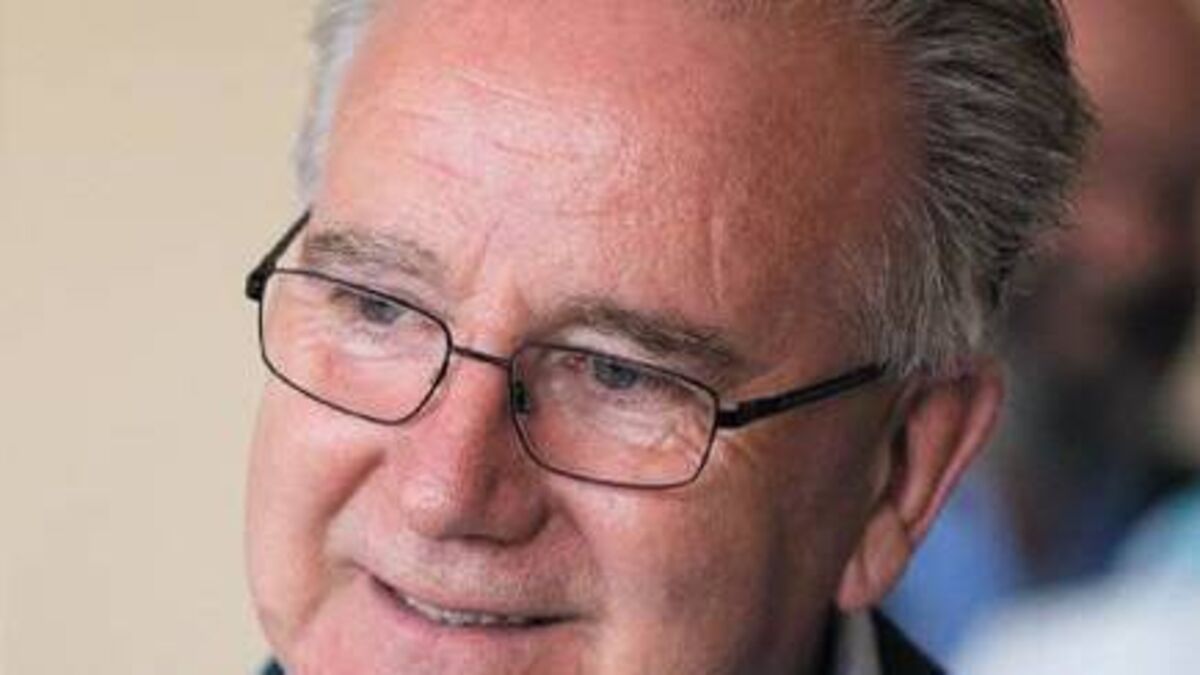
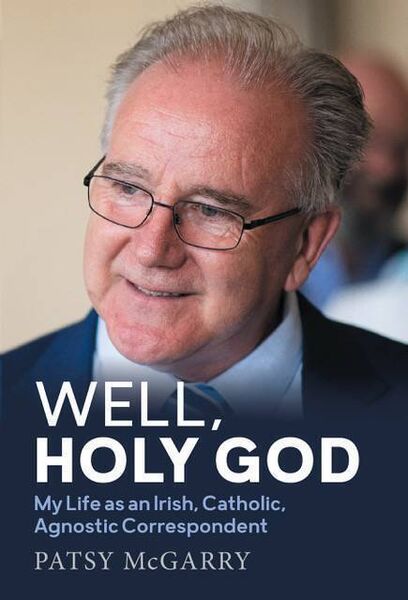
Ballaghaderreen man Patsy McGarry has released a new autobiography entitled 'Well, Holy God'.
Ballaghaderreen’s Patsy McGarry has released a new autobiography entitled ‘Well, Holy God’, in which he gives a personal account of growing up in the Catholic Church and of a faith lost when the stark realities of that church became apparent to him.
Patsy takes the reader through his formative years and education to his time as Religious Affairs Correspondent with The Irish Times in a period of massive social upheaval.
He argues that as an agnostic he was possibly better equipped to deal impartially with the seismic events that rocked the very foundations of the Catholic Church during his tenure. The church he experienced as a young man was a cold house for Catholics because of “its deep distrust of the body as the greatest threat to eternal salvation”.
His paternal grandfather, also known as Patsy, was a legendary local figure because of his exploits during the War of Independence. On one occasion during the 1930s he openly challenged the authority of the parish priest during a Mission Mass in the area, because of the cleric’s recommendation to the congregation that they vote Fine Gael in the upcoming election. Patsy stood up and asked: “Father, where does it say that in the Gospel?” As a founder member of the first Fianna Fáil cumann in Mullen, he was not going to stay silent in the face of such blatant propaganda. It was a courageous stance at that time.
His mother was deeply religious, but never pious. For a time, he believed he had a vocation.
This book covers his journalistic career, from the horrors of the various clerical child sex abuse cases and the muted reaction of the Church of Ireland to the violence at Drumcree, to the role of women in the Catholic Church and the tragedies of the Mother and Baby Homes and the Magdalene laundries.
There is a whole chapter dedicated to disgraced Bishop Eamonn Casey, the subject of recent sexual abuse allegations.
Mr McGarry told the Roscommon Herald that he applied for the role of Religious Affairs Correspondent back in 1997 to hold religious leaders to account in the same way as their political counterparts were.
“I had been writing political journalism up until then and I would have interrogated politicians. I questioned them without deference but with respect and hopefully I continued that when I became Religious Affair Correspondent. I questioned church leaders the same way I would question politicians.
“I treated them the same as any other powerful group in society. My early years coincided with the emergence of the abuse scandals. It took over my job. When I went into the job in 1997, Fr. Brendan Smyth was jailed that year for the abuse of children.
“I thought it was a once off, an aberration, but it was only the beginning. It became a tsunami. There were people coming forward with allegations of abuse that went through the courts process and priests were convicted so it was a massive story to be covering,” he explained.
The Ballaghaderreen native is an admirer of former President Mary McAleese. He remarked that being a Belfast-born President of Ireland and taking Communion at a Church of Ireland Eucharist - was one of the first big stories he covered in his role with The Irish Times.
He added that the former President was somebody who worked hard to bridge the religious divide north and south of the island of Ireland.
“I think she was very courageous and still is in terms of raising her voice against the Catholic Church and for gay people in particular.
“One of my first great scoops was when she received the Communion in the Church of Ireland’s Christ Church (Cathedral).
“The Catholic Church lost the head about it at the time, but she was trying to reach across the divide.
“She was one of those people involved at the outset when the peace process was concerned.
“I think Mary had a hugely positive influence where peace was concerned and her husband Martin, who refused RUC protection when he went into loyalist areas, also played a significant role. I think the McAleeses are enormously positive influential people in Ireland,” he explained.
He worked as Religious Affairs Correspondent through three separate popes. He states that Pope Francis has proven a steady influence during a time of turbulence for the church.
“John Paul II was a hugely influential figure politically and played a big part in the collapse of the Soviet Union. Ironically a man who was opposed to priest’s being involved in politics will be remembered for his own role in politics.
“He was a very conservative man. Then Pope Benedict XVI came along and he was seen as a continuance of John Paul II but he was a number two man.
“He became isolated and was a reserved, shy man. He did one of the most radical things any pope has done in 600 odd years by resigning. I like Francis a lot. He won’t make any huge changes, but he has changed the whole mood of the church.
“He is much more tolerant and has made the church a much more compassionate institution where gay people are concerned and where women are concerned. I met him personally and that is the way he is,” Patsy explained.
He states that although the church’s influence has reduced within society, he believes that faith and Catholicism will not disappear in Ireland.
“The church will not have the same influence in young people’s lives today that it had when I was young. There are still very good people in the church and the survival of the Catholic Church is due to the priests on the ground with whom the people identify with. Faith won’t die.
“People need to believe and as long as that necessity is there, there will be religion and a Catholic Church. It will take a different form. In the future it will be much more women led.
“There isn’t a parish in Ireland that isn’t dominated by women when it come to looking after churches. It is the same for all Christian denominations. Women are the backbone of religion wherever you have it.
“I do believe the church will last. Let us not forget Catholic religion survived shocking persecution in Ireland during the penal period and its survival came in part from the stubborn character of the Irish people. If you want to take Catholicism away from the Irish people, they will fight tooth and nail to keep it,” he said.