Herald Opinion: Covid times show us how fragile ordinary life can be
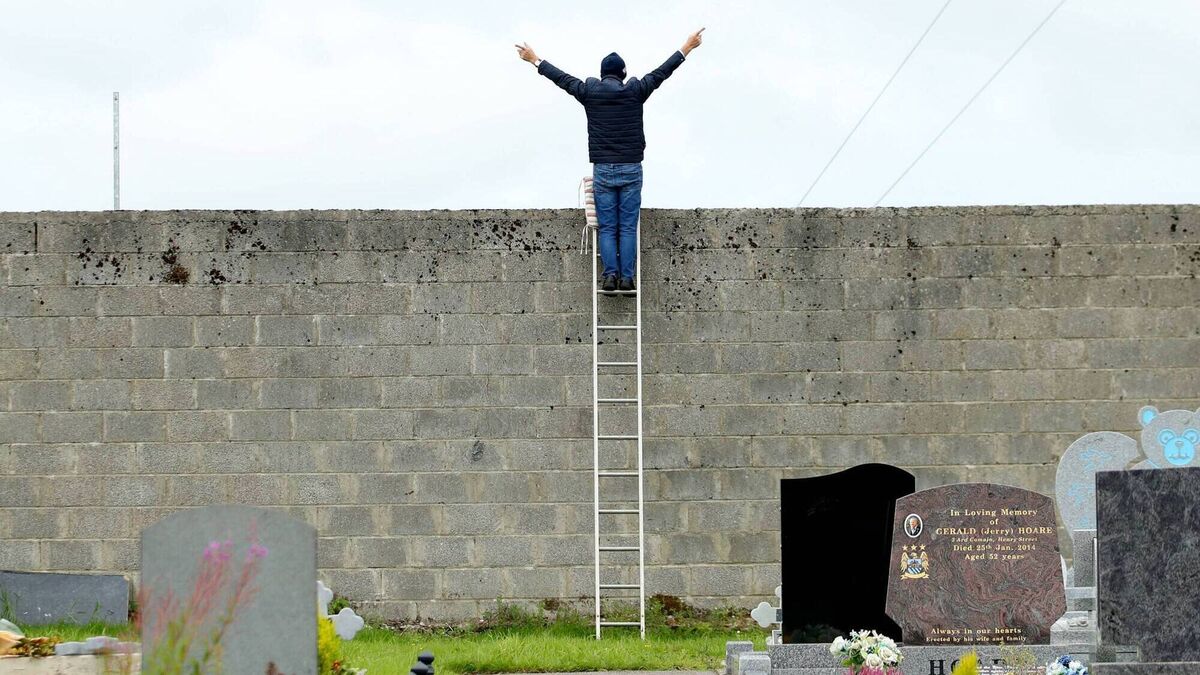
During the Roscommon senior football championship semi-final at Dr. Hyde Park, Roscommon on September 6th, 2020 (during Covid) this shot by James Crombie of a fan watching the game from outside the grounds made the headlines.
Six years is not a very long time in history, but when you think back to spring 2020 it feels like another era entirely.
Last week marked the anniversary of the moment when Covid suddenly became real for Ireland. On Thursday, March 12th, Taoiseach Leo Varadkar, speaking from Washington, announced that schools across the country would close that evening and remain closed for a few weeks while efforts were made to slow the spread of the virus.
At the time, many of us thought it would be little more than an extended break. A precaution. A pause while the authorities figured things out.
Few people imagined what lay ahead.
Within days the word “lockdown” had entered everyday language. Ordinary routines that had seemed permanent suddenly disappeared. The school run vanished. Sunday Mass was cancelled. A quick chat in the shop felt strangely awkward behind masks and distance markers on the floor. Matches stopped, pubs closed, and roads that were normally busy fell strangely quiet.
It was as though the country had stepped inside at the same moment.
For the first time in generations, people everywhere were living with the same uncertainty and the same unanswered questions. Nobody knew quite how serious the virus might become or how long the disruption would last.
For many families it was a difficult and lonely period. Some lost loved ones and were denied the comfort of a proper farewell. Older people endured long stretches of isolation. Children and young adults, meanwhile, were asked to adapt quickly to a world that had suddenly become smaller and more uncertain.
Schools moved to kitchen tables and laptop screens. Teachers and parents did their best to keep things going in circumstances none of us had ever prepared for. In towns and villages across the country, ordinary life carried on in unusual ways.
Yet even during those difficult months there were countless acts of kindness. Neighbours checked in on older residents. Shopping bags appeared quietly on doorsteps. Phone calls that might once have been short and routine became longer and more important. When the world felt uncertain, communities did what they have always done, they looked after each other.
We did not always agree with every rule or every decision made during that time. With the benefit of hindsight there are certainly aspects that can be debated and questioned. How a meal with a pint made you safe still baffles me, however one lesson from that period remains clear: the importance of science, patience and collective effort.
The arrival of vaccines changed the course of the crisis. Gradually, the worst of the danger receded. The work of doctors, nurses, carers, scientists and all frontline staff deserves to be remembered with real gratitude. For long periods they carried an enormous burden on behalf of the rest of us.
Life, of course, has moved on.
Some of the changes brought about by Covid remain with us. Working from home has become part of everyday life for many people. Others now operate hybrid working weeks, splitting their time between the office and home.
You can see the effect in small ways. Traffic in Dublin is not quite what it once was. Fridays and Mondays are noticeably quieter than they used to be.
Other changes are smaller but oddly persistent. To this day you still cannot get a cup of tea or coffee on the train from the West to Dublin — a tiny reminder that some habits lost during the pandemic never quite returned.
Sport eventually returned too. It is strange now to remember the anxiety around events like Cheltenham in those early days of 2020. The Allianz League is once again drawing to a close, championship is approaching, and grounds around the country are full again on weekends.
For a while it seemed impossible to imagine crowds gathering the way they once did. Yet slowly and steadily life found its rhythm again.
Looking back now, the scale of the disruption is almost hard to grasp. For nearly two years Covid reached into every corner of daily life — how we worked, how we travelled, how we met friends and neighbours, even how we mourned.
Six years on the virus has not completely disappeared, but thankfully the fear that once surrounded it has faded.
What remains are the memories: empty streets, anxious evenings and the strange quiet that settled across the country.
But perhaps the most lasting memory is something simpler than that.
Those months reminded us how fragile ordinary life can be — and how much we rely on one another when things go wrong.
And that is a lesson worth holding onto long after the pandemic itself has faded into history.