Herald Opinion: Time to start using town-centre parking responsibly
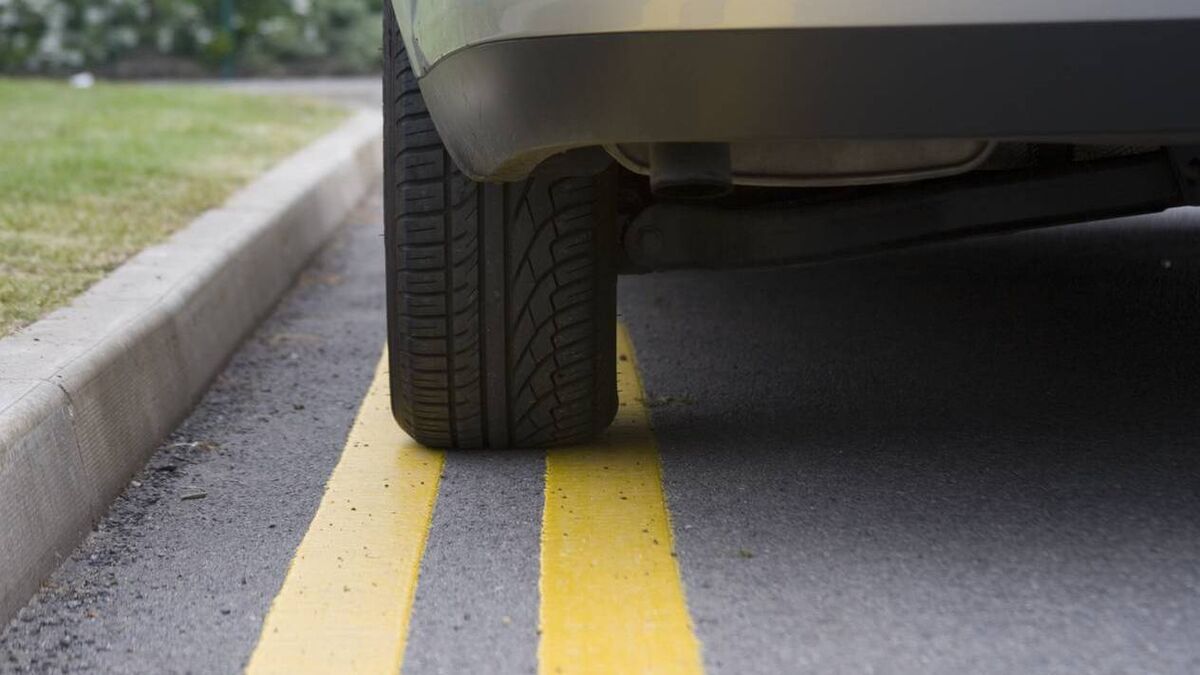
Cars being abandoned on footpaths and left on double yellow lines is a common sight.
It was a busy Saturday morning in Castlerea. I was heading into town to collect a prescription from the pharmacy, navigating the usual weekend flurry of activity. On-street parking was entirely full, all the marked spaces were taken—no surprise there, and no great grievance either. It is a sign of a healthy, trading town. What happened next, however, is a scene that has become altogether too familiar.
Right outside some businesses, cars were abandoned on the footpath and left on double yellow lines. Like many premises in Castlerea, there was a dedicated car park directly behind the shops, along with additional parking areas behind the businesses on the opposite side of the street. All were open, free, and mostly empty. Yet a handful of drivers had clearly decided that the shortest possible walk to the shop mattered more than traffic flow, pedestrian safety or common courtesy.
The consequences of this "convenience parking" were immediate. As always happens when a vehicle blocks a live lane, traffic quickly slowed to a crawl. Oncoming cars had to slow down, edge out blindly into the opposite lane, wait for a gap, and squeeze past the obstruction. Within minutes, a bottleneck formed, creating a sluggish tailback that rippled right through the heart of the town.
Thankfully, I wasn’t the only one to notice the disruption. The gardaí were firmly on the ball. Driving back out of town, after I’d completed my business, I spotted the flashing lights of a Garda patrol car parked up nearby. A garda was issuing parking tickets for blocking the footpath, obstructing the roadway and parking on yellow lines where restrictions apply between 8.30 a.m. and 6 p.m., Monday to Saturday. It was refreshing to see the rules being enforced. A bit more of this and maybe there’d be a bit less of the “total abandonment” that the Unbelievables told us about years ago.
But it leaves a lingering question that we must look squarely in the eye: Are we changing as a nation? Are we simply becoming lazy?
And it’s not just a Castlerea problem either. You see the same thing all over the country. Look at any major GAA match over at Dr. Hyde Park. The gate staff have an absolutely awful job dealing with motorists who insist on driving practically up to the turnstiles, trying to bring their cars inside the grounds. Those same supporters wouldn't dream of demanding a parking spot inside the gates of Croke Park, yet "The Hyde" is somehow deemed different. Patience seems to disappear once people think they might get a car a few yards closer to the gate.
The exact same phenomenon unfolds every single week at Sunday Mass. Cars are routinely abandoned directly by the front doors. You often get the distinct impression that if it weren’t for the stone steps, a few pious drivers would happily pilot their car right up the centre aisle to save themselves a twenty-yard walk from the formal car park.
The irony of it all is how incredibly lucky we are in this part of the country. Roscommon County Council maintains a very sensible policy: there is absolutely no paid parking anywhere in the county. Our public car parks are entirely free and plentiful. This is a massive competitive advantage for our local traders—one that business owners in neighbouring paid-parking counties look upon with immense jealousy. We have the infrastructure, yet we refuse to use it correctly.
The debate becomes more important when you consider what is happening in many towns. In towns across the county, there is a fear that as town improvements are carried out and historic streetscapes are redesigned, vital parking spaces are being permanently lost. This debate surfaced during public consultations on many projects. Local traders argued fiercely that removing spaces from places like Ballaghaderreen, Boyle, and Strokestown would suffocate local commerce.
It is a valid debate. But if we want to preserve town-centre parking, we must show we can use it responsibly. If we continue to treat footpaths as personal loading bays and double yellow lines as optional suggestions, we lose the right to complain when councils decide to pedestrianise our spaces entirely. It is time to leave the car in the car park, walk the fifty metres, and bring a bit of old-fashioned common courtesy back to our streets.