Retired officer plotted ‘inaccurate’ map in Noah Donohoe investigation

By Stanley Murphy-Johns, PA
A retired PSNI officer has admitted plotting an “inaccurate” location pin of Noah Donohoe’s phone after his last-known sighting but insisted it would not have helped police find the boy, an inquest has heard.
The 14-year-old had been planning to meet school friends at Cavehill, in north Belfast, after setting out on his bike on Sunday, June 21st, in 2020.
Jurors at Belfast Coroners Court heard that Noah’s family believe the police “overlooked issues”, including the location of his phone on the night he went missing.
The schoolboy was captured on CCTV cycling through the city centre and then towards the north of the city.
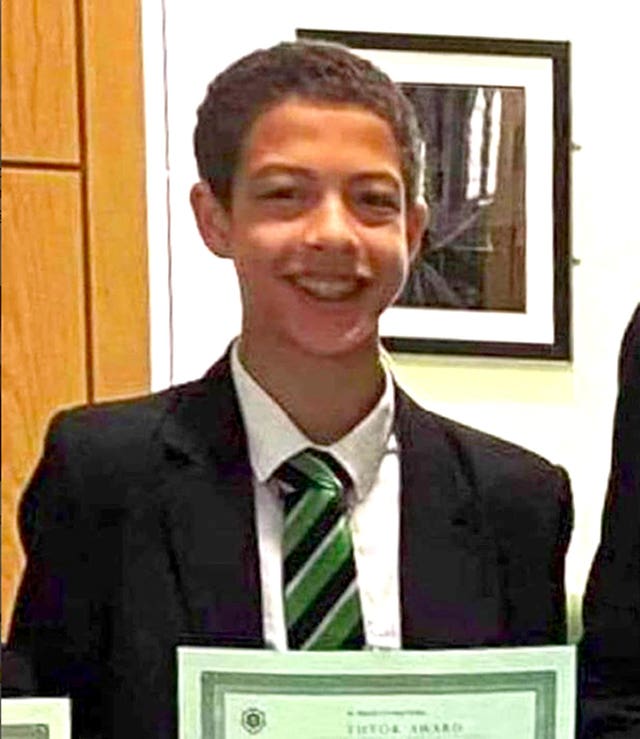
In the last piece of footage of Noah before he disappeared, he is seen riding the bike naked.
His naked body was found in an underground water tunnel on June 27th, six days after he left home.
A post-mortem examination found the likely cause of death was drowning.
On Thursday, the inquest – now in its 19th week – heard evidence from retired PSNI Detective Constable Wilson.
Wilson, whose first name was not given, was a digital media investigator (DMI), acting as a “first point of contact” for digital inquiries and was involved in the search of Noah’s Alcatel phone, which was found by a member of the public the day after Noah’s disappearance.
There was a police theory that Noah “threw his phone into Castleton Park over the railings” while he was cycling on Sunday, the court heard.
However, Brenda Campbell, representing Noah’s mother Fiona Donohoe, said this was “entirely inconsistent” with the data Mr Wilson was responsible for plotting.
Jurors heard that mobile phone data shows Noah’s phone travelled south of Castleton Park at 7:41pm on Sunday before being found back in the park the next day.
Wilson did not flag this as an inconsistency with the police theory at the time because he had incorrectly plotted the location on the map, the court heard.
“I am forced to accept it is inaccurate, but not wildly inaccurate,” Wilson said.
He added that the difference of “a couple of streets” does not change anything in the data and told the court “everything that was possible” was done to try to find Noah.
Campbell asked: “Did you not notice as the digital investigator that the location of Noah’s phone at 7.41pm was inconsistent with where the phone was recovered?”
“Using the Chorus Maps, which we’ve seen today, then it would have been consistent,” Wilson said.
“Because your location of Castleton Park was wrong,” Campbell added.
She argued that “further investigation” was warranted at the time into whether there was third-party involvement in Noah’s disappearance, telling Wilson, “I don’t suggest you’re the only one who overlooked issues”.
Campbell asked: “Who did you tell that the information you had was entirely inconsistent with the police theory that Noah threw his phone into the park?”
Wilson did not give a direct answer but eventually appeared to concede that, due to the location mix-up, he had not believed it was “inconsistent” at the time.
He rejected the suggestion the police were acting “retroactively” during the investigation.
“All information that I believed could assist with finding Noah and finding Noah alive was brought to the investigation as a matter of priority and as a matter of urgency,” Wilson said.
Returning to the suggestion that inconsistencies such as the location of the phone were not followed up, Campbell said: “To what extent did you even think about any of this when you got these maps?”
“Lots,” Wilson replied.
The inquest continues.