Short-term pain must procure long-term gain
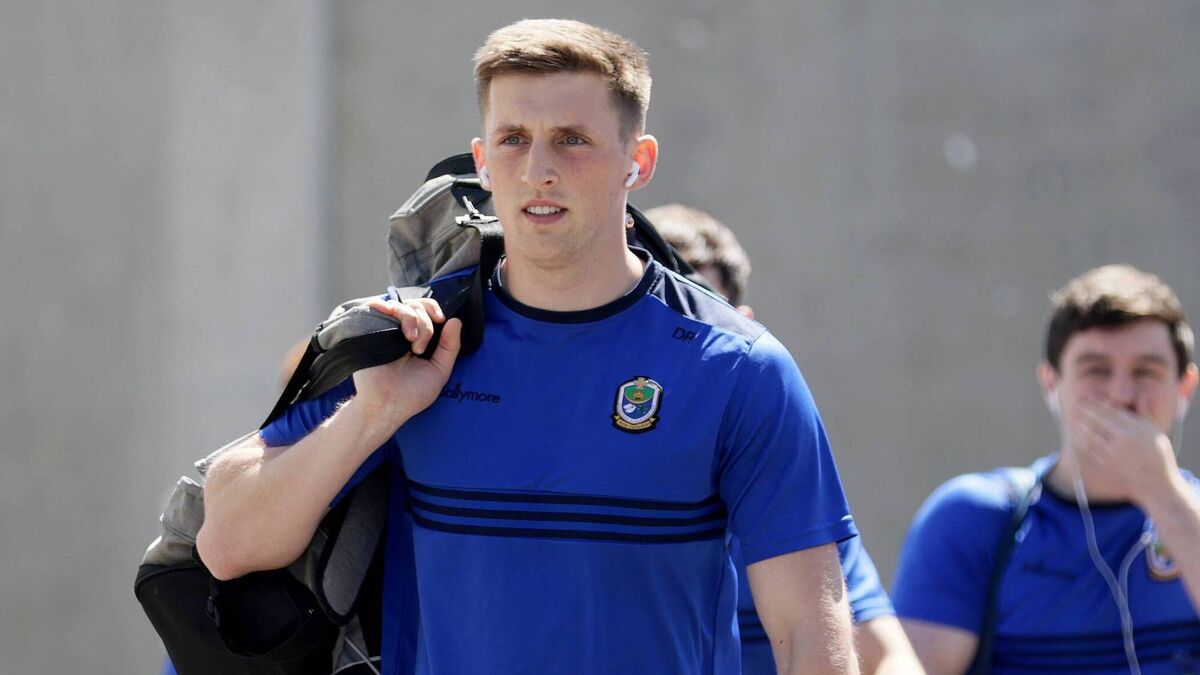
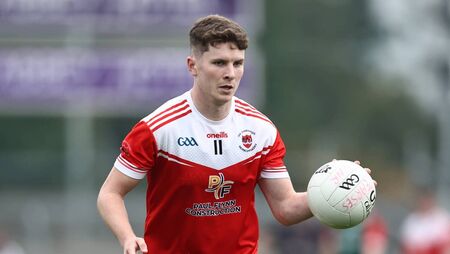
Dylan Ruane, one of Roscommon's most consistent performers these days, will be hoping that the Rossies can put their best forward during the upcoming National Football League Division One campaign. Picture: INPHO/Laszlo Geczo
It’s insightful that, despite a new manager taking up the baton, there has never been less expectation accompanying Roscommon into their latest Division One Football League escapade.
Mark Dowd’s new-look team are unbackable favourites to continue their yo-yoing trend since their promotion to the top flight under John Evans in 2015. Only twice (in 2016 and 2023) have Roscommon survived the cull among the big guns, and there’s little in the water on the eve of a new league campaign to ignite hopes of a successful survival mission.
Of course, the dearth of expectation can’t be placed at Dowd’s doorstep. In the aftermath of Davy Burke’s underwhelming final season, the Strokestown native — the first Roscommon man to take sole charge of the team since Des Newton in 2012 — has been tasked with overseeing a period of transition in the aftermath of the team losing a large tranche of experience from the dressing room.
Even with the team’s St. Brigid’s and Strokestown cohort firing on all cylinders, staying in the top flight would have been assigned to a Carlsberg advert.
It’s only natural to expect that the large St. Brigid’s contingent will be given some time off to recharge the batteries, and while Strokestown players like Colm Neary may return sooner, there’s no disguising the reality that Dowd is heading into this top-flight campaign with one arm tied behind his back.
But he must make the most of it, and that means finding new players that will prove themselves as accomplished intercounty footballers. With Donie Smith, Ciaráin Murtagh and Niall Daly heading off in the sunset, and a few more experienced players likely to follow the same road in the next year or two, Roscommon’s strength-in-depth will be tested, and it’s up to the new manager to find solutions.
Settling on a consistent spine — always an arduous task for Roscommon managers — must be a priority, and while the modern game bring flexibility to different positions, trusting players to fill the central positions in the knowledge that they won’t be jettisoned after one or two bad games must form part of Dowd’s thinking.
The fact that talk of Roscommon not having a full-back since Pat Doory or a settled midfield since the days of John Newton and Seamus Killoran still does the rounds hints at the regular issues experienced in nailing down key staples in the team.
In any other year, getting Kerry in the first round of the league might be viewed as an opportunity to nick something unexpected. But Roscommon aren’t at home and will be short personnel, meaning that Sunday’s trip into the den of the reigning All-Ireland champions in Killarney will be a baptism of fire, even if Jack O’Connor decided to rest some marquee names.
The first realistic chance to get some points on the board will be at home to Monaghan a week later. Win that game, and there will be some momentum going into the Armagh match in the Hyde on Valentine’s weekend. Lose, and Roscommon’s league campaign could, realistically, be over before after a few games.
Even though trips to Salthill and Castlebar present Roscommon with a chance to succeed at venues where they have experienced some good days in league and championship this decade, it’s hard to get away from the reality that Galway and Mayo have stolen a march in the province, leaving Roscommon trailing in their wake.
Depending what happens against Monaghan and Armagh will determine Roscommon’s competitiveness when Dublin and Donegal are the visitors in the second half of the campaign.
Remember, seven points weren’t enough to keep Tyrone in the division last season.
Above all, Dowd — irrespective of results — will be hoping to re-establish the connection between the team and their supporters. There were too many games last year where there was precious little hope and expectation, something that must be addressed to at least get Roscommon back to the place where they’re the plucky underdog capable of causing an upset, and try to move things on from there.
Mark Dowd won’t be judged on what happens this spring, but his team must sow some seeds to suggest that they can take a scalp or two later this year. For now, even beating teams around Roscommon’s level next May and June would be a sign that the Rossies are heading in the right direction.
To that end, being competitive in seven league games against the best teams in the land would be a start. Given the way the season has fallen — with St. Brigid’s and Strokestown flying the Primrose and Blue flag in early January, and the way last year ended — nobody is expecting miracles.
But Roscommon must find a spark from somewhere. If the campaign ends in relegation, so be it, but at least it must have been a worthwhile exercise to suggest that there are brighter days in the pipeline, and that players coming off the conveyor belt are ready for the demands of life at this level.
In other words, some short-term pain will be tolerable if it leads to long-term gain.