Trump's 'aggression towards Europe' following Putin playbook, Irish MEP says
James Cox
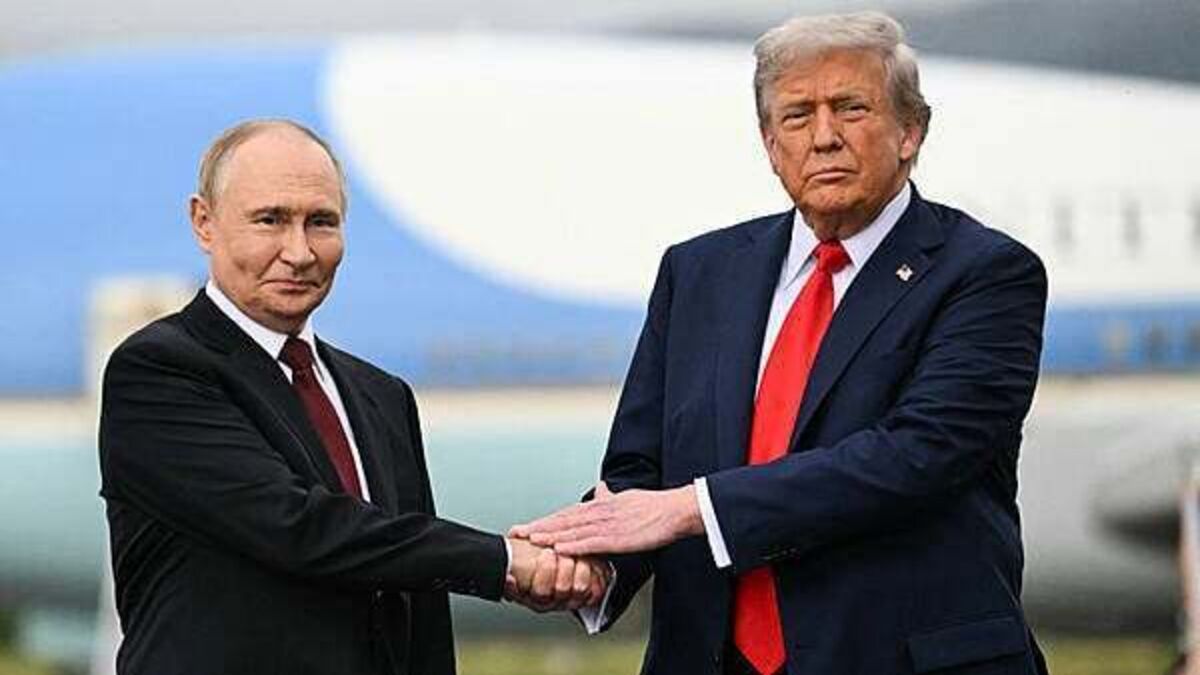
A new US national security strategy document shows president Donald Trump is making efforts to divide Europe reminiscent of actions taken by Russian president Vladimir Putin, an Irish MEP has said.
The document sent shockwaves across Europe, and its clear criticism of the European Union presents a big shift in America's relationship with traditional allies.
In an interview with BreakingNews.ie, Fianna Fáil MEP Barry Andrews said Donald Trump doesn't like the fact that the EU can "stand up to him as a collective".
He said the national security document can be traced back to a speech from US vice president JD Vance at the Munich Security Conference in February.
"That was jaw dropping, even for people who attend that conference regularly, a wake-up call.
"You can draw a straight line from that to the national security strategy which set out a much more explicit and open look at what their intentions are."

He added: "Europe has to accept that this is the way it'll be. Up until now we've been pursuing a twin track approach, On the one hand trying to keep Trump sweet, with the flattery which is nauseating but necessary, particularly to keep the Americans on the same course in regards to the war in Ukraine.
"On the other hand trying to develop independent security policy, independent trade policy, and to develop our own supply chains.
"All of this is bringing us to the point now where this twin track isn't useful anymore, we have to really recognise that the Americans consider Europe to be a systemic rival frankly, and when I say Europe I mean the European Union... it's important we draw that distinction.
"It's the multilateral organisation, what the EU is, which the Americans find to be a systemic rival to their system of government, their view and idea of what it should be."
Mr Andrews said European Commission president Ursula von der Leyen needs to come up with a strong response to the document.
"I've been really critical of von der Leyen, particularly in her approach to Israel and her failure to call out the war crimes in Gaza. I think she is recognised as the political leader in the European Union, in a way that previous Commission presidents were not.
"She has more political capital than previous presidents and we therefore look to her to make a clear response and give a clear correction. At the same time the EU is 27 member states and we need to make sure we are all comfortable with where we go now. Things happen a little bit more slowly at EU level, that's fine, but we do need a very clear and explicit response to where we find ourselves now."
He pointed to austerity, migration problems, Brexit, Covid and the invasion of Ukraine as examples of challenges where the EU had "emerged stronger".
Russian disinformation
The national security document focuses hugely on migration in Europe, claiming it is a threat to the EU and the West as a whole. In a subsequent interview with Politico, Mr Trump said European nations were "decaying" as a result of migration.
Mr Andrews said the document aimed to sow division in a similar manner to disinformation campaigns from Putin's Russia.
"Migration is a very divisive issue, we all know that, it generates very strong feelings. What the US is doing is recognising it is divisive in Europe, pushing through those divisions and trying to create more polarisation about EU policy. It's an approach that Putin has been pursuing for the last 10 years, using Russian bots and disinformation to undermine confidence in the European system. Now we see it coming from the White House, it's very explicit.
"We need to have confidence that our values are consistent, we will treat people humanely, of course have a robust migration policy and make sure people have confidence in it, particularly around asylum.
"We need to counter these American arguments, these are the same arguments Putin's Russia has been trying to circulate within the EU for more than a decade."
Let's look at the facts and forget about Trump's aggression and dismissal of the EU.
He added: "The EU has been developing for years and each crisis it has faced over the decades has made it stronger.
"As we speak in December 2025, there are a huge number of countries queuing to join the EU, the waiting room is full, I take that as a sign of the health of the EU.
"Look at Ireland, the Eurobarometer shows 92 per cent of Irish people are happy with membership of the EU.
"Let's look at the facts and forget about Trump's aggression and dismissal of the EU, we know we must be doing something right when someone like that is so irritated by its existence and its successes."
Mr Andrews called the proposals about additional checks on visitors to the US, including five years' of social media profiles, a "massive overreach".
"I welcome the fact the Taoiseach has called this unworkable. The diplomatic channels from all EU countries should be used to convey that message, everyone is shocked by the madness of it.
"Tourism numbers to the US from Europe have already fallen dramatically, not so much in Ireland because we have pre-clearance and people are confident of going to the airport without too much risk. This will surely impact Irish tourism to the US, Irish business relations with the US.
Social media policy
"It's not too late, the Americans can pull back on this, make sure it doesn't turn the US into a surveillance state. The whole thing is ridiculous.
"What it's really about is eliminating freedom of speech, intimidating people not to make criticisms of the US government, that's what its real intention is, for a US government that claims freedom of speech is so central to their identity, it's quite ironic."
He added: "I think people are shocked, but I think it's strength in numbers. If Ireland was outside of the EU we'd be isolated on this, but we're one of 27 all shocked by this with the exception of Hungary's Viktor Orban I'd expect.
"What Trump dislikes is we can collectively stand up to him and apply the kind of pressure that will hopefully bring this madness to an end. I've had contact with high officials in Brussels who are already bringing this message to Washington."