Public lecture on ‘Jadotville revisited - The Untold Story’
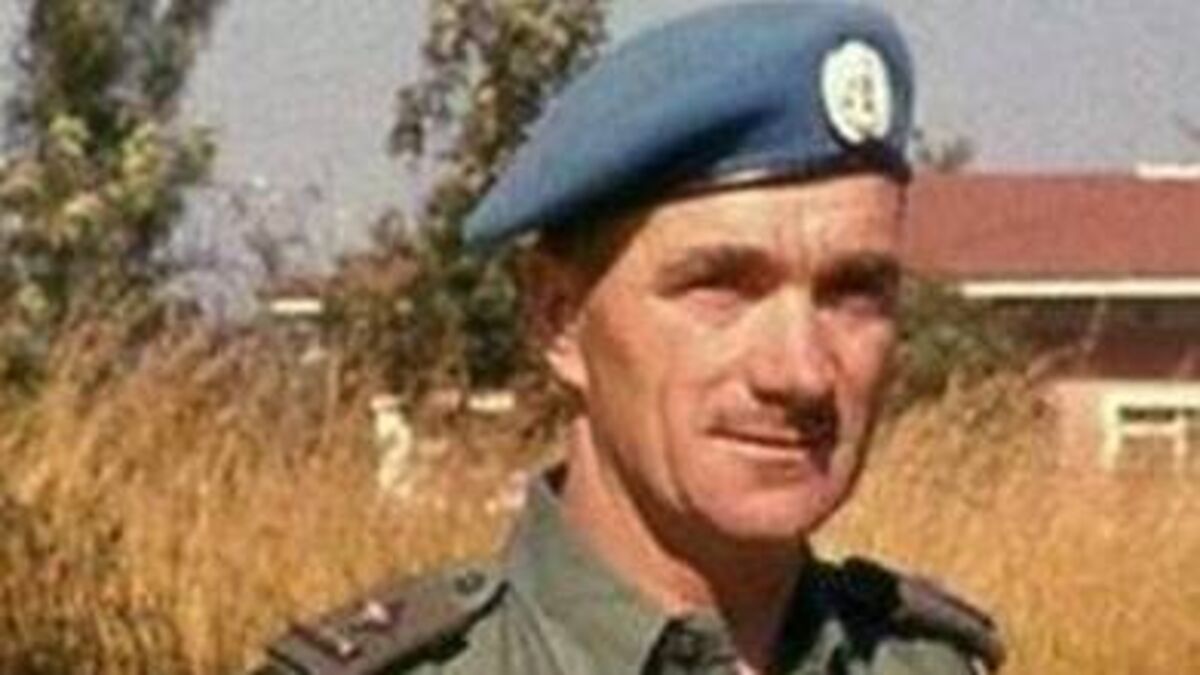
Jadotville Commandant Pat Quinlan.
The public will have a rare opportunity tomorrow night, August 19th to revisit one of the most extraordinary chapters in Irish military history, involving a story of courage, leadership and legacy.
As part of Heritage Week, the Connaught Street and Environs Community Group in Athlone will host a special public lecture in the Shamrock Lodge Hotel, Athlone on Wednesday, August 19th at 7.30 p.m..
The speaker will be Commandant Leo Quinlan (retired), son of the late Commandant Pat Quinlan, the legendary commander of "A" Company, 35th Infantry Battalion from Custume Barracks, Athlone.
Entitled ‘Jadotville Revisited - The Untold Story’, the presentation will bring audiences beyond the familiar headlines of the Siege of Jadotville and offer fresh insight into the leadership, tactical brilliance and enduring legacy of a battle that continues to captivate military historians around the world.
The evening will also mark the launch of a new book by Lieutenant Colonel Dan Harvey, ‘Jadotville: Benchmark for Bravery’, adding another important contribution to the growing body of work devoted to one of Ireland's most remarkable military engagements.
In September 1961, during the Congo Crisis, Commandant Patrick Quinlan of Athlone found himself in command of 156 Irish United Nations peacekeepers stationed at Jadotville in the breakaway Katanga province.
The situation was perilous from the outset. Isolated from support, surrounded by hostile forces and operating in a rapidly deteriorating political and military environment, Quinlan recognised that his company occupied an exposed and vulnerable position.
Many commanders might have hoped for reinforcement. Quinlan prepared for the worst. Drawing upon his experience, military judgement and instinct, he ordered the construction of a carefully planned defensive perimeter. Trenches were dug, firing positions established and overlapping fields of fire created. Every element of the camp's defence was meticulously organised.
What appeared to be an isolated outpost soon became a formidable fortress.
When the attack finally came, the Irish troops faced overwhelming odds. Several thousand Katangese troops, supported by experienced European and South African mercenaries, launched repeated assaults against the Irish position. The defenders had no artillery support, no air cover and only limited supplies of food, water and ammunition.
Yet for five relentless days they held firm.
Again and again, enemy attacks were repulsed by the disciplined fire and determined resistance of the Irish soldiers. Under Quinlan's calm and decisive leadership, "A" Company inflicted significant casualties on the attacking forces while suffering remarkably few losses themselves. Not a single Irish soldier was killed. Only five were wounded.
As the siege dragged on, however, supplies dwindled. Water became scarce. Ammunition ran low. Relief forces failed to arrive.
Faced with an impossible situation and determined to save the lives of his men, Quinlan made the difficult decision to surrender. Far from being an act of defeat, military historians and official reviews have since recognised the decision as an example of exemplary command. Through his leadership, every Irish soldier under his command survived and eventually returned home.
History has now delivered a verdict very different from that of the immediate aftermath.
For many years, the achievements of the men of Jadotville were overlooked and misunderstood. Yet over time, the battle came to be recognised internationally as a textbook example of perimeter defence, tactical planning and leadership under extreme pressure.
Today, military academies around the world study the actions of Commandant Pat Quinlan and his men. His strategic foresight and battlefield leadership are regarded as outstanding examples of defensive warfare and command decision-making.
Ironically, the recognition he received abroad often exceeded the recognition granted at home.
Independent reviews, military historians and the defence forces have since fully vindicated his actions. He is now widely acknowledged as one of Ireland's greatest military commanders; a soldier whose professionalism, courage, compassion and judgement saved the lives of every man under his command.
Yet one chapter remains unresolved. Following the siege, six members of "A" Company were recommended for the Military Medal for Gallantry, the Defence Forces' highest award for bravery. A further 28 soldiers were recommended for Distinguished Service Medals.
Although successive reviews and government decisions have paved the way for recognition, those medals have never been awarded.
Throughout the years, Commandant Quinlan's family has maintained a principled position. In keeping with Pat Quinlan's lifelong loyalty to the men who served under him, they have insisted that they will not accept his own medal until every recommended soldier receives the recognition originally intended for them.
Sixty-five years after Jadotville, the issue remains unresolved. This enduring injustice, and the campaign to have the recommendations honoured, forms an important part of Leo Quinlan's presentation.
The men of Jadotville never failed in their mission. Against overwhelming odds, they fulfilled their duties with courage, professionalism and determination. Their commander never failed them.
Through exceptional leadership, tactical brilliance and unwavering moral courage, Commandant Pat Quinlan ensured that every soldier entrusted to his care returned home alive. In doing so, he earned the lasting gratitude of families, comrades and future generations of Irish soldiers.
His legacy belongs not only to the Defence Forces but to the people of Athlone and to Ireland itself.
Today, the admiration felt for Pat Quinlan remains strong throughout the community he called home. Yet the story of Jadotville is more than a military history. It is a story of leadership in adversity, loyalty under pressure, and the enduring importance of honouring those who have served.
As history has increasingly recognised, Pat Quinlan was not simply a brave officer. He was one of Ireland's truly great military commanders, whose example continues to inspire soldiers, leaders and citizens alike.
This Heritage Week lecture offers a unique opportunity to hear that remarkable story from his son, Commandant Leo Quinlan (retired), and to reflect on a chapter of Irish history whose lessons remain as relevant today as they were in 1961.