Watch video: Irish language enjoys a cultural revival in Roscommon
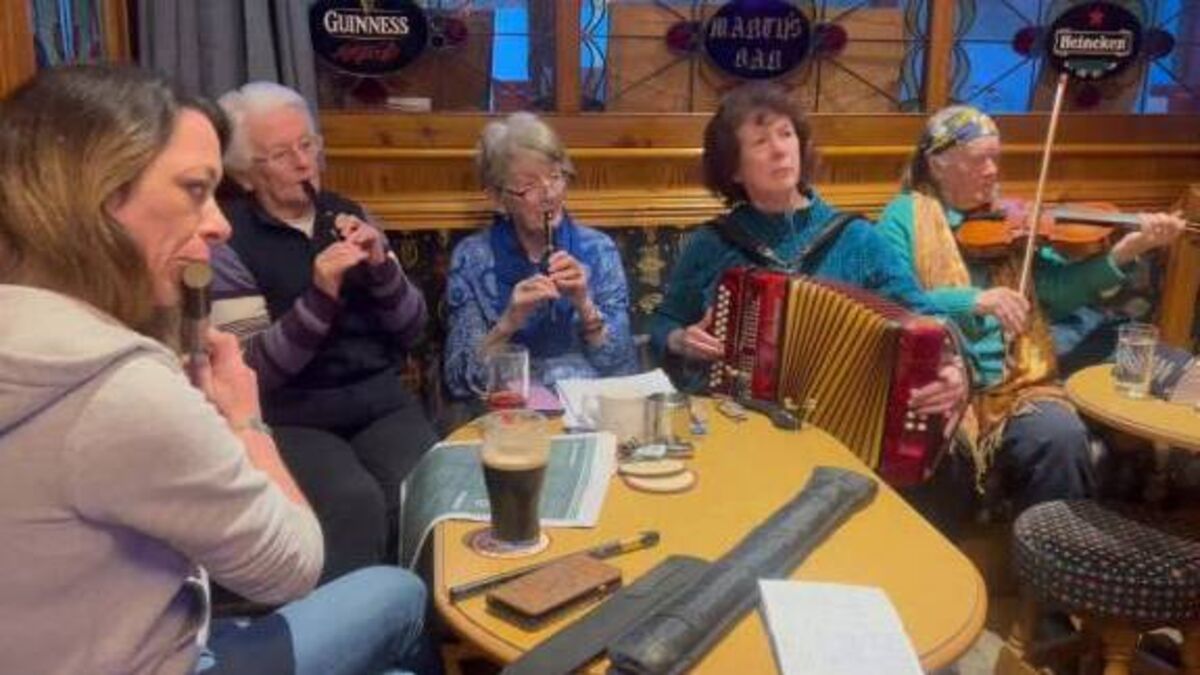
Caint agus Ceol at the Railway Bar, Roscommon - Edwina Farmer, Kitty Phelan, Mary Mulhern, Patricia Morris and Marion Herrity
For decades, Gaeilge was widely regarded as a dying language, a relic of the past that survived mainly in classrooms and compulsory exams. Ireland’s native tongue steadily faded from every day use as fewer people chose to speak it beyond the school gates.
However, in Roscommon, the winds of change are blowing, and the Irish language is beginning to find its voice once more.
At the heart of this revival is education. Orla Ní Chuinneagáin, principal of Roscommon’s only Irish-language primary school, Gaelscoil de hÍde, has witnessed the shift first-hand.
“I started here in 2000, and I’d say in the last 10 years it has improved all the time,” she said.
For many years, Irish was closely associated with rigid grammar rules and grim classroom memories, often symbolised by works such as Peig. That perception, Orla believes, is now changing.
“It’s all coming together,” she explained. “We’re starting to see a renaissance of Irish. The Gaelscoileanna are helping, and so are the arts.”
Popular culture has played no small role. The success of films like An Cailín Ciúin, alongside the rise of Irish-language music acts such as Kneecap, has presented Gaeilge in a fresh, relevant and confident light, particularly to younger audiences.
At Gaelscoil de hÍde, pupils are educated almost entirely through Irish. The immersion model removes fear from learning. “They acquire it naturally through the education system,” Ms Ní Chuinneagáin said. “They feel confident speaking Irish, and they develop a love for it.”
Many parents, she added, regret not having stronger Irish themselves. “When they see Irish becoming trendy, they want that for their children. Most don’t even realise the children are learning Irish — they’re simply immersed.” Language learning, she noted, comes more easily at a young age. “Children are like sponges.”
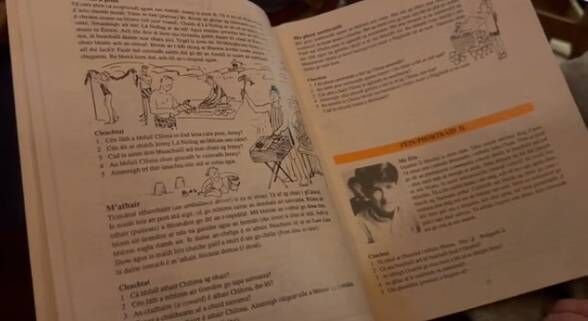
For adults, however, the relationship with Irish can be complicated. While many people appreciate the language and its cultural importance, they may struggle to speak it. Thomas Moran, who has spent years teaching and working through Irish, has seen this challenge repeatedly.
“In the first class there might be quite a crowd,” he said. “By the next night, there are fewer. People gradually drop off.” He believes many learn Irish for exams but fail to use it afterwards.
“They don’t keep it up. It’s too much trouble, people think.” Despite this, he remains passionate about the language’s value. “It’s our native language, and we should be proud of it. French people don’t abandon French for English. Why should we?”
The old proverb Is fearr Gaeilge briste, ná Béarla clíste — broken Irish is better than fluent English — still rings true. Thomas believes any effort to speak the language deserves encouragement. For adult learners, his advice is simple: use it. “Speak the language — that’s how you keep it.”
Roscommon offers opportunities for those returning to Irish, from language classes to traditional music sessions where Irish songs and conversation flow naturally. At a recent session in the Railway Bar in Roscommon town, the enthusiasm was clear.
“Once you start again, it’s amazing how words come back to you,” said attendee Dympna Molly. Another participant, Rosaleen McCourt, reflected on her own schooling. “We’re proud of our language now, but we were never made feel proud at the time.”
Many present shared stories of harsh teaching methods, limited opportunities to speak Irish, or leaving school early before fully engaging with the language.
Yet today, a new generation is embracing Gaeilge with confidence. Youth groups such as Scór encourage young people to use their teanga through music, drama and performance. Thomas has noticed the change. “You hear Irish used in groups, even for the craic. It’s nice to see.”
The revival also carries practical benefits. “There are more and more careers coming in for Irish,” Orla Ní Chuinneagáin noted. The Official Languages Act aims to ensure that by 2030, 20 per cent of new public sector recruits are proficient in Irish.
With education, employment and culture aligning, the Irish language is no longer living on the margins. In Roscommon, at least, its revival is unmistakably beo — alive.
WATCH VIDEO: