What the 1926 Census tells us about life in the county a century ago
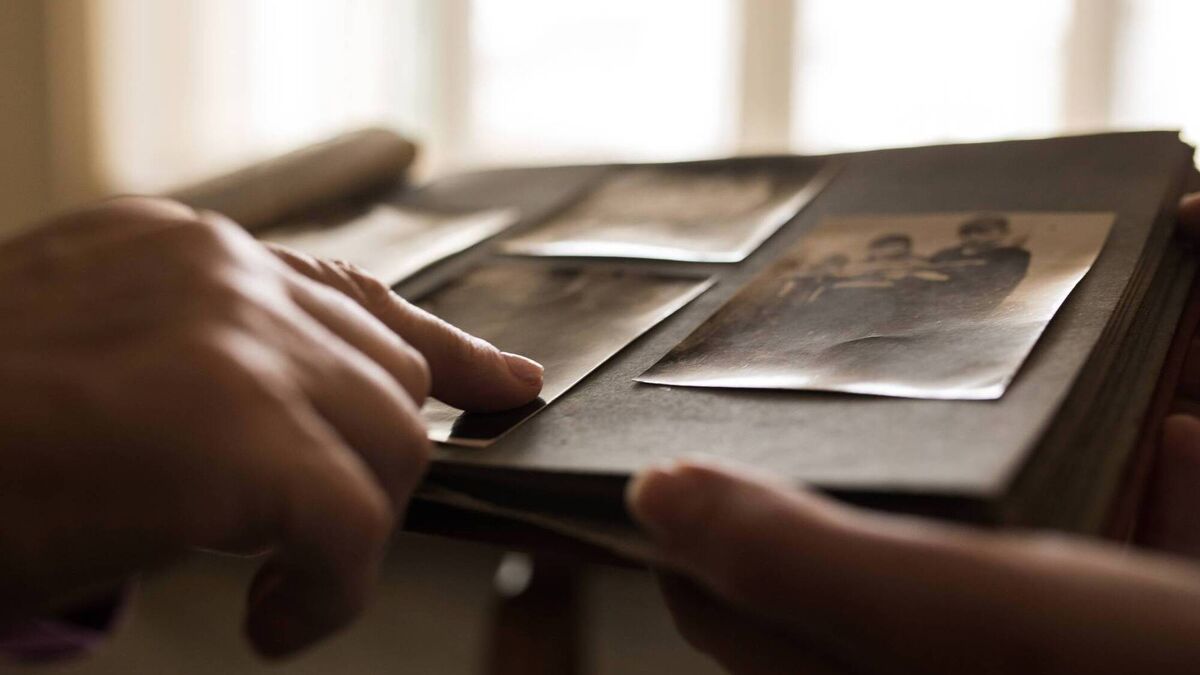
The release of the 1926 Census of the Irish Free State online has opened an extraordinary window into life in County Roscommon 100 ago.
The release of the 1926 Census of the Irish Free State online has opened an extraordinary window into life in County Roscommon 100 years ago, offering people a detailed snapshot of how people lived, worked, worshipped and identified themselves in the early years of independence.
For the county, the census record is not just a statistical return but a powerful social document, reflecting a county shaped by agriculture, emigration fears, strong religious identity and the early stirrings of cultural and sporting pride.
The census was carried out on April 18th, 1926, at a time when the Irish Free State was still finding its feet after revolution and civil war. Roscommon, like much of the west, was navigating political uncertainty alongside everyday struggles. Contemporary newspaper coverage from the Roscommon Herald reveals a county preoccupied with farming pressures, court business and regional affairs across Connacht and the north midlands.
The front page of the April 3rd, 1926 edition of the newspaper paints a vivid picture of the era. Sold for two pence, its columns were filled with farming concerns, legal disputes and national news, alongside local advertisements for everything from domestic servants to cycles, poultry and lodging houses. Advertising costs were modest by modern standards, with sixpence covering twelve words, a stark reminder of how dramatically the value of money has changed.
One of the defining issues of the time was the economic pressure on farmers, a theme that resonates strongly with Roscommon’s rural character. A meeting of Clontroney farmers, chaired by Richard Carrigy, heard strong criticism of what was described as “crippling” taxation. There was deep anxiety that state expenditure was not being reduced and fears that continued financial strain would leave farmers with only two options: emigration or the poorhouse.
These sentiments underline how vulnerable rural communities felt in the early Free State and help explain the demographic changes that followed. Today, Roscommon’s population stands around 16 per cent lower than it was in 1926, reflecting decades of outward migration in search of opportunity. In 1926 it was recorded as 83,566.
The census confirms just how religiously homogeneous Roscommon was at the time. An overwhelming 98.5 per cent of the county’s population identified as Roman Catholic. The Church of Ireland accounted for 1.34 per cent, Presbyterians 0.12 per cent, with all other denominations making up just 0.04 per cent. This dominance of Catholicism shaped community life, education and politics for generations.
Two industrial schools were listed within the county: St Joseph’s Industrial School for Girls in Summerhill, Athlone, and St Francis Xavier’s Industrial School for Girls and junior boys in Ballaghaderreen. Notably, there were no Magdalene Laundries, mental asylums, prisons or shared institutions officially recorded for Roscommon, a detail that distinguishes it from some other counties.
Life expectancy figures highlight how dramatically living conditions have changed. In 1926, men could expect to live to 57 years and women to 58. Today, those figures have risen to approximately 81 for men and 84 for women, underscoring profound advances in healthcare, nutrition and living standards.
The census also sheds light on language and cultural identity during a period when revived nationalism placed strong emphasis on Irish. An Elphin Gaelic class meeting in 1926 proposed that teachers paid by Roscommon County Council should declare allegiance to the Irish Free State in order to qualify for salaries funded by local rates, reflecting the central role of language and loyalty in public life.
Yet the census forms themselves reveal a more complex picture. In some households, including that of future GAA great Jimmy Murray, the Irish language section was left blank. This contrast between national aspiration and everyday reality adds depth to our understanding of the period.
Among the most striking census entries is that of Douglas Hyde, Roscommon native and first-ever President of Ireland. Although resident in Dublin at the time, Hyde’s roots lay in Castlerea, where he was born in 1860. A founder of the Gaelic League in 1893, Hyde was one of the leading cultural figures of his generation.
His 1926 census form is filled out in Irish, with his name recorded as Dubhghlas de hÍde, reflecting his lifelong commitment to the language. He is listed alongside his wife Lucy Kurtz and daughter Úna Máire, providing a personal glimpse of a man who would go on to become President in 1938.
Another notable profile is that of Jimmy Murray of Knockcroghery, one of Roscommon’s most celebrated GAA figures. In the 1926 census, Murray appears as Micheál Joseph Murray, aged just eight years and eleven months. Born on May 5th, 1917, he lived with his parents John and Susan Murray and several siblings, along with an 18-year-old assistant, reflecting the family-based and commercial nature of rural enterprise at the time. His father was listed as a merchant.
From those modest beginnings, Murray would rise to become one of the county’s greatest sporting heroes. He captained Roscommon to consecutive All-Ireland senior football titles in 1943 and 1944, and again led the county in multiple finals, lifting the Sam Maguire Cup twice. One of only eight men to captain teams to two All-Ireland titles, Murray’s legacy is etched into Roscommon sporting history. His statue, unveiled in Knockcroghery in December 2024, stands as a bridge between the child recorded in the 1926 census and the legend he became.
The 1926 Census is more than a historical curiosity. For Roscommon, it provides a benchmark against which to measure a century of change — from population decline and shifting economic fortunes to longer lives, evolving identities and enduring community pride.
Taken alongside contemporary newspaper reports, the census brings the county’s past vividly to life. It shows a Roscommon shaped by faith, farming, family and resilience, yet already producing figures who would leave a lasting mark on national culture and sport. As modern readers explore the newly available records, they are invited not just to trace family trees, but to reconnect with the lived reality of Roscommon a hundred years ago — a story of challenge, continuity and quiet determination.