Herald Opinion: Safer roads come down to awareness, consideration, and common sense
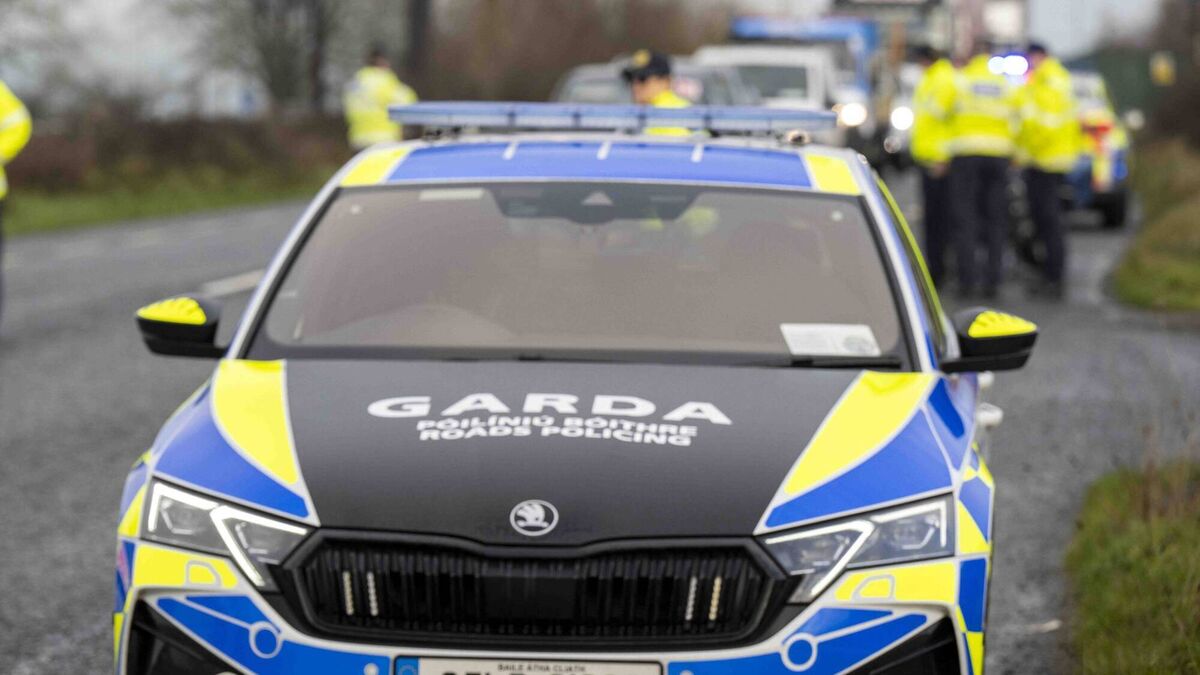
The provisional road traffic collision figures released on January 1st, show a concerning increase in fatalities on Irish roads in 2025. Pic: Andrew Downes, xposure
Christmas and the year 2025 are now behind us, and we are facing into a brand new year. For me, this Christmas felt like a strange one - unusually mild, quiet, and free of disruption. That calm stood in sharp contrast to one of the darkest aspects of the year just passed: the continuing toll of deaths on our roads.
In the lead-up to Christmas, I underwent a minor elective procedure that forced me to slow down for a couple of weeks. While I’m still not fully back to myself, the unexpected downtime gave me a rare chance to step back and reflect.
One reflection in particular has stayed with me: the awful level of deaths on our roads in 2025. Every year we hear that new measures are being introduced to improve road safety, and in my own lifetime I’ve seen real progress. There was a time when seat belts didn’t even have to be worn. It wasn’t until 1979 that wearing a seat belt in the front of a car became compulsory, and not until 1991 that it became mandatory in the back. Drink-driving laws have also tightened over time. Ireland’s first legal alcohol limit was introduced in 1968. It remained unchanged for decades, until reforms in 2011 reduced the limit for most drivers and introduced much lower limits for learner, novice, and professional drivers.
Despite these changes, the reality remains deeply troubling. Over the Christmas period alone, reports highlighted that during the week from December 22nd to December 28th there were three fatalities on Ireland’s roads, along with eight serious collisions that left a number of people badly injured. During that same week, gardaí carried out almost 2,100 checkpoints, resulting in 149 arrests for driving under the influence of alcohol or drugs, while more than 4,600 drivers were detected speeding.
A previous week was even more tragic. Between December 8th and December 14th, eight people lost their lives on Irish roads. More than 1,700 checkpoints were conducted in that seven-day period, including mandatory intoxicant testing and high-visibility policing operations, yet 147 people were still arrested for driving under the influence. These figures point not just to enforcement, but to a worrying level of disregard.
Another important piece of the road-safety puzzle is vehicle condition. In 2000, then Minister Bobby Molloy introduced the National Car Test to remove dangerous vehicles from use. There’s no doubt that standards improved significantly as a result, and the NCT has played a major role in reducing accidents caused by mechanical failure. That’s why it was so shocking to learn that in 2025 the overall full-test NCT pass rate fell to around 49.2 per cent. Less than half of cars passed on their first attempt, and approximately 133,000 vehicles, or about 7.6 per cent of all tests, were classified as dangerously defective.
Of course, speed is often cited as the main cause of collisions, and sometimes it is. But it isn’t the only factor. Invisibility also plays a major role. Dark clothing does not reflect light and makes pedestrians difficult to see, particularly on unlit rural roads. Cars with no rear lights are almost invisible until the final seconds, and it is now common to see vehicles with front lights illuminated but no rear lights showing, especially older cars where automatic settings activate only daytime running lights. The growing number of electric scooters and similar vehicles adds another layer of risk.
So what’s the solution? There probably isn’t a single one. Road safety isn’t fixed by one new law or one more campaign; it improves through small, sensible changes and personal choices. Drivers taking responsibility for their speed, their fitness to drive, and the condition of their vehicles all year round would help. Something as simple as manually switching on headlights in poor visibility rather than relying on automatic settings could make a real difference.
Pedestrians and cyclists also have a role to play. Wearing reflective clothing isn’t about blame; it’s about being seen. Better lighting, clearer road markings, and safer infrastructure would also help, particularly in rural areas. As for electric scooters, clearer rules, proper enforcement, and basic safety requirements are long overdue.
Ultimately, safer roads come down to awareness, consideration, and common sense. None of these measures are dramatic, but together they could save lives. If even a few people slow down, switch on their lights, or make themselves more visible, then the next statistic may never happen at all.