Fallon's Town Talk: Irony of removal of Dublin Airport cap won’t be lost on turf-cutters
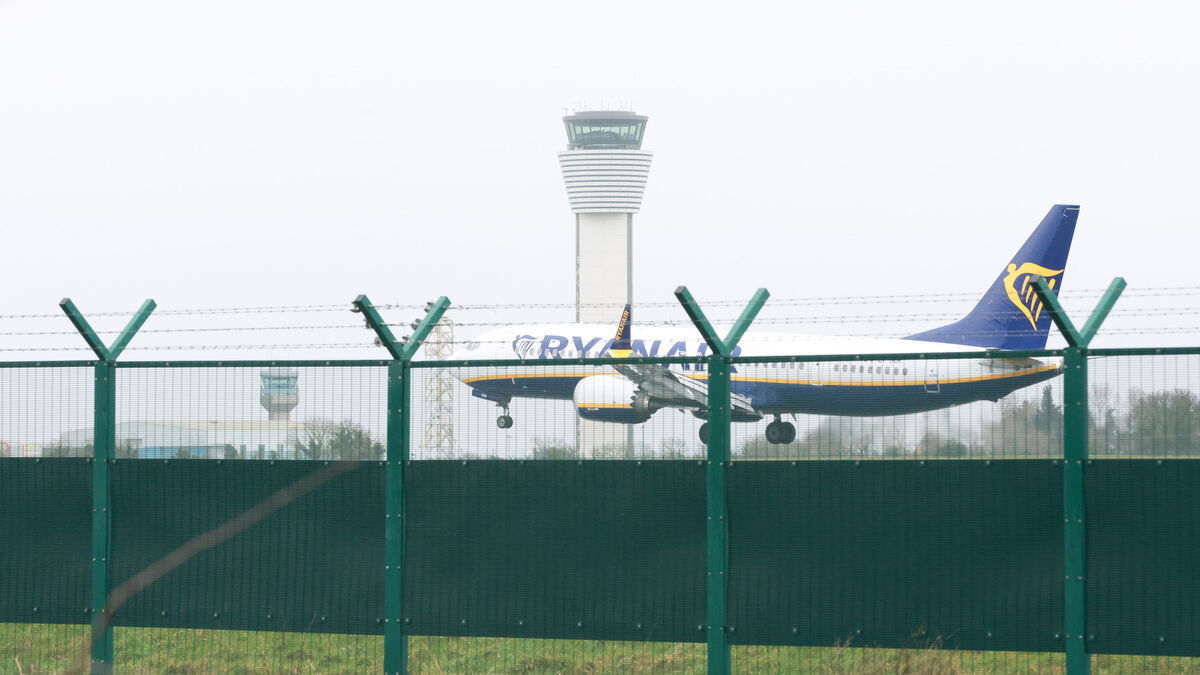
A Ryanair plane lands in front of the control tower at Dublin Airport.
The former staff in the peat-burning power stations in Lanesboro and throughout the midlands are entitled to be ruefully cynical as they read about the likely removal of the cap on the number of passengers at Dublin Airport. The irony won’t be lost either on the many people who still cut and burn turf in Roscommon.
As you will remember, the rationale behind banning turf-cutting and closing peat power stations was the move away from fossil fuels. It was reflective of the environmental concerns which were sweeping the world and became central to Irish government policy, accelerated by the presence of The Greens in government.
In the space of a few years, attitudes have changed. Since the return of Donald Trump to the White House, climate change has plummeted as a priority in the US. This has extended to Europe and Ireland.
Under pressure from critics, most notably Michael O’Leary of Ryanair, the government has recently introduced the Dublin Airport Passenger Capacity Bill which will allow the Minister for Transport to amend or revoke the existing cap of 32 million passengers and to preclude any future cap being introduced. This isn’t quick enough for O’Leary who wants the cap removed by St. Patrick’s Day.
The move has been welcomed by business leaders, tourist groups and travel agents. Before criticising their stance, how many of us have cut back on our air travel over the last five or six years? I can say environmental concerns have not come into my mind when booking flights.
However, what is interesting about the prospective removal of the cap is how little traction critics of the government’s decision have received politically or in the media.
A group called Children’s Rights Over Flights described abolishing the passenger cap as "reckless and irresponsible". They criticised the record levels of aviation fossil fuels being produced and noted that Ireland is "hugely off track on meeting 2030 emissions reductions targets".
These criticisms are legitimate, yet have made barely a dent in the public discourse. It’s startling how different attitudes are to the removal of the cap than they were to the closure of the power stations. The political and media outlook then was: it’s sad to see an era end but it’s for the good of the environment and the future of the planet. There has been hardly any of that narrative about the removal of the passenger cap.
Only last week I wrote here about the biblical levels of rain that have hit Roscommon over the last few weeks. Last Saturday was yet another day of incessant rain.
Two contrasting views can be true at once: we can have genuine concerns about climate change but be sceptical about the double standards that apply to different sectors of Irish life in implementing environmental policy.
Today (Tuesday) marks the fourth anniversary of Russia’s invasion of Ukraine. The conflict has already lasted almost as long as World War 1, supposedly the war to end all wars.
Initially, a wave of empathy and outrage swept across Europe as the West came to Ukraine’s aid. Ireland was particularly welcoming. Ukrainians arrived in Roscommon and all over Ireland. The influx has ebbed and flowed since 2022. Many Ukrainians immigrants are still living in Roscommon, with children in our schools and adults in our workplaces.
The sympathy and admiration for the bravery of Ukraine hasn’t dimmed but the belief that they can triumph in this war has. Since the start of the war Vladimir Putin calculated that the West’s resolve would weaken and, sadly, his Machiavellian calculation has proven correct.
The turning-point was the humiliation of President Volodymyr Zelensky in the White House. It sent out a message to the world that US support for Ukraine’s cause was over. The so-called peace negotiations are taking place on Putin’s terms. The Russians will continue to bomb Ukraine until it suits them to sit down at the table and get all the land they want. The US isn’t putting any major pressure on Putin and the EU hasn’t been able to fill the void left by what is, at best, US indifference.
The shifting of the diplomatic ground underneath Ukraine is extending to sport. The Winter Olympics were wildly entertaining and enjoyable. Nevertheless, one of the most notable stories was the disqualification of a Ukrainian skeleton athlete for wearing a helmet which showed images of some of his compatriots who had been killed in the war.
This comes in the context of Russian and Belarusian athletes being allowed to represent their countries in the Winter Paralympics. What was, until recently, unthinkable is becoming normalised.